
Nebraska permits granny pods, also known as accessory dwelling units (ADUs), primarily in urban counties such as Douglas and Lancaster, where they are allowed on single-family lots meeting minimum size requirements of 7,500 to 10,000 square feet. These units typically have maximum sizes of 800 to 1,000 square feet and must comply with local zoning laws, building codes, and permit processes. Rural counties often impose stricter regulations, including conditional use permits or larger lot requirements, so verification with local planning departments is essential.
As families in Nebraska seek innovative ways to care for aging loved ones, granny pods emerge as a compassionate and practical housing solution. These compact, self-contained units allow elderly relatives to maintain independence while remaining close to family support, aligning well with the state’s emphasis on multigenerational living amid its expansive rural and urban landscapes. With Nebraska’s senior population surpassing 16% and projected to grow significantly, granny pods address the rising demand for affordable, accessible elder care options that avoid the isolation of traditional facilities.
This comprehensive guide delves into the essentials of granny pods in Nebraska, covering definitions, benefits, legal considerations, costs, and installation processes to empower your decision-making. From urban centers like Omaha and Lincoln to rural counties, regulations vary, but understanding them ensures compliance and feasibility. Great Lakes Tiny Homes stands as a full-service manufacturer specializing in modular, park model, and tiny home-style granny pods, delivering turnkey builds to all 48 lower U.S. states with options for wheels or foundations, and RVIA certification for qualifying park models.
Whether customizing for accessibility or energy efficiency to suit Nebraska’s variable climate, their expertise helps navigate local nuances. For personalized advice on your property, book a call with our experts. Note that while this information provides a solid overview, zoning and building codes can evolve, so consulting local authorities is recommended.
Disclaimer: This article is for informational purposes only and does not constitute legal advice. Laws, regulations, and zoning rules vary by location and may change over time. Always consult your local zoning office or a qualified land use/zoning attorney before making decisions based on this information.
What Are Granny Pods?
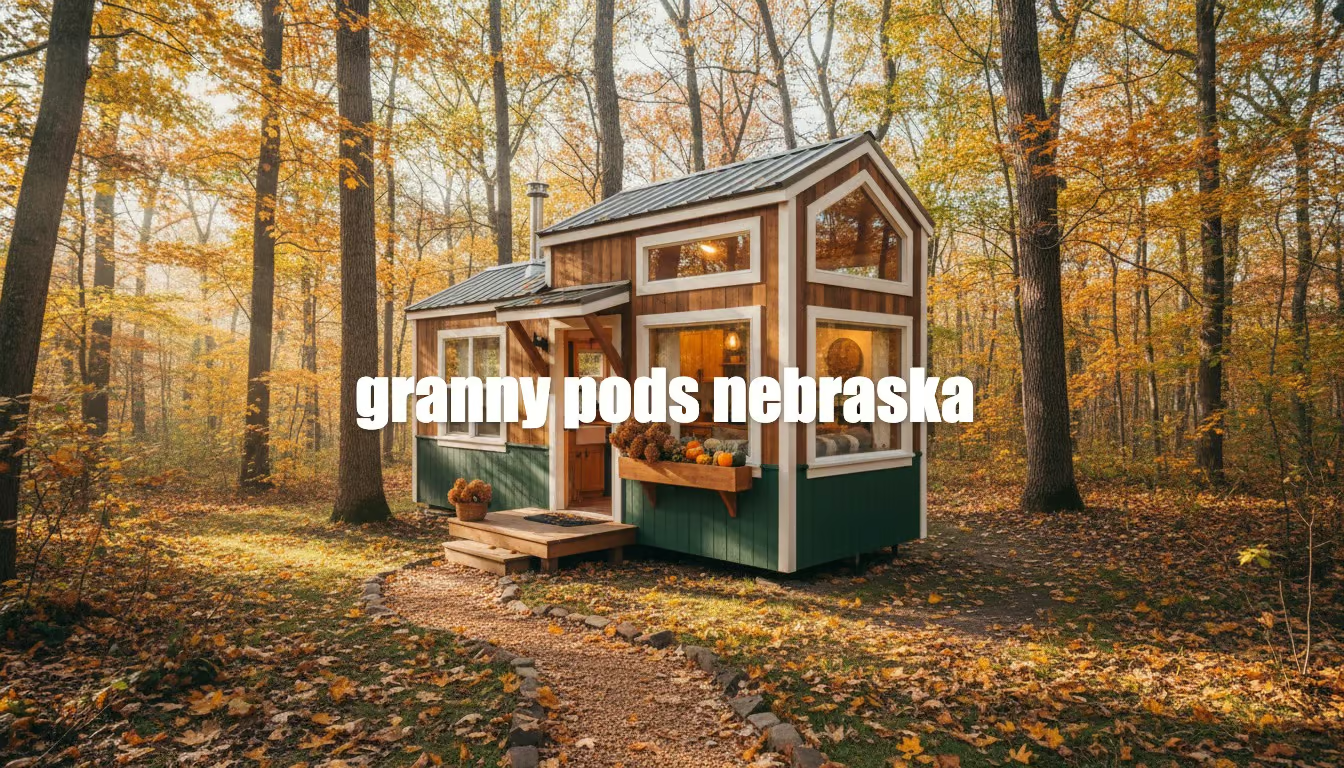
Granny pods, often referred to as backyard cottages or in-law suites, are small, detached residential units designed to provide independent living space for family members, particularly seniors, on the same property as the primary home. In Nebraska, these accessory dwelling units (ADUs) typically range from 300 to 800 square feet, featuring essential amenities like a kitchenette, bathroom, and bedroom to support daily needs without requiring constant supervision. This setup promotes privacy and autonomy while facilitating easy access to family assistance, which is increasingly vital as Nebraska’s elderly demographic expands.
The appeal of granny pods in Nebraska stems from the state’s blend of urban density and rural sprawl, where traditional nursing homes may be distant or costly. Unlike larger secondary structures, granny pods emphasize senior-friendly designs, such as single-level layouts and wide doorways, to accommodate mobility challenges. Recent legislative efforts, including updates to zoning codes in major cities, have made these units more accessible, reflecting a broader national trend toward multigenerational housing solutions.
Great Lakes Tiny Homes crafts granny pod-style units that can be mobile with wheels or permanently affixed, often with RVIA certification to streamline approvals in certain zones. This versatility suits Nebraska’s diverse terrains, from the flat Platte Valley to the rolling Sandhills. As projections indicate a 20% rise in the state’s senior population over the next decade, granny pods offer a forward-thinking alternative to conventional care, enhancing family bonds and financial stability.
Inside the Modern Granny Pod: Features, Design, and Purpose
Modern granny pods transcend basic shelter, evolving into sophisticated ADUs optimized for senior well-being and seamless integration with the host property. Serving as independent residences for aging relatives, these units typically span 300 to 800 square feet, incorporating compact yet functional spaces like full bathrooms, efficient kitchens, and cozy living areas. In Nebraska, where seasonal extremes demand resilience, designs prioritize durability and comfort to support long-term occupancy.
Key features include accessibility enhancements such as ramped entrances, lever handles, and non-slip surfaces, which mitigate fall risks common among seniors. Advanced options like integrated smart home systems for remote monitoring or automated lighting add layers of safety without compromising independence. Prefabricated models arrive nearly complete, reducing on-site disruption, while custom builds allow tailoring to specific health needs, such as therapeutic lighting or adjustable furnishings.
The core purpose of granny pods is to bridge the divide between solitude and support, particularly beneficial in Nebraska’s far-flung communities where professional care services may be limited. By enabling elders to age in place near loved ones, these units alleviate emotional strain and logistical burdens associated with relocation. As multigenerational households gain traction, granny pods not only fulfill immediate housing needs but also adapt to evolving family dynamics over time.
For insights into suitable communities, explore the best tiny home communities in Nebraska, where granny pod placements can thrive in supportive environments.
Benefits of Granny Pods for Nebraska Families
Granny pods deliver multifaceted advantages for Nebraska households, foremost by fostering close-knit family care without the intrusion of shared living spaces. Seniors retain personal routines and privacy in their dedicated unit, which studies link to improved mental health and reduced isolation—a pressing issue as 25% of the state’s elders report loneliness. This proximity enables timely assistance for daily tasks, enhancing safety while preserving dignity in a culture that values self-reliance.
Economically, granny pods prove cost-effective compared to Nebraska’s assisted living facilities, averaging over $50,000 annually per Genworth data. Initial investments of $100,000 to $150,000 often yield substantial savings, potentially exceeding $300,000 over five years, alongside potential property value increases of 10-20% as noted by real estate associations. Energy-efficient builds further lower ongoing expenses, crucial in Nebraska’s climate with its cold winters and humid summers.
Culturally and practically, these units support agricultural families by keeping generations connected to land and legacy, avoiding urban moves. They also align with state initiatives promoting aging in place, reducing strain on public health resources. Ultimately, granny pods enrich family life, turning potential challenges into opportunities for deeper connections and shared resilience.
When considering builders for your project, local experts like those offering tiny house builder services in Nebraska can provide tailored guidance.
Legal Considerations for Granny Pods in Nebraska
Granny pods in Nebraska fall under accessory dwelling unit (ADU) regulations, governed by a mix of state statutes and local ordinances that emphasize safety and compatibility with primary residences. The Nebraska Revised Statutes permit ADUs in residential zones but delegate specifics to counties and municipalities, requiring adherence to the International Residential Code (IRC) for construction standards. Permits for zoning, building, and utilities are mandatory, with health approvals needed for septic systems in unincorporated areas.
Statewide, House Bill 1048 from 2022 facilitated modular constructions, easing prefab granny pod installations, while ongoing legislative discussions aim to standardize approvals further. However, enforcement varies: urban jurisdictions streamline processes, but rural ones may mandate variances or prohibit detached units. RVIA-certified models can qualify as park models, potentially sidestepping some code hurdles and offering relocation flexibility if needed.
Owner-occupancy of the primary home is often required, and units must not exceed 50% of the main structure’s size in many locales. For detailed county rules, refer to resources like the best tiny home communities in Nebraska for zoning-friendly areas. Early consultation with planning departments prevents delays, ensuring your project aligns with Nebraska’s evolving housing policies.
Disclaimer: This article is for informational purposes only and does not constitute legal advice. Laws, regulations, and zoning rules vary by location and may change over time. Always consult your local zoning office or a qualified land use/zoning attorney before making decisions based on this information.
Which Nebraska Counties Allow Granny Pods?
Granny pod permissions in Nebraska hinge on county-specific zoning, with urban counties generally more permissive than rural ones. The table below outlines key details for major counties, including lot sizes, size limits, and notes. This overview aids in evaluating your property’s suitability, but direct verification with local officials is crucial due to potential updates.
| County Name | Granny Pod Status | Minimum Lot Size Requirements | Maximum Size Allowed | Special Notes | Source |
|---|---|---|---|---|---|
| Douglas (Omaha) | Allowed | 7,500 sq ft | 800 sq ft | Omaha city code supports ADUs; owner-occupancy required for primary home. Streamlined permits for seniors; up to two ADUs if under 50% of primary home size. | City of Omaha Planning Department ADU Regulations |
| Lancaster (Lincoln) | Allowed | 10,000 sq ft | 1,000 sq ft | Lincoln offers density bonuses; must connect to utilities. Recent 2023 updates favor modular units; detached ADUs up to 900 sq ft with special permits. | City of Lincoln ADU Text Amendment |
| Sarpy (Bellevue, Papillion) | Restricted | 1 acre | 600 sq ft | Only in agricultural zones; Bellevue has case-by-case reviews for urban lots. | No verified source; consult local planning |
| Hall (Grand Island) | Case-by-Case | 5 acres rural, 9,000 sq ft urban | 750 sq ft | Grand Island requires variance for detached ADUs; favorable for family care justifications. | No verified source; consult local planning |
| Buffalo (Kearney) | Allowed | 1 acre | 800 sq ft | Rural-friendly; no setbacks under 10 ft from property line. Kearney city encourages for aging in place. | No verified source; consult local planning |
| Dodge (Fremont) | Restricted | 2 acres | 400 sq ft | Limited to attached units; Fremont zoning board reviews detached proposals annually. | Dodge County Zoning Regulations |
| Kearney (Other areas) | Case-by-Case | Varies | 600 sq ft | Focus on compliance with flood zones near Platte River. | No verified source; consult local planning |
For more on tiny house allowances that overlap with granny pods, see What Counties in Nebraska Allow Tiny Houses. This data underscores urban opportunities while highlighting rural hurdles, informing your location choices effectively.
Disclaimer: This article is for informational purposes only and does not constitute legal advice. Laws, regulations, and zoning rules vary by location and may change over time. Always consult your local zoning office or a qualified land use/zoning attorney before making decisions based on this information.
Major Cities in Nebraska for Granny Pods
Omaha (Douglas County)
Omaha has embraced granny pods through progressive zoning updates, allowing ADUs by-right in most residential districts since 2024, with provisions for up to 800 square feet on lots over 7,500 square feet. Detached units must maintain setbacks of at least 5 feet from side and rear lines, and lot coverage can increase by 15% to accommodate them. The city’s planning department offers streamlined permitting, emphasizing senior housing incentives like fee reductions for accessibility features.
Unique ordinances require aesthetic harmony with the primary home, such as matching roofing and siding, to preserve neighborhood character. Utility connections to the main sewer and water systems are mandatory, with inspections ensuring IRC compliance. For official resources, contact the Omaha Planning Department at their website or via phone for site-specific guidance.
Exploring tiny house for sale options in Omaha, Nebraska can reveal pre-built granny pod models suited to local rules.
Lincoln (Lancaster County)
In Lincoln, granny pods are permitted via special permits in R-1 to R-8 zones, capping at 1,000 square feet or 40% of the primary home’s size, whichever is smaller, on lots of at least 10,000 square feet. Recent amendments allow detached ADUs closer to lot lines—down to 2 feet in some cases—facilitating conversions of existing garages. The process involves submitting plans to the Lincoln/Lancaster County Planning Commission, with approvals focusing on traffic impact and design standards.
Ordinances prioritize family care, waiving certain fees for units serving elderly relatives and requiring owner-occupancy. Building codes enforce energy efficiency, vital for Nebraska’s winters, including R-30 insulation minimums. Reach out to the city’s Planning Division for zoning maps and permit applications to navigate requirements smoothly.
Local builders familiar with these regs, such as tiny house builders in Lincoln, Nebraska, can assist in compliant designs.
Grand Island (Hall County)
Grand Island approaches granny pods on a case-by-case basis, requiring variances for detached ADUs in urban areas on lots over 9,000 square feet, limited to 750 square feet. The zoning board favors applications tied to elder care, but agricultural zones demand 5-acre minimums with conditional use permits. Permits involve environmental reviews, especially near waterways, to address flood risks.
City codes mandate shared utilities and visual screening from neighbors, promoting integration. Incentives include expedited reviews for modular units meeting state standards. Contact Hall County’s Planning and Zoning office for hearings and detailed ordinances.
Kearney (Buffalo County)
Kearney supports granny pods in rural settings on 1-acre lots, allowing up to 800 square feet with minimal 10-foot setbacks, encouraging aging-in-place initiatives. Urban placements follow similar rules but require utility tie-ins and IRC adherence. The process starts with a zoning permit, followed by building inspections.
Ordinances emphasize septic approvals for off-grid areas, common in Buffalo County. The city provides resources for sustainable designs resilient to plains weather. Buffalo County’s zoning department handles inquiries for personalized assessments.
Communities in the area, detailed in the best tiny home communities in Nebraska, offer ideal spots for granny pod installations.
The Granny Pod Installation Process in Nebraska
Installing a granny pod in Nebraska demands a systematic approach attuned to local climates and codes, beginning with thorough zoning research via county planning offices or the Nebraska Department of Economic Development. Assess setbacks—typically 5-10 feet—and ADU allowances, which urban areas like Omaha expedite in 2-4 weeks versus rural delays. Legal consultation may be wise for variances, ensuring alignment with IRC standards for structural and safety elements.
Secure permits by submitting site plans, engineering drawings, and specs; fees range $1,000-$3,000, with RV certification accelerating modular approvals. Site prep accounts for Nebraska’s soils—sandy east vs. clay west—requiring frost-resistant foundations up to 4 feet deep and erosion controls against tornadoes. Spring or summer timelines avoid winter disruptions, budgeting for grading in uneven terrains.
Utility hookups, costing $10,000-$25,000, involve insulated lines for sub-zero protection, buried conduits for longevity, and connections to main systems or standalone septic/wells. Delivery for prefabs takes 1-2 days, with craning and full setup spanning 2-4 months total. Final inspections confirm compliance, issuing occupancy after testing alarms and systems.
For builder support, consider tiny house builders in Omaha, Nebraska experienced in local installations.
Disclaimer: This article is for informational purposes only and does not constitute legal advice. Laws, regulations, and zoning rules vary by location and may change over time. Always consult your local zoning office or a qualified land use/zoning attorney before making decisions based on this information.
Design Considerations for Nebraska Granny Pods
Nebraska’s granny pod designs must withstand blustery winters, humid summers, and severe storms, incorporating R-30 insulated walls and metal roofs rated for 50 psf snow loads and high winds. Passive solar orientations with south-facing windows optimize natural heating, while efficient HVAC systems curb annual bills around $2,000. Accessibility remains paramount, featuring zero-step entries, 36-inch doorways, and grab bars to evolve with residents’ needs.
Smart integrations like app-based monitoring and voice controls enhance security, distinguishing granny pods from recreational tiny homes by prioritizing health over mobility. Aesthetic matching to the primary residence—such as prairie-style exteriors—ensures visual cohesion in Nebraska’s neighborhoods. Underground utilities prevent freeze damage, with designs adaptable to flat eastern lots or western slopes.
Great Lakes Tiny Homes facilitates visions through site visits and model tours, crafting personalized units resilient to local conditions. Their approach emphasizes harmony with surroundings, boosting both functionality and appeal. For zoning-aligned options, view tiny houses for sale in Lincoln, Nebraska.
Finding Expert Guidance for Your Project
Embarking on a granny pod in Nebraska benefits from professionals versed in state variances and codes, averting pitfalls in permitting and compliance. Experts streamline from concept to completion, customizing for accessibility and efficiency to meet family priorities. Local knowledge of counties like Douglas and Lancaster ensures seamless execution.
Great Lakes Tiny Homes excels in regulatory-compliant granny pods, offering $100,000-$150,000 builds with wheels, foundations, or RVIA options tailored to Nebraska. Their team provides permit aid, site evaluations, and post-install support for enduring satisfaction. Schedule a no-obligation discussion to align your goals with practical solutions.
Additional resources include best tiny home communities in Nebraska for placement ideas.
Granny Pod Prices in Nebraska
Granny pod costs in Nebraska fluctuate based on size (300-800 sq ft), foundation type (wheels for mobility or permanent slabs), RVIA certification for code flexibility, utility integrations, and adherence to local zoning variances. Base prefab models start at $80,000, escalating with custom features like solar or smart tech, while site-specific factors like terrain grading add $5,000-$15,000. In eastern flatlands, expenses lean lower than in western hilly regions requiring extra stabilization.
Compared to national averages of $100,000-$300,000, Nebraska’s range reflects affordable modular options amid rising material costs, with 2024 surveys indicating 5-7% annual increases due to labor and supply chains. Financing via home equity loans at 6-8% or state senior grants mitigates upfront burdens, while tax relief for accessibility mods enhances long-term value. Insurance riders for ADUs, at $500-$1,000 yearly, cover weather risks prevalent in the state.
Overall, these investments deliver savings over facility care, with equity gains boosting property appeal in Nebraska’s market.
Great Lakes Tiny Homes Pricing
Great Lakes Tiny Homes delivers turnkey granny pods priced between $100,000 and $150,000, encompassing durable materials, customization, and delivery across Nebraska. This range accommodates various sizes and features, ensuring compliance with local codes through optional RVIA certification. Their full-service model minimizes hidden fees, providing transparent budgeting for families.
Investments pay dividends in reduced care expenses and enhanced family dynamics, with models built to endure Nebraska’s climate extremes.
Great Lakes Tiny Homes Model Options
- Modular Homes – Ideal for permanent foundations in zoned areas, offering quick assembly and scalability.
- A-Frame – Charming, space-efficient designs suited to snowy regions with steep roofs for snow shedding.
- Cabin – Rustic yet modern, perfect for rural Nebraska lots emphasizing natural integration.
- Park Models – RVIA-certified for easier permitting, blending mobility with residential comfort.
- Tiny House on Wheels – Flexible for temporary or relocatable setups, navigating stricter zoning.
Model selection should consider local zoning—wheeled options for restrictive areas, modular for urban permanence—to optimize feasibility.
Zoning profoundly influences model and feature choices, so evaluating regulations early guides cost-effective decisions. If exploring availability, check tiny houses for sale in Kearney, Nebraska. For expert input on your site, book a call with our experts.
Disclaimer: This article is for informational purposes only and does not constitute legal advice. Laws, regulations, and zoning rules vary by location and may change over time. Always consult your local zoning office or a qualified land use/zoning attorney before making decisions based on this information.
FAQs in Nebraska
Are granny pods legal in all parts of Nebraska?
Granny pods are not uniformly legal across Nebraska, as permissions depend on local zoning ordinances rather than a single statewide mandate. Urban areas like Omaha and Lincoln generally allow them with permits, while rural counties may restrict or require conditional approvals. Always check with your county planning office, as regulations evolve and non-compliance can lead to fines or removal.
Can I install a granny pod on any size property in Nebraska?
No, minimum lot sizes typically range from 7,500 square feet in urban zones to 1-5 acres in rural ones, ensuring space for setbacks and utilities. Wheeled models offer more flexibility on smaller lots by classifying as temporary structures. Verify your property’s zoning district with local authorities to avoid variances or denials.
Do I need special insurance for a granny pod?
Yes, standard homeowners insurance often excludes ADUs, necessitating an add-on rider or separate policy covering structure, liability, and contents for $500-$1,500 annually. In Nebraska, include windstorm coverage for tornado risks. Consult insurers for quotes tailored to occupancy and features, potentially qualifying RV-certified units for specialized rates.
Can I rent out my granny pod in Nebraska?
Renting is feasible in permissive zones like Omaha with business licenses, but many areas limit to family use to maintain residential character. Long-term leases require zoning compliance, while short-term may face HOA or tax hurdles. Review local statutes and obtain permits to balance income with regulatory adherence.
What are the minimum size requirements for granny pods in Nebraska?
While no strict statewide minimum exists, local codes often enforce at least 200-300 square feet for habitability under IRC, including required rooms like kitchens and baths. Urban permits may specify 400 square feet for full ADU status. Confirm with your jurisdiction, as undersized units might classify as non-residential.
How do wheels versus foundations affect granny pod placement in Nebraska?
Wheeled granny pods, often RVIA-certified, enable easier mobility and may bypass some foundation codes in restrictive areas, treating them as vehicles. Permanent foundations suit urban zones for stability but demand deeper permits and frost-proofing. Choose based on zoning—wheels for flexibility, foundations for longevity—after consulting planners.
Conclusion: Creating a Supportive Home for Your Loved Ones
Granny pods in Nebraska offer a balanced path to elder care, harmonizing independence with family proximity across the state’s diverse regions. By navigating regulations thoughtfully, families can craft enduring solutions that uplift well-being and fortify bonds. Great Lakes Tiny Homes, with their nationwide delivery of compliant, customizable units, provides reliable support for this vital endeavor.
As demographics shift, embracing these options ensures compassionate, practical futures. To discuss your vision, book a call with our experts for informed next steps.