
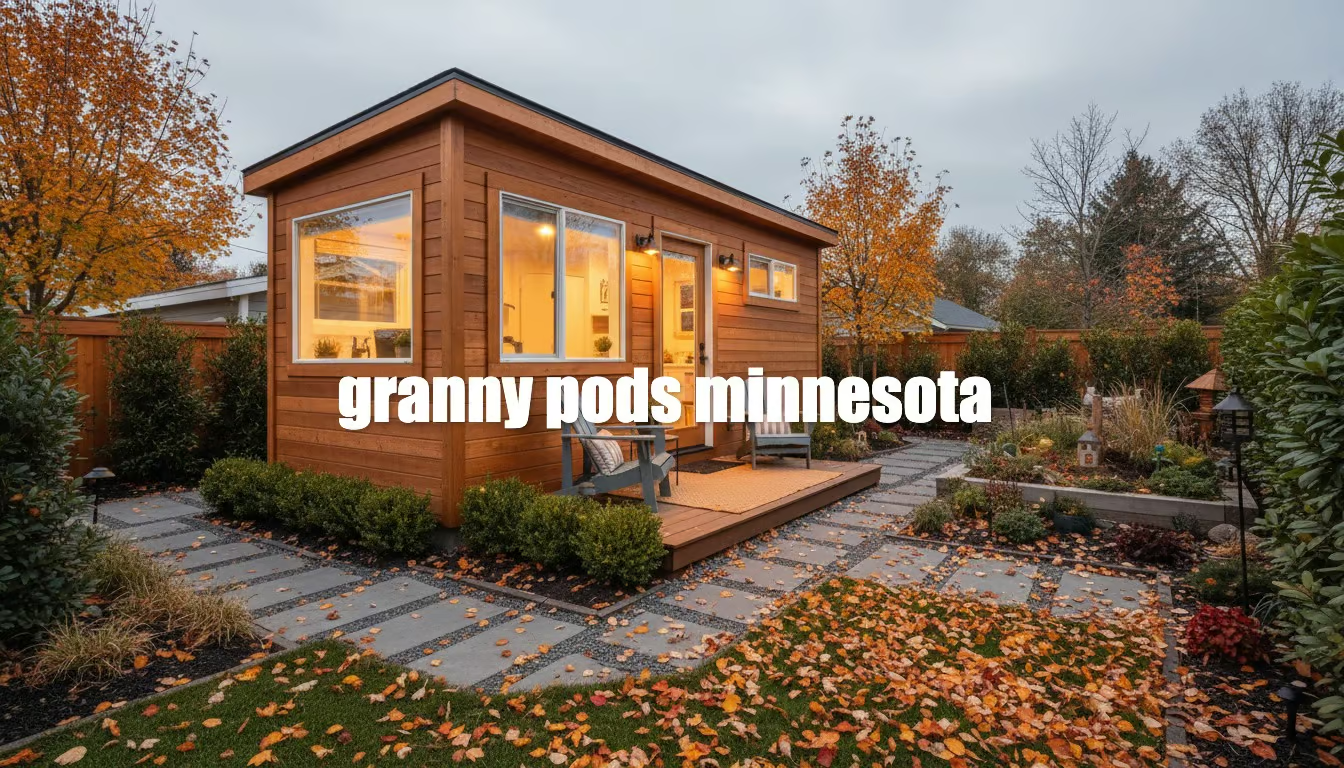
Minnesota allows granny pods as accessory dwelling units (ADUs) in most residential zones, governed by the Minnesota State Building Code and local ordinances. Regulations vary by county and city, with common requirements including minimum lot sizes of 0.25 acres, maximum sizes up to 1,000 square feet, and compliance with setbacks and utilities. Detached units are permitted in urban areas like Minneapolis and St. Paul, but rural counties may impose stricter rules or require case-by-case approvals.
As you consider ways to care for your aging family members in Minnesota, granny pods offer a practical and compassionate solution. These compact living spaces allow your loved ones to stay nearby, providing the support they need without sacrificing their autonomy. With Minnesota’s growing senior population and the challenges of harsh winters, understanding granny pods can help you make informed decisions for your family’s well-being.
In the context of Minnesota’s unique housing landscape, where family ties run deep and weather demands resilient designs, granny pods align perfectly with your desire for affordable, independent elder care. Companies like Great Lakes Tiny Homes specialize in tiny houses that function as granny pods, offering customizable options that meet local needs and build trust through quality craftsmanship. As a full-service manufacturer of modular, park model, and tiny homes, Great Lakes Tiny Homes delivers turnkey builds to all 48 lower U.S. states, with options with or without wheels and with or without RVIA certification—models with RVIA certification are often known as park models. If you’re ready to explore your options, book a call with our experts.
Disclaimer: This article is for informational purposes only and does not constitute legal advice. Laws, regulations, and zoning rules vary by location and may change over time. Always consult your local zoning office or a qualified land use/zoning attorney before making decisions based on this information.
What Are Granny Pods?
You might be wondering what exactly granny pods are and why they’re gaining traction in Minnesota. Granny pods are small, detached dwelling units designed specifically for aging relatives, allowing them to live close to your family home while enjoying their own independence. These structures, often around 300 to 800 square feet, provide a private space equipped with essential amenities, making them ideal for seniors who want to age in place near loved ones.
In Minnesota, where family values emphasize keeping elders involved in daily life, granny pods are becoming popular due to the state’s aging demographic. According to recent census data, over 16% of Minnesotans are 65 or older, and this number is projected to rise significantly by 2030. The appeal lies in their affordability compared to traditional care facilities and their adaptability to Minnesota’s variable climate, ensuring your relative stays comfortable year-round. For families navigating these options, exploring tiny house builders in Minnesota can provide tailored solutions compliant with local standards.
Great Lakes Tiny Homes offers granny pod-style tiny houses that you can customize with or without wheels for mobility, and with or without RVIA certification. Models with RVIA certification are commonly known as park models, which can simplify placement on your property by complying with certain recreational vehicle standards. This flexibility lets you choose the best fit for your Minnesota lifestyle, whether you prefer a permanent foundation or a more portable option.
Historically, the concept of granny pods emerged from the need for multigenerational living, inspired by backyard cottages in other states. In Minnesota, they’ve evolved to address local concerns like energy efficiency against cold winters and zoning flexibility in suburban areas. As you explore this option, you’ll find that granny pods not only foster family closeness but also adapt to your property’s layout, whether in urban Minneapolis or rural outskirts. Recent updates to state laws, such as those encouraging ADU construction in 2025, have further streamlined approvals across the state (Minnesota Reformer, 2025).
The rise in popularity can be attributed to shifting attitudes toward elder care. You no longer have to choose between institutional living or straining your primary home’s space. Instead, granny pods provide a middle ground, with designs that incorporate modern conveniences like full kitchens and bathrooms, all scaled down for efficiency. In Minnesota’s context, where community and self-reliance are prized, these units resonate deeply with families seeking sustainable solutions.
Inside the Modern Granny Pod: Features, Design, and Purpose
When you delve into the world of modern granny pods, also known as accessory dwelling units or ADUs, you’ll discover versatile structures tailored for senior living. Typically ranging from 300 to 800 square feet, these units include essential features like a bedroom, bathroom, kitchenette, and living area, ensuring your loved one has everything needed for daily comfort. To learn more about available tiny houses for sale in Minnesota, consider how these features align with your specific needs.
Amenities often extend to energy-efficient appliances, ample natural light through large windows, and storage solutions optimized for smaller spaces. What sets granny pods apart from standard tiny homes is their focus on accessibility and safety for elderly residents. You can expect features such as non-slip flooring, lever-style door handles, and emergency call systems integrated into the design.
Different types of granny pods are available to suit your preferences and budget. Prefab models arrive pre-assembled, allowing for quick installation on your Minnesota property—ideal if you want to minimize disruption. Custom-built options let you personalize layouts, incorporating elements like built-in medical alert devices or adjustable-height counters for wheelchair users.
Converted structures, such as repurposed sheds or garages, offer a budget-friendly alternative, though they require more modifications to meet habitability standards. For elderly relatives, senior-friendly elements are crucial: zero-threshold entries prevent tripping, wider doorways accommodate mobility aids, and reinforced grab bars in bathrooms provide stability. Some designs even include smart sensors for monitoring health metrics, like fall detection or vital signs, which can give you peace of mind from afar. In areas with supportive zoning, such as those near best tiny home communities in Minnesota, these features enhance overall livability.
Unlike standard tiny homes, which prioritize minimalism for young adventurers, granny pods emphasize durability and ease of maintenance. Insulation suited to Minnesota’s cold snaps, along with heating systems that distribute warmth evenly, ensures your relative stays cozy. Ventilation systems combat humidity in summer, while durable roofing withstands snow loads. These purposeful designs make granny pods a thoughtful choice for your family’s needs, blending functionality with a sense of home.
You’ll also appreciate how these units can incorporate therapeutic elements, such as private patios for gardening or large-print controls for appliances. The overall purpose is to support independence while facilitating family oversight, creating a harmonious living arrangement that enhances quality of life for everyone involved.
Benefits of Granny Pods for Minnesota Families
For Minnesota families like yours, granny pods bring numerous advantages that align with the state’s emphasis on community and resilience. One key benefit is the proximity to family, enabling you to offer daily care and emotional support without the logistics of distant facilities. Your aging relative can attend family gatherings or receive help with meals, all while retaining their privacy. This setup is particularly valuable in Minnesota’s tight-knit communities, where maintaining close family ties is a cultural norm.
Independence remains a cornerstone, as granny pods provide a self-contained space where your loved one can maintain routines, from cooking to hobbies, fostering dignity in aging. Financially, these units offer substantial savings over nursing homes or assisted living, where average annual costs in Minnesota exceed $100,000 per the Genworth Cost of Care Survey. A granny pod, typically costing $100,000 to $150,000 from builders like Great Lakes Tiny Homes, represents a one-time investment that pays off long-term. When considering long-term ownership, checking tiny houses for sale in Minnesota can help identify cost-effective options.
Property value considerations are also significant: adding a granny pod to your Minnesota home inherently boosts its market appeal, as multigenerational living becomes more desirable. Whether you opt for a wheeled model for flexibility or a foundation-based one for permanence, the $100,000 to $150,000 expenditure retains value, unlike the ongoing expenses of assisted living, which can total hundreds of thousands over years.
Emotionally, keeping family close combats isolation, a common issue among Minnesota’s 1 million seniors. The state’s culture of neighborly support amplifies these bonds, with granny pods facilitating shared experiences like winter bonfires or summer lake outings. In Minnesota’s climate, where blizzards can isolate, having your elder nearby ensures quick assistance, reducing stress for everyone. Integrating into established tiny home communities in Minnesota can further enhance these social benefits.
Statistically, Minnesota’s aging population is booming, with projections showing a 50% increase in those over 65 by 2030, per the Minnesota Department of Health. Rising elder care costs, up 5% annually, make granny pods a savvy choice. Culturally, Minnesota’s Scandinavian roots value familial duty, making these units a natural extension of keeping elders integrated into the household fabric.
Additionally, granny pods promote health through accessible designs that encourage activity, like step-free paths to your main home. They also allow for personalized care, adapting to specific needs such as dementia-friendly layouts. Overall, for your Minnesota family, granny pods deliver peace of mind, financial prudence, and deepened connections in a state where family is paramount.
Legal Considerations for Granny Pods in Minnesota
Disclaimer: This article is for informational purposes only and does not constitute legal advice. Laws, regulations, and zoning rules vary by location and may change over time. Always consult your local zoning office or a qualified land use/zoning attorney before making decisions based on this information.
Navigating the legal landscape for granny pods in Minnesota requires your attention to state regulations, which treat them primarily as ADUs. Minnesota state law, under the Minnesota State Building Code, allows ADUs in most residential zones, but specifics vary by county and municipality (Minnesota Statutes § 462.359). Zoning laws generally permit one ADU per lot, provided it doesn’t exceed 50% of the primary home’s size. Recent 2025 legislation has expanded allowances, easing owner-occupancy rules and promoting standardized permits statewide.
Building codes mandate compliance with energy standards, especially for Minnesota’s cold climate, including R-49 insulation for ceilings. Permit requirements involve submitting site plans, engineering reports, and proof of septic capacity if not on city sewer. You must check with local planning departments, as urban areas like Minneapolis have streamlined processes via their ADU ordinance passed in 2020 and updated in subsequent years.
More accommodating counties include Hennepin and Ramsey, where cities like Minneapolis and St. Paul actively encourage ADUs to address housing shortages. Stricter areas, such as rural Itasca County, may impose larger lot size minimums or prohibit detached units altogether. Recent legislative changes, like House File 2909 in 2023 and further expansions in 2025, have made approvals more accessible (Minnesota Reformer, 2025). For professional guidance on compliance, consider consulting a tiny house builder in Minnesota.
RVIA certification offers legal benefits for park model granny pods, classifying them as RVs in some jurisdictions, which can bypass full building permits if placed temporarily. This certification ensures safety standards, making approval faster and reducing liability. In Minnesota, where frost heave is a concern, certified models with proper anchoring provide stability.
To proceed, you should consult your local zoning board early. Challenges include HOA restrictions in planned communities, but variances are often granted for family needs. By understanding these considerations, you can position your granny pod project for success in Minnesota’s evolving regulatory environment.
Which Minnesota Counties Allow Granny Pods?
To help you determine feasibility, here’s a comprehensive table outlining granny pod (ADU) allowances in key Minnesota counties. This focuses on the most populated areas with clear regulations; always verify with local authorities as rules can change. Note the added source column for verified references.
Disclaimer: This article is for informational purposes only and does not constitute legal advice. Laws, regulations, and zoning rules vary by location and may change over time. Always consult your local zoning office or a qualified land use/zoning attorney before making decisions based on this information.
| County Name | Granny Pod Status | Minimum Lot Size Requirements | Maximum Size Allowed | Special Notes | Source |
|---|---|---|---|---|---|
| Hennepin (Minneapolis) | Allowed | 0.25 acres | 1,000 sq ft | Minneapolis city ordinance supports detached ADUs; no owner-occupancy required since 2020. Utilities must connect to main home. | Minneapolis ADU Ordinance (2016, updated) |
| Ramsey (St. Paul) | Allowed | 0.2 acres | 800 sq ft | St. Paul permits up to two ADUs per lot; streamlined permitting for seniors. Check for historic district restrictions. | St. Paul ADU Page |
| Dakota | Case-by-Case | 1 acre | 900 sq ft | Allowed in rural zones; urban areas like Eagan require variance. Septic approval needed for non-sewered lots. | Dakota County ADU Guide (2023) |
| Anoka | Restricted | 2 acres | 600 sq ft | Only attached ADUs in cities like Coon Rapids; detached require special use permit. Focus on family caregiver justification. | Columbia Heights ADU (Anoka County) |
| Olmsted (Rochester) | Allowed | 0.5 acres | 1,200 sq ft | Rochester’s progressive policy includes height limits (20 ft); energy code compliance emphasized. | Rochester ADU Page |
| Stearns (St. Cloud) | Case-by-Case | 1.5 acres | 700 sq ft | Permits issued for accessory uses; winter set-back from property lines required to avoid snow drift issues. | Stearns County Permits |
For major counties like Hennepin, Minneapolis specifics include no minimum size but caps at 1,000 sq ft, with incentives for affordable units. In Ramsey, St. Paul’s program offers fee waivers for ADUs under 800 sq ft. This table equips you to research further, ensuring your granny pod fits local rules. Remember to verify with official sources, as regulations continue to evolve with state initiatives promoting ADUs.
Granny Pods in Major Minnesota Cities
Minnesota’s major cities have developed specific ordinances for granny pods to accommodate urban density and housing needs. These local rules often build on state guidelines, providing clearer paths for approvals in populated areas. Understanding city-specific requirements can streamline your planning process and ensure compliance from the start.
Minneapolis, in Hennepin County, has one of the most progressive ADU programs in the state, allowing detached granny pods up to 1,000 square feet on lots as small as 0.25 acres. The city’s 2020 ordinance eliminated owner-occupancy requirements, making it easier for families to add these units without residing in the primary home. Key considerations include connecting utilities to the main residence and adhering to setbacks of at least five feet from property lines. For those interested in urban installations, contacting the Minneapolis Community Planning and Economic Development department is essential, as they offer resources for permit applications and design reviews (Minneapolis ADU Ordinance). This approach supports multigenerational living in a bustling metro environment.
St. Paul, located in Ramsey County, permits up to two ADUs per lot, with a maximum size of 800 square feet or 75% of the primary dwelling’s footprint. Recent updates allow for more flexible placements, including interior attached units, to maximize space in historic neighborhoods. Owners must ensure the structure meets the Minnesota State Building Code for habitability, including proper insulation and ventilation. The city’s Safety and Inspections Division handles permitting, often with expedited reviews for senior housing projects (St. Paul ADU Guidelines). These provisions reflect St. Paul’s commitment to affordable housing solutions amid growing demand.
Rochester, in Olmsted County, supports detached granny pods in rear or side yards, with size limits up to 1,200 square feet on lots of at least 0.5 acres. The city emphasizes architectural compatibility with the primary home and requires compliance with height restrictions of 20 feet. A pilot program launched in 2023 provides application support for families, focusing on accessibility features for elders. Contact the Rochester Community Development department for site-specific advice, as floodplain considerations may apply in certain areas (Rochester ADU Page). This framework aids Rochester’s aging population while preserving neighborhood aesthetics.
Duluth, in St. Louis County, allows granny pods as ADUs with a focus on year-round habitability given the city’s harsh winters. Units must provide complete living facilities and cannot exceed standards set by local zoning, typically around 800 square feet. Detached structures require land use permits, with emphasis on setbacks to accommodate snow accumulation. The Duluth Planning and Economic Development office oversees approvals, encouraging designs that integrate with natural surroundings (Duluth ADU Handout, 2020, updated). Duluth’s regulations balance environmental concerns with family care needs.
Eagan, in Dakota County, handles granny pods on a case-by-case basis, requiring registration and limiting occupancy to two persons with no more than two bedrooms. Maximum size is 960 square feet or 33% of the primary home, whichever is less, on lots of at least one acre in rural zones. Septic approvals are mandatory for non-sewered properties, and variances may be needed in urban settings. Reach out to Eagan’s Community Development for guidance, as the city aligns with county-wide initiatives (Eagan ADU Registration). These rules promote sustainable growth in the Twin Cities suburbs.
Granny Pod Prices in Minnesota
Granny pod prices in Minnesota vary significantly based on several factors, including the unit’s size, whether it’s built on a foundation or wheels, RVIA certification status, utility hookups, and adherence to local codes and zoning requirements. Smaller prefab models start around $80,000 for basic 300-square-foot units, while larger custom builds can exceed $200,000 when incorporating advanced accessibility features and high-end finishes. Foundation-based installations add costs for site preparation and permits, particularly in areas prone to frost heave, whereas wheeled options offer mobility but may face zoning restrictions for permanent residency. Utility connections, such as electrical and septic tie-ins, can increase expenses by $10,000 to $25,000 depending on whether your property is in a rural or urban setting. Local building codes often mandate energy-efficient materials to withstand Minnesota’s climate, influencing material choices and overall budgeting. Families should factor in ongoing maintenance, like annual inspections for insulation integrity, to ensure long-term value.
Great Lakes Tiny Homes provides competitive pricing for granny pod-style builds, ranging from $100,000 to $150,000 for turnkey deliveries that include customization for senior living. This range covers high-quality construction suited to Minnesota’s weather, with options for modular assembly to reduce on-site disruption. Their full-service approach handles design through installation, ensuring compliance with state and local standards while keeping costs transparent. Delivery to any of the lower 48 states means no hidden fees for transportation, making it a reliable choice for Minnesota families.
Great Lakes Tiny Homes Model Options
- Modular Homes – Ideal for permanent foundations in zoned areas, offering quick assembly and scalability for granny pod needs.
- A-Frame – Compact and efficient designs that maximize space vertically, suitable for sloped Minnesota terrains.
- Cabin – Rustic yet modern styles with strong insulation, perfect for blending into suburban or rural properties.
- Park Models – RVIA-certified options for easier permitting in restrictive zones, emphasizing mobility without compromising comfort.
- Tiny House on Wheels – Portable solutions for temporary or flexible placements, though zoning may limit long-term use as residences.
Choosing the right model depends on your local zoning—foundation-based units like modular homes suit permanent ADU approvals, while wheeled park models offer versatility in case-by-case counties. This selection ensures your granny pod meets both family needs and regulatory demands. Zoning impacts, such as lot size minimums or setback rules, directly influence which model fits best, so early consultation with local planners is advisable. If you’d like personalized advice on selecting a model for your Minnesota property, book a call with our experts.
The Granny Pod Installation Process in Minnesota
Installing a granny pod in Minnesota follows a structured process to ensure compliance and durability. First, research local zoning laws: contact your county planner to confirm ADU allowances, using tools like Minnesota’s zoning map portal. This step, taking 2-4 weeks, helps you avoid setbacks. Incorporating insights from experienced tiny house builders in Minnesota can expedite this phase.
Next, obtain permits: submit applications with blueprints and environmental assessments, budgeting 4-8 weeks for approval. Fees vary, but Hennepin County processes efficiently. Site preparation comes third: clear and level the area, considering Minnesota’s clay soils and slopes. For winter installations, schedule during milder months to prevent frozen ground issues.
Utility connections are critical, especially for Minnesota’s winters: extend power lines with buried conduits to resist freezing, and insulate water lines. Septic upgrades may be needed, costing extra in northern counties. Delivery and installation, for prefab units, take 1-2 days, with cranes for placement.
Final inspections verify code adherence, including smoke detectors and egress windows. Potential challenges include permitting delays in stricter municipalities or weather-related postponements—plan for spring starts. With careful steps, your granny pod will be ready, providing a secure space for your loved one. Exploring tiny houses for sale in Minnesota during this process can align your timeline with available models.
Design Considerations for Minnesota Granny Pods
Designing your granny pod for Minnesota means prioritizing weatherproofing against four distinct seasons. Opt for high R-value insulation and triple-pane windows to retain heat during sub-zero winters, while reflective roofing combats summer humidity. Energy efficiency, through solar-ready panels or geothermal systems, lowers your utility bills in a state with high heating demands. Designs that fit within tiny home communities in Minnesota often incorporate these elements for seamless integration.
Accessibility is key: incorporate zero-step entries, 36-inch doorways, and grab bars in baths to support aging in place. Smart home tech, like voice-activated lights or remote thermostats, allows you to monitor comfort levels effortlessly. At Great Lakes Tiny Homes, the team takes a personal approach to understand your vision.
You’re always welcome to schedule site visits, tour their shop or available models, and meet the team—book calls or visits directly through the website. The team is eager to help you take the next step toward your dream home, ensuring every detail fits your family’s needs. Utility connections should be seamless, with dedicated meters if required, and aesthetics that blend with your main home, perhaps using matching siding.
Consider terrain: elevated foundations prevent flooding in low-lying areas. Indoor-outdoor flow, via covered porches, encourages family interaction despite weather. These elements create a resilient, inviting space tailored to Minnesota’s environment and your priorities. For custom designs, partnering with a local tiny house builder in Minnesota ensures optimal adaptation to site-specific challenges.
Finding Expert Guidance for Your Project
When embarking on a granny pod project in Minnesota, partnering with experienced professionals ensures success amid local nuances. Experts familiar with state codes can guide you through zoning variances and climate-specific builds, avoiding costly errors. This expertise is crucial for navigating the diverse regulations across counties.
Great Lakes Tiny Homes emerges as a trusted local option, with deep knowledge of Minnesota regulations for quality granny pods. Their expertise in local building codes allows for seamless customization, from accessible layouts to energy-efficient features, all while committing to comfortable spaces for aging family members. When selecting a partner, review options among tiny house builders in Minnesota to find the best match.
To discuss your specific needs, consider scheduling a consultation with Great Lakes Tiny Homes—they’re a valuable resource for informed decisions. Ready to explore your options? Book a call with our experts who’ve helped hundreds of customers make their tiny home dreams a reality.
Frequently Asked Questions About Granny Pods in Minnesota
Are granny pods legal in all parts of Minnesota?
Granny pods aren’t legal uniformly across Minnesota; regulations vary by location. Statewide, ADUs are permitted under Minnesota Statutes Section 462.359, but counties and cities enforce specifics (Minnesota Statutes). Urban areas like Minneapolis and St. Paul have permissive ordinances allowing detached units on most lots. Rural counties may restrict them to attached forms or require minimum lot sizes of 2+ acres. HOAs can add barriers, though family caregiver exemptions often apply. Recent laws like the 2023 ADU bill and 2025 updates promote consistency, but you must verify with your local planning office; consult professionals for current rules.
Can I install a granny pod on any size property in Minnesota?
No, property size impacts granny pod installation in Minnesota. Most counties require at least 0.25 acres for residential zones, with rural areas demanding 1-5 acres to support septic systems. In dense urban settings like parts of Hennepin County, smaller lots (under 10,000 sq ft) may qualify if sewered. Regulations ensure adequate space for setbacks—typically 5-10 feet from property lines—and utilities. If your lot is undersized, consider attached ADUs or seek variances, common for senior care. Assess your lot via county GIS maps, and discuss with builders to confirm feasibility before proceeding; always check local zoning for updates.
Do I need special insurance for a granny pod?
Yes, special insurance considerations apply for granny pods in Minnesota. Standard homeowners’ policies cover them as detached structures up to $10,000 for personal property, but habitability requires additional dwelling coverage or a separate policy, costing $300-$1,000 annually. For occupied units, liability and contents insurance protect against accidents or theft. If financed, lenders may mandate builder’s risk during construction. Minnesota’s weather risks, like hail or floods, warrant endorsements for those perils. Shop providers like State Farm or Allstate, who offer ADU riders; consult an agent to tailor coverage to your setup, ensuring full protection for your investment and occupants.
Can I rent out my granny pod in Minnesota?
Renting out a granny pod in Minnesota is possible but regulated. State law allows ADUs as rental units if they meet habitability standards, but local zoning often prioritizes owner or family use. Cities like Minneapolis permit short-term rentals under certain conditions, while others ban them to preserve housing stock. You’ll need a rental license, inspections for safety, and compliance with lead-free paint rules. Income from rentals may affect property taxes or qualify for homestead exemptions if family-occupied primarily. In rural counties, restrictions are tighter, focusing on accessory rather than income-generating use; if renting to non-family, disclose utilities and prepare for tenant rights under Minnesota statutes—always check ordinances to avoid fines.
How do wheels versus foundation affect granny pod placement in Minnesota?
Wheeled granny pods, often classified as RVs or park models with RVIA certification, offer mobility and may simplify temporary placements but face restrictions for permanent residency in many zones. Foundation-based units are treated as permanent ADUs, requiring full building permits and compliance with local codes, which is preferable in urban areas like St. Paul. Wheels can bypass some foundation costs but need anchoring against Minnesota’s winds and frost; foundations provide stability but add $10,000-$30,000 in expenses. Zoning often favors foundations for detached structures over 400 sq ft. Choose based on your county’s rules—wheeled for flexibility in case-by-case approvals, foundation for long-term security; consult local planners early.
What are the minimum size requirements for granny pods in Minnesota?
Minimum size for granny pods in Minnesota typically starts at 200-300 square feet to meet habitability standards under the state building code, ensuring space for essential amenities like a kitchenette and bathroom. Cities like Eagan require at least 300 sq ft, while others like Minneapolis have no strict minimum but emphasize functionality. These thresholds support safe, livable conditions without excessive expansion on small lots. Larger minimums in rural areas account for septic and utility needs. Verify with your local ordinance, as sizes below 200 sq ft may not qualify as dwellings; professional builders can optimize layouts within limits.
Conclusion: Creating a Supportive Home for Your Loved Ones
In Minnesota, granny pods empower you to create a supportive environment where your loved ones thrive close by, balancing independence with care. This choice honors family bonds, offering dignity and joy in daily life beyond mere shelter. With evolving regulations and affordable options, these units provide a forward-thinking solution for the state’s aging population.
Local expertise, such as from Great Lakes Tiny Homes, streamlines the journey, turning vision into reality. With their experience delivering turnkey modular and park model homes across the lower 48 U.S. states, they provide a reliable option for your granny pod needs, ensuring quality and compliance wherever you are. Take that first step today toward a warmer, more connected future for your family by booking a call with our experts.