
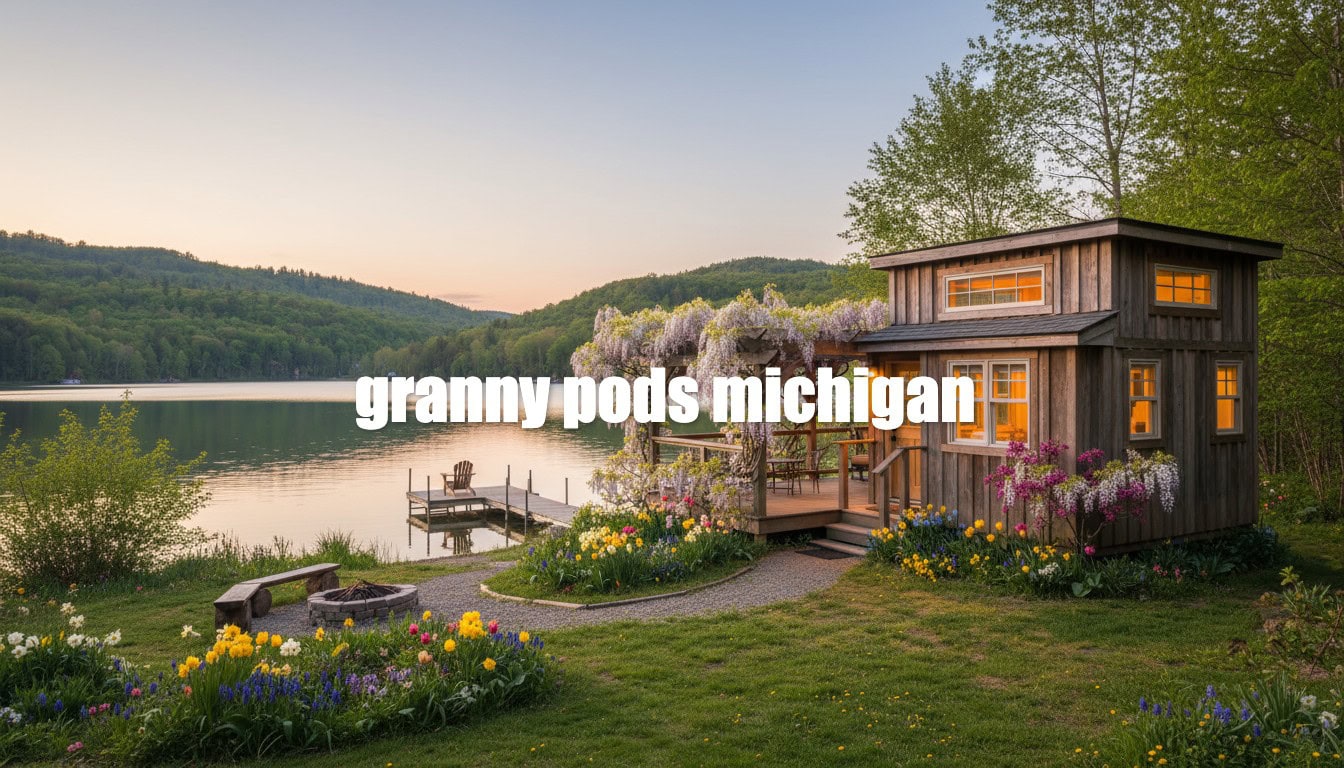
Michigan permits granny pods, known as accessory dwelling units (ADUs), in many counties and cities under local zoning laws, typically allowing sizes up to 800 square feet with requirements for setbacks, utilities, and owner occupancy in some areas. Regulations vary by locality, with progressive places like Ann Arbor and Oakland County offering straightforward approvals, while others like Detroit impose restrictions or require special permits. Always verify with your local planning department, as state-level bills like HB 5585 aim to ease statewide restrictions by 2026.
As families in Michigan grapple with the realities of aging in place amid the state’s diverse landscapes and economic landscape, granny pods emerge as a viable solution for keeping loved ones close. These compact, self-contained units provide elderly relatives with independence while allowing caregivers to offer timely support, particularly during the long winters that characterize much of the Mitten State. From urban centers like Detroit to rural retreats in the Upper Peninsula, granny pods adapt to Michigan’s unique needs, blending affordability with functionality. This guide explores everything from legal considerations to design tips, helping you navigate the process of integrating a granny pod into your property.
Understanding the nuances of granny pods in Michigan involves looking at local zoning, building codes, and practical implementation. With Michigan’s population over 65 projected to grow significantly by 2030, these units address a pressing need for multigenerational housing options. Great Lakes Tiny Homes specializes in full-service manufacturing of modular, park model, and tiny homes, delivering turnkey builds to all 48 lower U.S. states. Their offerings include options with or without wheels and with or without RVIA certification, where certified models are often classified as park models to simplify regulatory compliance. If you’re ready to explore customized solutions for your Michigan property, book a call with our experts to discuss your needs.
Disclaimer: This article is for informational purposes only and does not constitute legal advice. Laws, regulations, and zoning rules vary by location and may change over time. Always consult your local zoning office or a qualified land use/zoning attorney before making decisions based on this information.
What Are Granny Pods?
Granny pods, often referred to as accessory dwelling units (ADUs), are small, independent living spaces designed for elderly family members, enabling them to reside on your property while maintaining privacy and autonomy. In Michigan, these units typically range from 300 to 800 square feet and can include essential features like a bedroom, bathroom, kitchenette, and living area. They differ from traditional tiny homes by emphasizing accessibility and senior-specific adaptations, such as ramps and medical alert systems, to support aging in place. As Michigan’s senior population exceeds 2 million, granny pods offer a compassionate response to the challenges of elder care in a state with vast rural areas and urban hubs.
The popularity of granny pods in Michigan stems from the state’s strong family-oriented culture and the economic pressures of long-term care facilities. According to U.S. Census data, over 77% of seniors prefer to age at home, and these units facilitate that preference without the high costs of institutional living. Great Lakes Tiny Homes provides versatile options, including wheeled models for mobility and permanent park models with RVIA certification, which can ease zoning compliance by classifying them as RVs in certain areas. For available models suited to Michigan properties, consider exploring tiny houses for sale in Michigan.
Customization allows granny pods to fit seamlessly into Michigan’s varied terrains, from lakefront lots in Traverse City to suburban yards in Oakland County. This flexibility ensures the unit not only meets regulatory standards but also enhances family dynamics during seasonal changes. By choosing a reputable builder familiar with local codes, you can avoid common pitfalls and create a space that promotes dignity and comfort for your loved one.
Inside the Modern Granny Pod: Features, Design, and Purpose
Modern granny pods function as secondary residences on your property, tailored for seniors with a focus on safety and convenience in Michigan’s fluctuating climate. Spanning 300 to 800 square feet, they incorporate compact yet complete amenities, including sleeping quarters, sanitation facilities, a small cooking area, and communal space. Unlike recreational tiny homes, these units prioritize health-oriented designs, such as antimicrobial surfaces and air quality systems to handle indoor humidity from Great Lakes influences.
Available in prefab, custom, or converted formats, granny pods offer installation speed and personalization. Prefab versions assemble quickly, reducing disruption, while custom builds can integrate Michigan-specific reinforcements like superior insulation against sub-zero temperatures. Senior-friendly elements are core: zero-threshold entrances prevent falls, expansive hallways accommodate mobility aids, and strategic grab bars enhance bathroom security. Advanced integrations, like remote health monitors linked to family devices, provide reassurance without invading privacy.
Practical additions include slip-resistant floors, ergonomic fixtures, and energy-saving tech to manage utility costs in a state with variable weather. Open layouts optimize limited space, and optional lofts with access ramps maintain separation from the main house. For off-grid rural sites in the Upper Peninsula, features like solar power and eco-toilets promote sustainability. To connect with builders experienced in these adaptations, visit tiny house builders in Michigan.
These designs not only comply with Michigan’s building standards but also foster emotional well-being by allowing seniors to retain routines in a familiar setting. Thoughtful planning ensures the pod withstands lake-effect snow and summer humidity, creating a resilient haven year-round.
Benefits of Granny Pods for Michigan Families
Granny pods deliver proximity for hands-on care, enabling quick assistance with daily tasks like meals or medication in Michigan’s expansive geography. This setup minimizes travel burdens between cities such as Grand Rapids and Lansing, strengthening family ties. For seniors, the private entrance and personal space preserve autonomy, aligning with AARP findings that 77% of those over 50 favor home-based aging.
Economically, granny pods outperform assisted living, where Michigan averages surpass $50,000 annually per Genworth’s latest reports, against a one-time pod investment of $100,000 to $150,000. This shift yields long-term savings and potential property value boosts of 10-20% in ADU-friendly markets. Emotionally, reduced isolation benefits the state’s 1.8 million seniors, as highlighted in health department analyses, while insulated builds cut heating expenses during harsh winters.
Culturally, Michigan’s multigenerational traditions amplify these advantages, making pods ideal for holiday gatherings and ongoing support. With demographic shifts forecasting a 25% senior increase by 2030, granny pods position families for sustainable care solutions. Explore community examples at best tiny home communities in Michigan to see real-world integrations.
Overall, the investment in a granny pod safeguards finances and honors familial bonds, transforming potential challenges into opportunities for closeness in the Great Lakes region.
Legal Considerations for Granny Pods in Michigan
Disclaimer: This article is for informational purposes only and does not constitute legal advice. Laws, regulations, and zoning rules vary by location and may change over time. Always consult your local zoning office or a qualified land use/zoning attorney before making decisions based on this information.
Michigan’s framework for granny pods relies on the Michigan Zoning Enabling Act, treating them as ADUs on single-family lots, but implementation hinges on local ordinances. State building codes, aligned with the International Building Code, enforce safety in electrical, plumbing, and construction, accounting for wind and frost factors. Permits demand detailed submissions, including site evaluations and utility proofs, with timelines fluctuating from weeks to months based on jurisdiction.
Counties like Oakland and Washtenaw facilitate ADUs in residential zones with caps around 800 square feet, while urban Detroit in Wayne County favors attached variants or requires variances. A 2023 proposal, House Bill 4025, sought uniform statewide standards, and by 2026, HB 5585 further modifies ADU and mobile home restrictions to promote accessibility.Michigan HB 5585 – BillTrack50 RVIA certification aids navigation by categorizing park models as RVs, often sidestepping rigorous inspections in constrained zones.
Insurance and tax aspects also apply: ADUs may qualify for abatements in supportive areas, but occupancy alters coverage needs. For zoning insights, reference what counties in Michigan allow tiny houses. Community resources include best tiny home communities in Michigan.
To advance your project, book a call with our experts for tailored regulatory guidance.
Recent Developments in Michigan ADU Laws
Michigan’s evolving landscape for accessory dwelling units reflects growing recognition of housing shortages and elder care demands, with recent legislative actions aiming to streamline approvals. House Bill 5585, introduced in 2026, amends the Zoning Enabling Act to reduce barriers for ADUs and mobile homes, potentially allowing more flexible placements without stringent owner-occupancy rules in select areas. This builds on prior efforts like HB 4025, which sought to standardize processes across municipalities, responding to the state’s aging demographic and urban-rural divides. Local governments, such as those in Kent and Washtenaw Counties, have begun updating ordinances to align with these changes, facilitating easier integration of granny pods on family properties.
These developments emphasize affordability and accessibility, with provisions for size adjustments and utility connections that accommodate Michigan’s climate challenges. For instance, updated codes now often permit detached units up to 900 square feet in progressive zones, provided they meet setback and environmental standards. Builders and families benefit from clearer guidelines, reducing permit delays that previously averaged months in restrictive counties. However, implementation varies, underscoring the need for site-specific consultations to leverage these advancements effectively.
Looking ahead, ongoing task forces in cities like Grand Rapids recommend further relaxations, such as excluding non-living spaces from size calculations to encourage innovative designs. This progressive shift not only supports multigenerational living but also boosts property values in compliant areas. As these laws mature, granny pods stand to become a cornerstone of Michigan’s housing strategy, blending compassion with practicality for families statewide.
Which Michigan Counties Allow Granny Pods?
Granny pod permissions in Michigan depend on county-specific zoning, with a mix of allowances, restrictions, and case-by-case evaluations. The table below outlines regulations for key populated counties, aiding initial assessments. Note that details can evolve, so direct verification with county offices is essential.
| County Name | Granny Pod Status | Minimum Lot Size Requirements | Maximum Size Allowed | Key Requirements | Source |
|---|---|---|---|---|---|
| Wayne (Detroit) | Restricted | 0.5 acres | 600 sq ft | Special use permit required; attached ADUs preferred in urban zones; historic district rules apply. | City of Detroit Zoning Analytic |
| Oakland | Allowed | 1 acre | 800 sq ft | Progressive in cities like Troy; RVIA-certified models exempt from some codes; suburban permitting straightforward. | Local zoning office (Oakland County) |
| Macomb | Case-by-Case | 0.75 acres | 500 sq ft | Variances needed in Warren and Sterling Heights; utility connections emphasized; stricter in flood zones. | Local zoning office (Macomb County) |
| Kent (Grand Rapids) | Allowed | 0.25 acres | 750 sq ft | Encouraged for affordability; no owner-occupancy required; setback regulations apply.Grand Rapids ADU Task Force | |
| Genesee (Flint) | Restricted | 1 acre | 400 sq ft | Limited approvals; environmental reviews due to industrial legacy; health department approval needed. | Local zoning office (Genesee County) |
| Washtenaw (Ann Arbor) | Allowed | 0.5 acres | 900 sq ft | Supports detached units; green build incentives; influenced by university housing policies.City of Ann Arbor ADUs | |
| Otsego (Gaylord) | Case-by-Case | 2 acres | 600 sq ft | Rural flexibility in northern Michigan; septic permits essential; suitable for wheeled models. | Local zoning office (Otsego County) |
This overview highlights variations, such as Wayne County’s urban constraints versus Washtenaw’s inclusivity. For example, Detroit’s rules prioritize community impact with neighbor notifications, while Oakland’s updates favor family homes. Deeper research via what counties in Michigan allow tiny houses is recommended. Builder options are available at tiny house builders in Michigan.
Disclaimer: Regulations are subject to change; consult local authorities for current details.
Granny Pods in Major Michigan Cities
Detroit (Wayne County)
Detroit’s zoning currently restricts new detached granny pods in single-family areas, favoring attached ADUs or special permits for innovative housing.City of Detroit Zoning Analytic Applications require site plans and community reviews, with size limits at 600 sq ft on 0.5-acre lots. The city’s Buildings, Safety Engineering, and Environmental Department handles permits; contact them at (313) 224-0564 for guidance. Recent urban revitalization efforts may loosen rules, but historic districts add layers of approval.
Unique to Detroit, granny pods can support affordable housing initiatives amid the city’s comeback, but flood-prone zones demand elevated foundations. Families benefit from proximity in dense neighborhoods, though variances are common for detached units. Always engage the planning department early to navigate these complexities.
Grand Rapids (Kent County)
Grand Rapids embraces granny pods through ADU-friendly zoning, allowing up to 750 sq ft on 0.25-acre lots without owner-occupancy mandates.Grand Rapids ADU Task Force Recommendations The Planning Department, reachable at (616) 456-4100, processes applications emphasizing affordability. Setbacks and utility ties are key, with task force proposals potentially raising size caps to 850 sq ft by excluding non-living areas.
This city’s progressive stance aligns with its vibrant economy, making granny pods ideal for multigenerational setups near breweries and trails. Environmental reviews ensure compliance with local codes, and incentives for green features encourage sustainable builds. Consult the department for tailored advice on your lot.
Ann Arbor (Washtenaw County)
Ann Arbor permits detached granny pods up to 900 sq ft on 0.5-acre properties, with zoning supporting inclusive housing influenced by the university community.City of Ann Arbor Accessory Dwelling Units The Community Development Department, at (734) 794-6265, oversees permits focusing on accessibility and setbacks. Incentives for eco-friendly designs, like solar integration, are available to offset Michigan’s energy costs.
The city’s innovative spirit facilitates quick approvals, often within weeks, for units that enhance neighborhood diversity. Families appreciate the blend of independence and support in this walkable, educated locale. Verify specifics with planners to align with evolving ordinances.
Lansing (Ingham County)
Lansing allows granny pods as ADUs in residential zones, with max sizes around 800 sq ft and min lots of 0.5 acres, per local codes. The Planning and Development Department, contactable at (517) 483-4196, requires utility proofs and design reviews. State capital influences promote flexible rules for family housing.
Proximity to government resources aids permit processes, though floodplain considerations apply near the Grand River. These units support Lansing’s growth in affordable options, balancing urban access with private living. Engage officials for site evaluations.
Flint (Genesee County)
Flint restricts granny pods to 400 sq ft on 1-acre lots, necessitating environmental health approvals due to historical concerns.City of Flint Planning The Planning Division at (810) 410-1130 handles applications, emphasizing safe water and soil tests. Revitalization programs may offer grants for compliant builds.
Despite challenges, granny pods aid community recovery by keeping families intact. Stricter reviews ensure durability, but approvals are feasible with proper documentation. Consult the department for updates.
Disclaimer: City-specific rules evolve; contact departments directly for authoritative information.
Granny Pod Prices in Michigan
Granny pod costs in Michigan fluctuate based on size, mobility features like wheels versus foundations, RVIA certification status, utility integrations, and adherence to local codes. Basic 300 sq ft prefabs start at $50,000, escalating to $150,000+ for customized 800 sq ft units with senior adaptations. Wheeled options reduce site prep expenses under $10,000, ideal for Michigan’s uneven terrains, while permanent foundations add $15,000+ for frost resistance. Utility hookups range $10,000-$30,000, higher in remote areas without infrastructure, and permits contribute $2,000-$5,000. Compared to assisted living’s $48,000+ yearly average, pods recoup investments in 2-3 years, per state data. Zoning impacts final pricing, as compliant designs avoid variance fees.
Financing via home equity loans at 6-8% or aging-in-place grants eases upfront burdens, with insurance hikes of 10-20% offset by RV coverage for certified models. Tax benefits, like abatements in ADU-supportive counties, further enhance value. For sales, see tiny houses for sale in Michigan. These factors make granny pods a strategic choice for Michigan’s variable economy and climate.
Great Lakes Tiny Homes Pricing
Great Lakes Tiny Homes offers granny pods in the $100,000–$150,000 range, encompassing turnkey delivery and customization for Michigan’s regulations. This pricing covers high-quality builds with options for wheels or foundations, ensuring compliance and durability. Full-service support includes site assessments and permit assistance, delivering value through efficient manufacturing and nationwide shipping to the lower 48 states.
Great Lakes Tiny Homes Model Options
- Modular Homes – Quick assembly for permanent setups, ideal for stable foundations in urban Michigan zones.
- A-Frame – Compact, peaked designs suited to snowy regions, with zoning flexibility for sloped lots.
- Cabin – Rustic aesthetics blending with Michigan’s wooded properties, customizable for accessibility.
- Park Models – RVIA-certified for easier approvals as temporary structures in restrictive areas.
- Tiny House on Wheels – Mobile options for relocatable granny pods, navigating varied county rules.
Model selection should align with local zoning—wheeled or certified units often bypass foundation mandates in case-by-case counties. This approach ensures regulatory fit while meeting family needs. For personalized recommendations, book a call with our experts.
Disclaimer: Prices are estimates and subject to customization, location, and market changes; consult builders for quotes.
The Granny Pod Installation Process in Michigan
The installation of a granny pod in Michigan begins with zoning verification using resources like what counties in Michigan allow tiny houses to confirm lot suitability. Subsequent permit applications to townships include blueprints and assessments, typically spanning 4-8 weeks with associated fees. Michigan’s terrain necessitates thorough site prep, such as clearing and soil testing for frost protection, especially in northern counties.
Utility linkages demand winter-proofing, like insulated lines to main systems or standalone septic setups per NEC standards. Delivery for prefabs occurs via truck and crane in 1-2 days, while custom on-site work extends to weeks. Total timelines range 2-6 months, best scheduled for non-winter periods to evade delays. Coastal elevations address flooding risks.
Inspections finalize plumbing, electrical, and structural compliance, with local experts streamlining Great Lakes adaptations. For support networks, review best tiny home communities in Michigan. This methodical process yields a secure, code-adherent addition to your home.
Design Considerations for Michigan Granny Pods
Michigan-specific designs for granny pods emphasize resilience against seasonal extremes, incorporating R-40 insulation and durable metal roofs for 50-inch snow accumulations in the Upper Peninsula. Fiber cement siding withstands lakeside humidity, while triple-pane windows and heat pumps slash winter heating by 30%. Solar compatibility harnesses summer sun, promoting eco-efficiency in a state with frequent outages.
Accessibility drives features like ramped entries, 36-inch corridors, and automated controls for mobility-impaired users. Smart systems, including thermostats and sensors, enable remote oversight via apps. Utilities integrate with primary septic or grid, backed by generators for storms. Aesthetics match main homes for harmony, suiting windy shores or forested interiors. Builder insights at tiny house builders in Michigan refine these elements.
Holistic planning creates inviting, enduring spaces that honor Michigan’s environmental diversity and family priorities.
Finding Expert Guidance for Your Project
Professional input is crucial for Michigan granny pods, given zoning intricacies and climate demands; experts prevent errors and ensure code alignment. Builders versed in local variances deliver compliant, family-centric designs without rework expenses. Great Lakes Tiny Homes excels in Michigan-tailored solutions, from accessibility enhancements to efficient configurations.
Their regulatory knowledge facilitates seamless customizations, prioritizing winter durability and utility resilience. Consultations match budgets and sites, establishing them as a dependable partner. Schedule a discussion to advance your vision effectively. Book a call with our experts.
For broader options, check tiny houses for sale in Michigan.
FAQ
Are granny pods legal in all parts of Michigan?
Granny pods are not uniformly legal across Michigan, as ADUs fall under local zoning rather than statewide mandates. Areas like Ann Arbor allow them readily, while others require variances; RVIA models provide alternatives in tight spots.City of Ann Arbor ADUs Recent bills like HB 5585 seek standardization, but consult your municipality for current rules.
Wheels vs. foundation: Which is better for granny pods in Michigan?
Wheeled granny pods offer mobility and simpler zoning as RVs, suiting flexible sites, but foundations provide permanence against frost heave. Choice depends on county regs—wheeled for rural leniency, fixed for urban stability. Both require utility compliance; professional assessment guides the decision.
What is the minimum size for a granny pod in Michigan?
Minimum sizes vary, often 300 sq ft for habitability under building codes, but locals may impose higher thresholds like 400 sq ft in restricted zones. Efficiency standards ensure livability; check ordinances for specifics. Designs maximize space regardless of baseline.
Where can I place a granny pod on my Michigan property?
Placement follows setbacks—typically 5-10 feet from property lines and structures—with rear or side yards preferred. Lot size minima range 0.25-2 acres; avoid front yards and easements. Site plans must address drainage and access; local planners approve final spots.
What permits and utilities are needed for granny pods in Michigan?
Permits include zoning compliance, building, and septic approvals, submitted with engineering docs; costs $2,000-$5,000. Utilities tie to mains or install independently, insulated for freezes. Inspections verify safety; timeline 4-8 weeks. Disclaimer: Verify with authorities for your area.
How much do granny pods cost in Michigan?
Costs range $50,000-$150,000 based on size and features, plus $15,000-$50,000 for site work and utilities. Compared to care facilities, they save long-term; financing options available. Quotes vary by customization.
Conclusion: Creating a Supportive Home for Your Loved Ones
Granny pods in Michigan transcend basic housing, forging connections that uphold independence and care in a state rich with family heritage. This guide equips you to assess feasibility, from legal hurdles to design choices, ensuring informed steps forward. Local specialists like Great Lakes Tiny Homes facilitate realization with expertise attuned to Michigan’s nuances.
Embrace this opportunity to build a nurturing environment; your family merits a solution that sustains well-being amid the Great Lakes’ beauty. For next actions, book a call with Great Lakes Tiny Homes experts to tailor your project.
Great Lakes Tiny Homes delivers reliable, compliant granny pods across the lower 48, focusing on quality for enduring family support.