
As you consider ways to care for aging family members in Maryland, granny pods offer a practical and compassionate solution. These compact living spaces, often referred to as accessory dwelling units (ADUs), allow your elderly relatives to stay nearby while enjoying their own independence. With Maryland’s growing senior population and the high costs of traditional care facilities, granny pods in Maryland are gaining popularity as an affordable alternative that fits seamlessly into family life.
In the context of Maryland’s diverse landscapes from the Chesapeake Bay to the Appalachian foothills, granny pods provide flexible housing that adapts to your property’s needs. Their relevance becomes clear when you think about the emotional and financial strain of distant care options. For credibility, companies like Great Lakes Tiny Homes specialize in crafting these spaces, drawing on years of experience to ensure they meet local standards and your family’s unique requirements.
What Are Granny Pods?
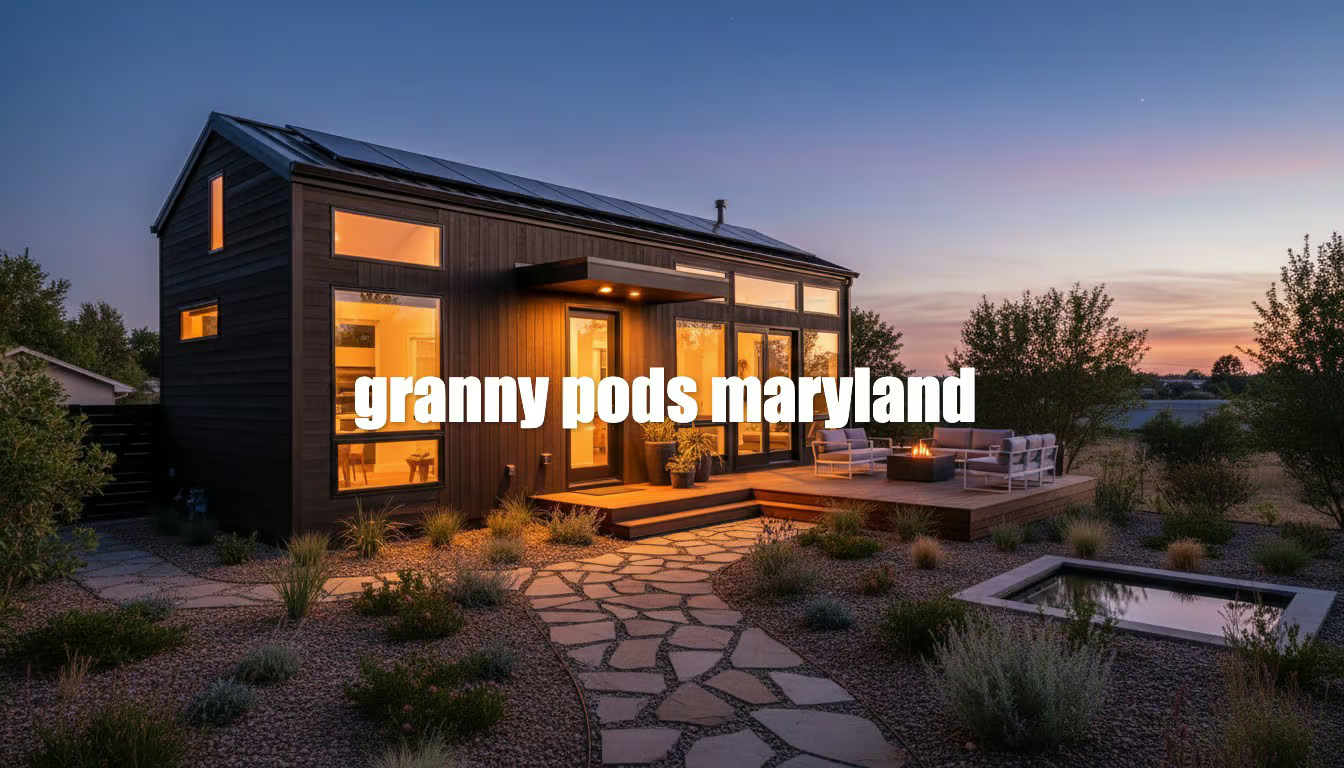
You might be wondering what exactly granny pods are and why they’re catching on in Maryland. Granny pods are small, detached dwelling units designed specifically for aging relatives, allowing them to live close to your family home while preserving their independence. These structures, typically ranging from 300 to 800 square feet, function as private retreats equipped with essential living spaces like a bedroom, bathroom, and kitchenette.
In Maryland, their popularity stems from the state’s aging demographic—over 16% of residents are 65 or older, according to recent census data—and the desire for multigenerational living amid rising housing costs. Unlike traditional homes, granny pods emphasize accessibility and convenience, making daily life easier for seniors. Great Lakes Tiny Homes offers a type of granny pod in the form of tiny houses, which you can customize with or without wheels for mobility, and with or without RVIA certification. Models with RVIA certification are often called park models, providing added versatility for placement on your property. For instance, if you’re in a more rural part of Maryland, the wheeled option allows you to relocate the pod seasonally or as needs change, while the certified park model ensures it meets recreational vehicle standards that can simplify permitting in certain areas.
The appeal in Maryland lies in how these pods address the balance between family proximity and personal space, especially in a state where urban areas like Baltimore and rural spots in Western Maryland demand adaptable solutions. You can envision installing one in your backyard, fostering closer bonds without sacrificing privacy. Consider a scenario where your parent enjoys gardening; a granny pod with an adjacent patio could extend their living space outdoors, integrating seamlessly with Maryland’s natural surroundings and promoting daily activity that supports mental health.
Inside the Modern Granny Pod: Features, Design, and Purpose
Granny pods, also known as accessory dwelling units or ADUs, are purpose-built secondary residences on your property tailored for elderly loved ones. You can expect sizes between 300 and 800 square feet, featuring compact yet functional layouts that include a full kitchen, bathroom, sleeping area, and sometimes a small living room. Amenities often encompass energy-efficient appliances, ample natural light, and storage solutions optimized for limited space.
Different types cater to your preferences: prefab granny pods arrive ready-to-assemble, offering quick installation; custom-built options allow you to personalize every detail; and converted structures, like repurposed sheds or garages, provide budget-friendly alternatives. What sets them apart for elderly relatives is their focus on senior-friendly design. Accessibility features such as zero-step entries, wider doorways for wheelchairs, non-slip flooring, and lever-style handles make navigation effortless. You might also incorporate medical monitoring capabilities, like built-in emergency call systems or smart sensors that alert you to falls or irregular activity. For example, integrating a system like a wearable device synced to the pod’s Wi-Fi can give you peace of mind, allowing remote monitoring without constant intrusion.
Unlike standard tiny homes, which prioritize minimalism for young adventurers, granny pods emphasize comfort and safety. Reinforced grab bars in bathrooms, adjustable-height counters, and even therapeutic elements like heated floors cater to aging needs. In Maryland’s variable climate, these designs include superior insulation to handle humid summers and chilly winters, ensuring your loved one stays comfortable year-round. By choosing a granny pod, you’re creating a space that supports health and happiness, distinct from the one-size-fits-all approach of typical tiny dwellings. Think about adding customizable lighting that adjusts for better visibility in low-light conditions, which is particularly useful during Maryland’s shorter winter days.
Benefits of Granny Pods for Maryland Families
For Maryland families, granny pods bring a host of advantages that align with your lifestyle and the state’s unique environment. The primary benefit is proximity: your aging relative lives just steps away, enabling quick check-ins and support without the logistics of distant facilities. This setup promotes independence, as they maintain their own routines in a private space, reducing feelings of isolation common in nursing homes. In practice, this means you can share meals or assist with medication more easily, strengthening daily interactions that combat loneliness, a prevalent issue among Maryland’s seniors.
Financially, granny pods offer significant savings. The average annual cost of assisted living in Maryland exceeds $50,000, per Genworth’s Cost of Care Survey, while a one-time granny pod investment of $100,000 to $150,000—like those built by Great Lakes Tiny Homes—pays off over time. You’re avoiding ongoing fees that can drain retirement savings, and the pod could even boost your property value by 10-20%, according to real estate experts, as it adds versatile living space. Over five years, this could translate to savings of over $250,000 compared to facility costs, freeing up funds for other family priorities like education or travel.
Emotionally, keeping family close strengthens bonds, especially in Maryland’s family-oriented culture influenced by its historic communities. With over 1 million seniors in the state, the rising elder care costs—up 5% annually—make this option timely. Maryland’s temperate climate allows for outdoor enjoyment, so your granny pod can include patios for shared family time. Regarding property value, adding a granny pod inherently increases your home’s worth; that $100k to $150k spend becomes a retaining asset, far better than the cumulative expense of assisted living paths that offer no equity return. In areas like the Eastern Shore, where community ties are strong, this setup can also facilitate intergenerational knowledge sharing, such as teaching grandchildren about local history.
In coastal areas like Annapolis or inland spots near Frederick, these pods adapt to local vibes, providing peace of mind amid Maryland’s blend of urban hustle and rural charm. Ultimately, you gain a holistic solution that enhances quality of life for everyone involved, potentially reducing stress-related health issues through closer family support.
Legal Considerations for Granny Pods in Maryland
Navigating the legal landscape for granny pods in Maryland requires understanding state regulations, which treat them as ADUs under local zoning laws. Maryland encourages ADUs through guidelines from the Department of Planning, but implementation varies by county and municipality. You must comply with building codes based on the International Residential Code (IRC), often requiring permits for construction, electrical, and plumbing. This includes ensuring the structure meets wind resistance standards due to occasional coastal storms.
Zoning laws typically allow ADUs in residential districts, but setbacks, lot coverage, and occupancy rules apply. More accommodating areas include Montgomery County and Prince George’s County, where streamlined permitting supports family caregiver units. In contrast, stricter spots like parts of Baltimore City may demand variances or prohibit detached units altogether. Recent changes, such as the 2023 housing bill expanding ADU allowances in urban zones, signal progress, with pending legislation potentially easing rural restrictions. For example, if you’re in a historic district, you might need to submit architectural renderings to preserve the area’s character.
RVIA certification benefits you greatly here: park model RVs certified under this standard often bypass some site-built requirements, classifying as recreational vehicles for easier zoning approval. This can speed up your process and reduce costs. For expert navigation of these rules, consider booking a call with our team at Great Lakes Tiny Homes, who have helped hundreds of customers make their tiny home dreams a reality. Visit https://greatlakestinyhome.com/book/ to get started.
To link this to broader tiny home options, explore best tiny home communities in Maryland for inspiration, or check what counties in Maryland allow tiny houses for detailed regulations.
Which Maryland Counties Allow Granny Pods?
Determining which Maryland counties permit granny pods involves reviewing local ordinances, as state law defers to municipalities. Below is a comprehensive table focusing on the most populated counties with clear policies. For cities within, additional rules may apply, such as design reviews in historic districts.
| County Name | Granny Pod Status | Minimum Lot Size Requirements | Maximum Size Allowed | Special Notes |
|---|---|---|---|---|
| Montgomery County (Silver Spring, Bethesda) | Allowed | 0.5 acres | 1,200 sq ft | Streamlined permits for caregiver units; cities like Rockville require owner-occupancy in main home. This county’s progressive stance makes it ideal for families seeking quick approvals, often within 30 days. |
| Prince George’s County (Bowie, Laurel) | Allowed | 1 acre | 800 sq ft | Encourages ADUs for affordability; Upper Marlboro has fast-track approvals but mandates utility connections. Incentives here include reduced fees for eco-friendly designs. |
| Baltimore County (Towson, Dundalk) | Case-by-Case | 1 acre | 1,000 sq ft | Variances needed in urban zones; Baltimore suburbs allow if tied to primary residence. Case approvals often hinge on demonstrating family caregiving needs. |
| Anne Arundel County (Annapolis) | Restricted | 2 acres | 600 sq ft | Coastal regulations limit placements; Annapolis requires environmental impact assessments. Focus on erosion control is key in these waterfront areas. |
| Howard County (Columbia) | Allowed | 0.75 acres | 900 sq ft | Progressive policies; Ellicott City offers incentives for energy-efficient builds, such as rebates for solar integration. |
| Harford County (Bel Air) | Case-by-Case | 1.5 acres | 700 sq ft | Rural flexibility but strict septic rules; check for flood zone restrictions. Soil tests are often required to ensure system viability. |
This table highlights key areas; always verify with local planning offices. For more on tiny house builders, see tiny house builder Maryland Baltimore. Expanding on this, counties like these vary in enforcement; for instance, in Montgomery, you might benefit from community programs that subsidize ADU construction for low-income families, adding another layer of accessibility.
Cost of Building a Granny Pod in Maryland
Building a granny pod in Maryland involves various costs, starting with the unit itself. Prefab models range from $50,000 to $100,000 for basic 400 sq ft setups, while custom-built options climb to $150,000 or more for premium features. Great Lakes Tiny Homes constructs tiny houses in the $100,000 to $150,000 range, offering quality without excess. Breakdowns often include materials like durable siding resistant to Maryland’s humidity, which can add 10-15% to the base price but ensures longevity.
Site preparation adds $5,000 to $20,000, depending on whether your unit has wheels (mobile, no foundation needed) or not (requiring a concrete slab or piers for permanence, especially in Maryland’s clay soils). Utility connections—water, sewer, electricity—cost $10,000 to $30,000, higher in rural areas needing septic systems. Permits run $1,000 to $5,000, and ongoing maintenance, like snow removal in winter, adds $2,000 yearly. If you’re opting for advanced features like geothermal heating, expect an additional $10,000-$15,000, but it pays off in energy savings over time.
Compared to Maryland nursing homes averaging $120,000 annually, your granny pod saves substantially over a decade. Financing options include home equity loans or construction mortgages at 4-7% interest. Insurance might increase your policy by 10-20%, but tax implications are favorable—ADUs can qualify for property tax abatements in some counties. Overall, you’re investing in long-term value, with the pod enhancing resale potential. A real-world example: families in Prince George’s County have reported recouping 80% of costs through property appreciation within five years.
For sales, consider tiny house for sale Maryland Annapolis to compare options.
The Granny Pod Installation Process in Maryland
Installing a granny pod in Maryland follows a structured process to ensure compliance and durability. First, research local zoning laws using your county’s planning portal—Maryland’s Department of Planning offers resources to identify restrictions. This step might involve consulting online maps to check for easements or protected wetlands, which are common in the state.
Next, obtain permits: submit plans to your local building department, which may take 4-8 weeks. Expect reviews for structural integrity and environmental impact, especially near waterways. Detailed blueprints, including elevation views, help expedite this phase.
Site preparation accounts for Maryland’s terrain—clear vegetation and level ground, costing more in hilly areas like Garrett County. For winter conditions, insulate against frost heaves. Engaging a geotechnical engineer here can prevent future settling issues.
Utility connections are crucial: tie into your main septic or municipal lines, with plumbers ensuring freeze-proof pipes for cold snaps. In areas with high water tables, elevated connections might be necessary.
Delivery and installation timeline spans 1-3 months; prefab units arrive via truck, set on foundation or wheels. Final inspections verify code adherence, potentially delaying occupancy if issues arise. Post-installation, test all systems thoroughly to ensure seamless operation.
Challenges include permitting delays in bureaucratic counties or weather interruptions—plan for spring starts. Practical tip: hire a local surveyor early to avoid surprises, and consider phased installation if budget constraints apply.
Design Considerations for Maryland Granny Pods
Designing your Maryland granny pod means prioritizing the state’s four seasons: humid summers demand ventilation and dehumidifiers, while winters call for robust insulation and heating systems like radiant floors. Energy efficiency is key—opt for solar panels or high-R-value walls to cut utility bills amid Maryland’s variable weather. Incorporating passive solar design, where windows face south for natural warmth, can reduce heating needs by up to 30%.
Accessibility features ensure safety: incorporate zero-step entries, wider doorways (at least 36 inches), and grab bars throughout. Smart home technology, such as voice-activated lights or health monitors, adds convenience without complexity. For instance, automated shades can help regulate indoor temperatures, easing physical effort for residents.
At Great Lakes Tiny Homes, the team loves meeting the people they build for, taking a personal approach to understand your vision. You’re always welcome to schedule site visits, tour their shop or available models, and meet the team—book calls or visits directly through the website, where the team is eager to help you take the next step toward your dream home.
Utility connections should blend seamlessly, perhaps via underground lines, and aesthetics matter: choose siding that matches your main home’s style, like clapboard for Chesapeake influences. These elements create a harmonious addition to your property, while considering noise reduction materials if near busy roads like those in Baltimore County.
Finding Expert Guidance for Your Project
When embarking on a granny pod project in Maryland, partnering with experienced professionals is essential to handle the state’s nuanced requirements. You need builders who grasp local codes, from seismic considerations in the east to wind loads near the bay. Look for those familiar with IRC amendments specific to Maryland, ensuring your build withstands local hazards like heavy snow or hurricanes.
Great Lakes Tiny Homes emerges as a trusted local option, with deep expertise in constructing quality granny pods that comply with Maryland regulations. Their understanding of zoning variances, customization for accessibility, and dedication to comfortable spaces for seniors make them a reliable choice. Whether you want wheels for flexibility or a permanent foundation, they tailor solutions to your needs, often incorporating client feedback loops during design to refine details like cabinet heights.
To discuss your specific situation, schedule a consultation with Great Lakes Tiny Homes—it’s a helpful step toward clarity. For more, book a call with our experts who have helped hundreds of customers make their tiny home dreams a reality at https://greatlakestinyhome.com/book/.
Conclusion: Creating a Supportive Home for Your Loved Ones
Granny pods in Maryland represent more than a housing choice—they’re a commitment to family, allowing your loved ones to age with dignity and independence close to you. This investment fosters emotional well-being, cuts costs, and adapts to your life’s changes, all while enhancing your property.
Local expertise, such as from Great Lakes Tiny Homes, simplifies the journey, ensuring your pod meets every need. As a company with experience delivering turnkey modular and park model homes across the lower 48 U.S. states, Great Lakes Tiny Homes provides credible, practical solutions that align with your goals for supportive living, making them a reliable partner regardless of your location in Maryland. Take that first step today; reach out for guidance and build a supportive future for your family.
Frequently Asked Questions About Granny Pods in Maryland
How Can Great Lakes Tiny Homes Help Me On My Granny Pod Journey
Great Lakes Tiny Homes supports you throughout your granny pod journey in Maryland by offering end-to-end guidance. From initial consultations where you discuss your property and needs, to custom designs incorporating accessibility and Maryland-specific features like enhanced insulation, they handle it all. Their process includes detailed site assessments to recommend the best foundation type, whether wheeled for mobility or fixed for permanence.
You benefit from their knowledge of local permits, ensuring compliance without hassle. They build durable tiny houses—your granny pod option—in the $100k-$150k range, with choices for wheels or foundations, RVIA-certified park models or standard units. Their team provides site visits, material selections, and post-installation support, making the process smooth and personalized. Whether you’re in Baltimore or rural Eastern Shore, they adapt to your location, helping you create a space that truly serves your family, including options for integrating sustainable features like rainwater collection systems suited to Maryland’s rainfall patterns.
Are granny pods legal in all parts of Maryland?
No, granny pods aren’t legal everywhere in Maryland due to varying local regulations. State law supports ADUs, but counties like Montgomery allow them readily with permits, while others like Worcester may restrict them in coastal zones to protect environments. In practice, this means urban areas often have more flexible rules to address housing density, whereas rural coastal spots prioritize ecological preservation.
You’ll need to check zoning—residential areas often permit detached units up to 800 sq ft, but urban spots might require attached designs or special approvals. Recent laws ease restrictions in housing-shortage areas, but always consult your local planning office. RVIA-certified models can skirt some rules by classifying as RVs, offering you flexibility in placement, especially if you’re considering temporary setups during renovations.
Can I install a granny pod on any size property in Maryland?
Installation depends on your property size and local rules in Maryland. Most counties require at least 0.5-1 acre for detached granny pods to meet setbacks and lot coverage—under 40% typically. This ensures adequate space for emergency access and utilities without overcrowding.
Smaller urban lots might allow attached ADUs, but detached ones need space for utilities and access. In counties like Anne Arundel, minimums rise to 2 acres near water. You can overcome limitations with variances, but assess your lot’s topography and soil first. For tiny house sales on varied lots, see tiny house for sale Maryland Silver Spring. Soil percolation tests are advisable to confirm septic feasibility on smaller parcels.
Do I need special insurance for a granny pod?
Yes, you’ll likely need to update your insurance for a granny pod in Maryland. Standard homeowners policies may cover it as an addition, but detached units often require separate dwelling coverage or an endorsement, adding $500-$2,000 annually depending on size and features. Factors like proximity to the main house and included amenities influence premiums.
Liability for guests or medical equipment is key, especially for seniors. In flood-prone areas like the Eastern Shore, add FEMA-compliant flood insurance. Shop around—some insurers offer tiny home riders. Consult your agent to avoid gaps, ensuring your investment is protected against Maryland’s storms and winters, and consider bundling with existing policies for discounts.
Can I rent out my granny pod in Maryland?
Renting out your granny pod is possible in Maryland but regulated. Many counties allow short-term rentals if zoned appropriately, but long-term requires it to be a permitted ADU, often mandating owner-occupancy in the main home. This setup can support income generation while complying with family-use intentions.
Places like Baltimore City have Airbnb rules with permits and taxes, while rural counties might prohibit commercial use. You could generate income for caregivers, but check for HOA restrictions. For builder insights on rentable designs, explore tiny house builder Maryland Rockville. Always verify local ordinances to stay compliant, and note that some areas offer tax credits for affordable rental ADUs.