
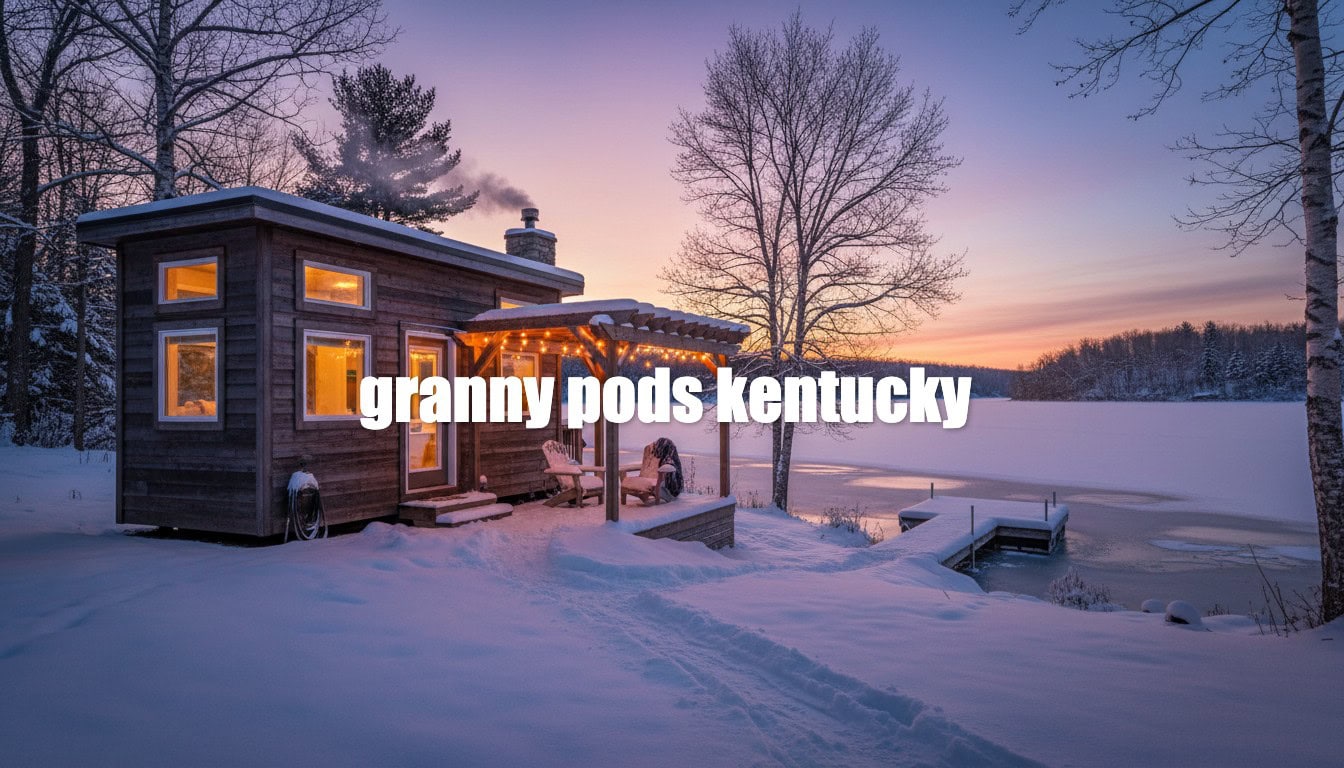
Kentucky permits granny pods, known as accessory dwelling units (ADUs), in various counties such as Jefferson, Fayette, and Kenton, though regulations differ by locality without a uniform statewide policy. These units must generally be situated on the same lot as the primary residence, adhere to local zoning and building codes, and often require owner occupancy or family use. Minimum lot sizes typically range from 5,000 to 15,000 square feet, with maximum sizes capped at 500 to 1,000 square feet depending on the area.
As families in Kentucky seek innovative ways to support aging loved ones, granny pods emerge as a practical solution for multigenerational living. These compact, self-contained units allow elderly relatives to maintain independence while staying close to family, addressing the state’s growing senior population which now exceeds 17% over age 65. With Kentucky’s mix of urban centers and rural landscapes, granny pods adapt well to diverse properties, from suburban backyards in Louisville to acreage in the Bluegrass region. This guide explores the essentials of granny pods in Kentucky, covering definitions, benefits, legal frameworks, costs, and installation, to help you navigate this option effectively.
Granny pods align with Kentucky’s emphasis on family-centric care amid rising eldercare expenses, offering a cost-effective alternative to nursing homes averaging over $7,000 monthly. They provide accessibility features tailored for seniors, ensuring safety and comfort in a state where healthcare access varies by region. For those considering this path, Great Lakes Tiny Homes serves as a full-service manufacturer of modular, park model, and tiny homes, delivering turnkey builds to all 48 lower U.S. states. Their offerings include options with or without wheels and with or without RVIA certification, where certified models function as park models compliant with recreational vehicle standards. If you’d like personalized advice, book a call with our experts.
Disclaimer: This article is for informational purposes only and does not constitute legal advice. Laws, regulations, and zoning rules vary by location and may change over time. Always consult your local zoning office or a qualified land use/zoning attorney before making decisions based on this information.
What Are Granny Pods?
Granny pods represent a thoughtful approach to elder care, consisting of small, detached dwelling units designed for aging family members to live adjacent to the primary home. In Kentucky, where family bonds are strong and the population aged 65 and older has grown to over 17% as of recent census updates, these units—often classified as accessory dwelling units (ADUs)—range from 300 to 800 square feet. They include essential amenities like a bedroom, bathroom, kitchenette, and living space, promoting autonomy while enabling quick family support. This setup is particularly appealing in a state with vast rural areas where traditional care facilities may be distant.
The surge in popularity stems from economic pressures, as nursing home costs in Kentucky average $7,000 to $8,000 per month, far outpacing the one-time investment in a granny pod. Families in cities like Lexington and Louisville increasingly choose these for daily assistance without full-time institutionalization. Great Lakes Tiny Homes specializes in tiny house-style granny pods, offering wheeled models for mobility or fixed ones for permanence, and RVIA-certified park models that streamline regulatory compliance. For instance, exploring tiny houses for sale in Louisville can reveal options suited to urban lots. These designs withstand Kentucky’s humid summers and cold winters, providing a resilient living space.
Beyond basics, granny pods foster emotional well-being by keeping generations connected in Kentucky’s close-knit communities. Imagine a setup where grandparents enjoy their own entrance and routines, yet share meals steps away—this balances privacy and proximity effectively. As healthcare challenges persist in remote counties, such units offer peace of mind, especially with features like emergency alerts integrated into modern builds.
Inside the Modern Granny Pod: Features, Design, and Purpose
Modern granny pods, or ADUs, prioritize safety and ease for seniors, creating a secondary residence on your property that supports aging in place. Unlike minimalist tiny homes, these units emphasize accessibility, with sizes from 300 to 800 square feet featuring open layouts for a bedroom, bathroom, kitchen, and living area. Energy-efficient elements like LED lighting and insulated walls reduce utility costs in Kentucky’s variable climate, while natural light from large windows enhances mood and visibility.
Key senior-friendly aspects include zero-threshold entries to prevent trips, 36-inch wide doorways for wheelchair access, and slip-resistant floors throughout. Grab bars in bathrooms and adjustable counters accommodate mobility aids, crucial for Kentucky residents affected by conditions like arthritis from active lifestyles. Advanced options incorporate smart tech, such as motion sensors and remote health monitors, allowing family oversight via smartphone apps without invading privacy.
Compared to standard tiny homes, granny pods focus on durability and medical readiness rather than portability. Prefab versions assemble quickly, ideal for Kentucky’s weather-prone seasons, while custom builds allow scenic integrations like views of rolling hills. Converted sheds offer budget entry but demand code checks for habitability. To ensure suitability, review what counties in Kentucky allow tiny houses. Ultimately, these pods blend independence with care, elevating family life in the Bluegrass State.
Benefits of Granny Pods for Kentucky Families
Granny pods deliver multifaceted advantages for Kentucky households, starting with enhanced family proximity that facilitates timely care in a state spanning urban and rural divides. Seniors benefit from immediate help with daily tasks, reducing isolation prevalent in areas like eastern Kentucky’s mountains. This arrangement preserves dignity, as loved ones retain personal space amid strong cultural ties to multigenerational homes.
Financially, they outperform alternatives: with assisted living costing $4,000–$5,500 monthly, a $120,000 pod recoups investment rapidly while boosting property values by 10–15% in permissive counties like Fayette. Kentucky’s senior demographic, forecasted at 20% by 2030, underscores the urgency, as eldercare inflation hits 15% recently. Pods also lower ongoing expenses through efficient designs handling humidities over 70% and winter lows near 20°F.
Culturally, they suit Kentucky’s hospitality, enabling gatherings for events like the Kentucky Derby or holidays in spacious backyards. Environmentally, compact footprints minimize impact on the state’s natural beauty. For community integration, consider best tiny home communities in Kentucky. Overall, granny pods promote health, savings, and harmony tailored to local lifestyles.
Disclaimer: This article is for informational purposes only and does not constitute legal advice. Laws, regulations, and zoning rules vary by location and may change over time. Always consult your local zoning office or a qualified land use/zoning attorney before making decisions based on this information.
Legal Considerations for Granny Pods in Kentucky
Kentucky lacks a statewide ADU law, so granny pod legality hinges on local zoning, treating them as accessory units on the primary lot with setbacks of 5–10 feet. Building must comply with the International Residential Code (IRC), covering foundations, utilities, and safety. Permits from zoning boards and health departments are mandatory, especially for septics in rural zones; processes span 4–8 weeks.
Accommodating areas include Jefferson County, where Louisville caps ADUs at 1,000 square feet with owner ties (Accessory Dwelling Units (ADU) – LouisvilleKY.gov). Fayette County updated in 2023 to permit detached units without owner occupancy. House Bill 370 (2022) relaxed modular restrictions, with further bills pending for uniformity. RVIA certification aids by aligning with RV codes, easing approvals in mobile-friendly spots.
Stricter locales like Boone limit to one per lot for family use only. Non-compliance fines reach $500 daily, so early planning office consultations are vital. For compliant builds, connect with tiny house builders in Louisville. Recent 2025 developments in Kenton and Henry Counties signal expanding options.
Disclaimer: This article is for informational purposes only and does not constitute legal advice. Laws, regulations, and zoning rules vary by location and may change over time. Always consult your local zoning office or a qualified land use/zoning attorney before making decisions based on this information.
Which Kentucky Counties Allow Granny Pods?
This updated table outlines ADU policies in key Kentucky counties, focusing on major areas; verify with locals as rules evolve post-2025 updates.
| County Name | Granny Pod Status | Minimum Lot Size Requirements | Maximum Size Allowed | Special Notes | Source |
|---|---|---|---|---|---|
| Jefferson (Louisville) | Allowed | 7,200 sq ft | 1,000 sq ft | Requires owner occupancy; no rentals. Utilities tie to main home; setbacks 5 ft. Updated 2024 with streamlined apps. | Accessory Dwelling Units (ADU) – LouisvilleKY.gov |
| Fayette (Lexington) | Allowed | 5,000 sq ft | 800 sq ft | Detached units permitted since 2023 update; separate entrance required. No owner occupancy mandate. | Accessory Dwelling Units | City of Lexington, Kentucky |
| Kenton (Covington) | Allowed | 10,000 sq ft | 600 sq ft | Regulations approved 2025 for Independence; case-by-case in others. Flood zones impact placement. | Accessory dwelling unit regulations approved for Independence |
| Warren (Bowling Green) | Allowed | 8,000 sq ft | 750 sq ft | Board reviews for family use; supports multigen near WKU. | N/A |
| Boone (Florence) | Allowed | 15,000 sq ft | 500 sq ft | One per lot for detached; aesthetics match main home. Attached preferred. | Boone County Zoning Regulations |
| Madison (Richmond) | Allowed | 6,000 sq ft | 900 sq ft | Streamlined in rural; EKU area favors family setups. | N/A |
| Christian (Hopkinsville) | Case-by-Case | 1 acre | 700 sq ft | Rural flexibility; septic key for off-grid. | N/A |
Variations persist; Jefferson’s progress contrasts Boone’s limits. For city specifics, see tiny houses for sale in Lexington. Consult authorities for latest.
Disclaimer: This article is for informational purposes only and does not constitute legal advice. Laws, regulations, and zoning rules vary by location and may change over time. Always consult your local zoning office or a qualified land use/zoning attorney before making decisions based on this information.
Granny Pods in Major Kentucky Cities
Louisville (Jefferson County)
In Louisville, granny pods thrive under progressive ADU ordinances, allowing up to 1,000 square feet on lots over 7,200 square feet with ties to the main residence. The city’s planning office facilitates applications, emphasizing utilities from the primary home and 5-foot setbacks to neighbor harmony. This urban setting suits backyard installs, supporting the metro’s 1.2 million residents facing housing shortages. Recent 2024 enhancements include faster reviews, making it easier for families in neighborhoods like Highlands or Crescent Hill.
Local uniqueness involves flood considerations near the Ohio River, requiring elevated foundations. Contact the Louisville Metro Planning Department at (502) 574-6230 for guidance. These rules align with Kentucky’s push for affordable senior housing, integrating well with tiny home trends.
Lexington (Fayette County)
Lexington’s 2023 ordinance update permits detached granny pods up to 800 square feet on 5,000-square-foot lots, dropping owner occupancy for flexibility. The Imagine Lexington initiative streamlines permits in R-1 zones, mandating separate entrances and code compliance. This benefits the horse capital’s growing senior base, allowing placements amid historic districts with aesthetic matches. Applications process through the Division of Planning, often within 6 weeks.
Challenges include karst terrain needing soil tests, but incentives like fee waivers encourage adoption. Reach the Lexington-Fayette Urban County Government Planning at (859) 258-3160. Such policies enhance multigenerational living in Bluegrass backyards.
Bowling Green (Warren County)
Bowling Green’s case-by-case approvals favor granny pods up to 750 square feet on 8,000-square-foot lots for family use, reviewed by the Board of Adjustments. Proximity to Western Kentucky University influences lenient urban policies, focusing on setbacks and utility ties. This south-central city supports ADUs to address housing needs, with rural edges offering more space.
Septic approvals are crucial outside city sewers; contact the Warren County Planning Commission at (270) 842-6052. Updates post-2024 align with state modular easements.
Covington (Kenton County)
Kenton County’s 2025 regulations allow ADUs up to 600 square feet on 10,000-square-foot lots, with approvals varying by suburb like Independence. Flood-prone northern areas dictate placements, requiring elevated designs. The planning commission oversees, prioritizing family necessity.
Call the Kenton County Planning at (859) 356-3030 for details. This expands options near Cincinnati.
Paducah (McCracken County)
Paducah permits granny pods as ADUs with local zoning caps around 700 square feet, emphasizing western Kentucky’s river influences for drainage. The city’s forward-thinking approach includes owner-optional rules, supporting artist communities.
Contact McCracken County Planning at (270) 444-4712. It fits the region’s affordable housing goals.
Tiny House Prices in Kentucky
Tiny house prices in Kentucky fluctuate based on size, foundation type (wheeled or fixed), RVIA certification for park models, utility connections, and local code adherence. Basic 300-square-foot prefabs start at $50,000, while custom 800-square-foot units with accessibility reach $200,000, influenced by Kentucky’s terrain requiring extra site prep like $5,000–$15,000 for leveling karst soil. Wheeled models avoid $10,000–$20,000 foundations but need anchoring against winds; utilities add $5,000–$10,000, higher in rural septic areas. Zoning impacts costs—permissive counties like Fayette lower permit fees ($1,000–$3,000), while stricter ones raise compliance expenses. Ongoing maintenance for humidity and freezes runs $500–$1,000 yearly, but energy-efficient builds cut bills 20–30%. Compared to $80,000+ annual nursing homes, tiny houses offer long-term savings.
Great Lakes Tiny Homes Pricing
Great Lakes Tiny Homes provides turnkey granny pod solutions in the $100,000–$150,000 range, covering modular and park model builds delivered across Kentucky. This pricing includes customization for senior needs like grab bars and smart tech, plus compliance with IRC and local codes. Full-service handles design to installation, minimizing surprises in variable climates. Options suit budgets, with financing via home equity at ~6% rates available. Insurance adds $500–$1,000 yearly to policies, and some counties grant ADU incentives. Property taxes may increase 5–10%, offset by elderly exemptions.
Great Lakes Tiny Homes Model Options
- Modular Homes – Ideal for permanent foundations in zoning-strict areas, offering quick assembly and full customization.
- A-Frame – Charming, space-efficient designs fitting rural Kentucky lots with steep rooflines for snow.
- Cabin – Rustic styles blending with Bluegrass aesthetics, suitable for detached ADUs.
- Park Models – RVIA-certified for easier permitting as recreational units, perfect for mobile or semi-permanent setups.
- Tiny House on Wheels – Portable options navigating restrictive zones, with wheels for relocation if needed.
Model selection ties to zoning—fixed modulars for permanent sites, wheeled for flexibility in case-by-case counties. For sales, view tiny houses for sale in Louisville. Zoning profoundly affects choices, so align with local rules.
If zoning fits your property, these models ensure compliance and comfort. Book a call with our experts
Disclaimer: This article is for informational purposes only and does not constitute legal advice. Laws, regulations, and zoning rules vary by location and may change over time. Always consult your local zoning office or a qualified land use/zoning attorney before making decisions based on this information.
The Granny Pod Installation Process in Kentucky
The installation of a granny pod in Kentucky demands careful steps to meet codes and endure climate challenges. Begin with zoning research via county planning—Fayette confirms ADU fits in 1–2 weeks. This prevents rework on sloped or flood-risk sites common statewide.
Secure permits for zoning, building, and utilities, taking 4–8 weeks with fees $1,000–$3,000; surveyors assess lots, vital in Appalachian hills. Site prep costs $2,000–$5,000 for clearing and drainage against spring rains.
Connect utilities insulated for winters, $3,000–$8,000; solar viable in south. Delivery: prefabs in days, customs months; weather delays typical. Final inspections grant occupancy. For pros, tiny house builders in Lexington assist.
Design Considerations for Kentucky Granny Pods
Kentucky’s climate—humid summers, cold winters, tornadoes—shapes granny pod designs with impact-resistant materials and elevated bases in river valleys. Metal roofs and spray-foam insulation handle 70%+ humidity and 25°F lows, cutting energy use.
Accessibility via ramps, wide doors, and non-slip surfaces suits seniors; smart tech monitors remotely. Utilities link to mains with outage backups for storms. Exteriors match local styles, like clapboard in Lexington. Great Lakes Tiny Homes customizes for vision.
These features ensure seamless property extension, functional and aesthetic in Kentucky’s landscapes.
Finding Expert Guidance for Your Project
Expert partners navigate Kentucky’s zoning variances and soils for compliant granny pods meeting IRC. Great Lakes Tiny Homes knows regulations, customizing from ramps to insulation for comfort.
Their $100k–$150k options, wheeled or certified, build trust via family-focused designs. Post-install maintenance suits weather. Book a call for tailored insights, aiding supportive environments.
Conclusion: Creating a Supportive Home for Your Loved Ones
Granny pods in Kentucky transcend housing, fostering independence and bonds for seniors in a heritage-rich state. This choice invests in care and dignity amid evolving needs.
Great Lakes Tiny Homes delivers quality modular and park models nationwide, emphasizing compliance. Weighing options, consider this impact. Book a call with our experts for your family’s connected future.
FAQ
How Can Great Lakes Tiny Homes Help Me On My Granny Pod Journey?
Great Lakes Tiny Homes guides from consultation on size and access to designs fitting Kentucky codes. They offer $100k–$150k prefabs, customs, wheeled, or RVIA park models. Maintenance advice handles local weather. Book via site for permits, financing, tech. Accessible for Louisville or rural.
Are granny pods legal in all parts of Kentucky?
No, legality varies locally as ADUs without statewide rule. Jefferson and Fayette allow with permits, caps at 1,000 sq ft; Boone restricts to family. HB 370 eased modulars, but HOAs/floods complicate. Check codes; non-compliance risks fines. See what counties in Kentucky allow tiny houses. Consult planners.
Disclaimer: This article is for informational purposes only and does not constitute legal advice. Laws, regulations, and zoning rules vary by location and may change over time. Always consult your local zoning office or a qualified land use/zoning attorney before making decisions based on this information.
Can I install a granny pod on any size property in Kentucky?
No, minimums are 5,000–15,000 sq ft; Fayette needs 5,000 for Lexington, Christian 1 acre for septic. Urban small lots limit to attached; setbacks 5–10 ft, utilities access key. Slopes in Knobs hinder tiny parcels. Larger ease detached. Verify zoning; hardships allow variances for care.
Do I need special insurance for a granny pod?
Yes, endorse homeowner’s for habitability, $500–$1,500/year covering liability, weather like hail. Rentals need landlord policy; wheeled under RV $300–$800. Kentucky tornadoes require riders. Disclose to avoid denials; bundles via State Farm. Protects assets, premiums up but valuable.
Can I rent out my granny pod in Kentucky?
Limited; Jefferson bans short-term, family/caregiver only. Fayette permits long-term with zoning. Locals prioritize owner ADUs against density. Rural more open with changes. $800–$1,500/month in Louisville, but taxes/maintenance rise. Fines $1,000 for violations; check Airbnb. Explore best tiny home communities in Kentucky.
Disclaimer: This article is for informational purposes only and does not constitute legal advice. Laws, regulations, and zoning rules vary by location and may change over time. Always consult your local zoning office or a qualified land use/zoning attorney before making decisions based on this information.