
As you navigate the challenges of caring for aging family members in Indiana, granny pods offer a practical and compassionate solution. These compact living spaces allow your elderly relatives to stay nearby, providing peace of mind without sacrificing their autonomy. In a state known for its tight-knit communities and varying rural-urban landscapes, granny pods are gaining traction as families seek affordable alternatives to traditional elder care.
In the context of Indiana’s growing need for flexible elder care options, connecting with experienced builders can help you understand how tiny home designs adapt to local conditions. Great Lakes Tiny Homes provides customizable tiny houses suitable as granny pods, with options for wheels or permanent setups and RVIA certification for park models, ensuring relevance to your property requirements and building standards.
What Are Granny Pods?
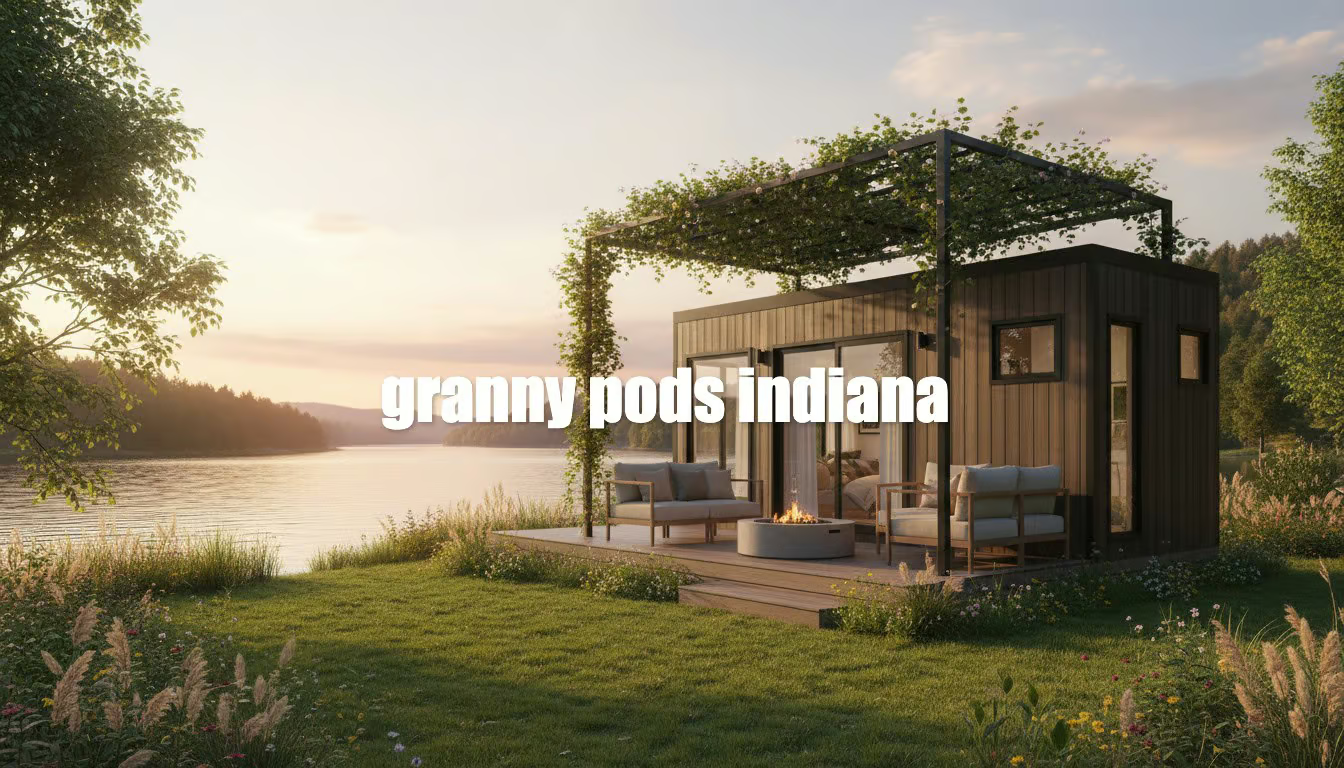
You might be wondering what exactly granny pods are and why they’re catching on in Indiana. Granny pods, also referred to as backyard cottages or in-law suites, are small, detached dwelling units built on your property specifically for aging relatives. These structures enable your loved ones to live close to you, fostering family bonds while granting them the independence they desire. Typically ranging from 300 to 800 square feet, granny pods include essential living spaces like a bedroom, bathroom, kitchenette, and living area.
In Indiana, their popularity stems from the state’s growing senior population and the desire for cost-effective care options amid rising healthcare expenses. With over 1.1 million residents aged 65 and older—projected to increase by 50% by 2030 according to the Indiana State Department of Health—families are turning to granny pods to keep elders out of expensive facilities. The Hoosier culture of family-centric values makes this setup particularly appealing, allowing you to monitor health subtly while respecting privacy. For more on related regulations, check out what counties in Indiana allow tiny houses.
Great Lakes Tiny Homes offers granny pod-style tiny houses that you can customize with wheels for mobility or without for a permanent foundation. If you opt for RVIA certification, these become park models, which often simplify zoning compliance in recreational or accessory dwelling contexts. This flexibility ensures your granny pod meets both your family’s needs and local regulations.
Inside the Modern Granny Pod: Features, Design, and Purpose
Granny pods, or accessory dwelling units (ADUs), serve a vital purpose in modern family dynamics, especially as you plan for your parents’ or grandparents’ future in Indiana. These self-contained homes are designed for comfort and functionality, typically spanning 300 to 800 square feet to balance space efficiency with livability. You’ll find standard amenities like a compact kitchen with appliances, a full bathroom, one or two bedrooms, and open living areas that promote ease of movement.
What sets granny pods apart from standard tiny homes is their emphasis on senior-friendly features. Accessibility is key: expect zero-step entries to eliminate tripping hazards, wider doorways for wheelchair access, and lever-style handles instead of knobs. Many include grab bars in bathrooms, non-slip flooring, and adjustable-height counters to accommodate mobility aids. For health monitoring, smart tech integrations like automated lighting, fall-detection sensors, and remote thermostats allow you to stay connected without intrusion.
You have several types to choose from. Prefab granny pods arrive pre-assembled, speeding up installation on your Indiana lot—ideal for quicker setups in variable weather. Custom-built options let you tailor designs to your property’s aesthetics, incorporating Indiana-specific elements like insulated walls for harsh winters. Converted structures, such as shipping containers or garages, offer budget-friendly alternatives but may require more modifications for code compliance. If you’re interested in builders, explore tiny house builders in Indianapolis for local expertise.
Unlike recreational tiny homes, granny pods prioritize longevity and safety for elderly occupants. Reinforced framing withstands Indiana’s snow loads, while energy-efficient windows reduce utility bills. Medical capabilities, such as built-in emergency call systems or Wi-Fi-enabled health devices, ensure your relative’s well-being. These elements make granny pods a thoughtful choice, blending independence with the security of family proximity.
Exploring layouts, you might select a single-story model to avoid stairs, or a lofted design if space allows for a caregiver’s nook. Materials like durable siding and low-maintenance exteriors suit Indiana’s humid summers and cold winters. Overall, the purpose is clear: to create a dignified space where your loved one thrives, supported by your nearby presence.
Benefits of Granny Pods for Indiana Families
Installing a granny pod on your Indiana property brings numerous advantages, tailored to the state’s unique family-oriented culture and climate. First, proximity to family enhances care and support; you can check in daily without the logistics of distant facilities, which is especially valuable in sprawling rural areas like those in southern Indiana.
Independence remains a cornerstone—your elderly relative enjoys their own space, kitchen, and routines, reducing feelings of burden. This setup contrasts sharply with nursing homes, where costs in Indiana average $7,000 monthly per the Genworth Cost of Care Survey, potentially totaling over $84,000 yearly. A granny pod, built for $100,000 to $150,000, offers long-term savings, often paying for itself in under two years compared to assisted living fees exceeding $4,500 monthly.
Financially, granny pods boost property value; adding this versatile structure increases your home’s appeal for multigenerational living, with real estate experts noting up to a 20% value hike in ADU-friendly markets. Emotionally, keeping family close aligns with Indiana’s community values, combating isolation that affects 25% of seniors statewide per AARP reports. The emotional toll of separation diminishes, fostering stronger bonds and better mental health. To see community options, visit best tiny home communities in Indiana.
Indiana’s climate adds specific perks: insulated granny pods handle freezing winters efficiently, lowering heating costs versus larger homes. Culturally, in a state with strong agricultural roots, these pods support aging farmers staying on family land. With Indiana’s senior population comprising 17% of residents and elder care costs rising 5% annually, granny pods provide a proactive, heartfelt solution. Investing $100,000 to $150,000 in a tiny house granny pod retains value as a property asset, far outweighing the cumulative expense of institutional care paths.
Moreover, tax incentives in some counties may apply, and the setup promotes sustainability—smaller footprints mean less energy use, appealing to eco-conscious Hoosiers. Ultimately, these benefits create a win-win, enhancing your family’s quality of life while addressing practical needs.
Legal Considerations for Granny Pods in Indiana
Navigating the legal landscape for granny pods in Indiana requires careful attention, as regulations blend state guidelines with local variations. At the state level, Indiana Code Title 36 governs property use, but ADUs like granny pods fall under municipal zoning ordinances. You’ll need to comply with the International Residential Code (IRC) adopted statewide, ensuring structures meet wind, snow, and seismic standards.
Zoning laws typically classify granny pods as accessory structures, permitted in residential zones but restricted in historic districts. Building codes mandate proper foundations, electrical, and plumbing inspections. Permit requirements vary: expect applications through your county planning department, often involving site plans and engineering reports. Fees range from $500 to $2,000, depending on size.
More accommodating areas include Marion County (Indianapolis), where ADUs are allowed with owner-occupancy, and Allen County (Fort Wayne), supporting them up to 800 sq ft on lots over 10,000 sq ft. Stricter spots like Lake County (near Chicago) limit them to family use only, with height caps. Hamilton County (Carmel) has progressive rules, permitting detached units with utility tie-ins.
Recent changes, like House Bill 1137 in 2023, eased some rural zoning for small dwellings, potentially benefiting granny pods. Pending bills aim to standardize ADU approvals statewide, reducing case-by-case hurdles.
RVIA certification shines here: park model granny pods with this seal often bypass full residential permits, treated as RVs for quicker approvals in Indiana’s RV-friendly counties. Benefits include mobility for relocation and easier financing, making them ideal if regulations tighten.
To ensure compliance, consult local officials early. For guidance on similar setups, explore what counties in Indiana allow tiny houses.
Which Indiana Counties Allow Granny Pods?
Determining county-specific rules is crucial for your granny pod project in Indiana. Below is a comprehensive table focusing on populated counties with clear regulations. Note that city rules within counties may add layers—always verify with local planning offices.
| County Name | Granny Pod Status | Minimum Lot Size Requirements | Maximum Size Allowed | Special Notes |
|---|---|---|---|---|
| Marion (Indianapolis) | Allowed | 7,200 sq ft | 800 sq ft | Owner must occupy primary residence; Indianapolis allows ADUs in most R-zones with utility connections. No short-term rentals. |
| Allen (Fort Wayne) | Allowed | 10,000 sq ft | 1,000 sq ft | Fort Wayne permits detached units for family; requires septic review if not on city sewer. RVIA-certified models favored. |
| St. Joseph (South Bend) | Case-by-Case | 8,000 sq ft | 600 sq ft | South Bend reviews via variance; historic areas restricted. Emphasis on accessibility features. |
| Lake (Gary) | Restricted | 15,000 sq ft | 400 sq ft | Family-only use; Gary has strict setbacks. Environmental reviews for lakefront properties. |
| Hamilton (Noblesville/Carmel) | Allowed | 1 acre | 900 sq ft | Progressive policies; Carmel encourages ADUs for aging in place. Tax incentives possible. |
| Vanderburgh (Evansville) | Allowed | 9,000 sq ft | 750 sq ft | Evansville streamlines permits; flood zone considerations in river areas. |
| Tippecanoe (Lafayette) | Case-by-Case | 12,000 sq ft | 500 sq ft | Lafayette requires impact studies; university proximity aids innovative designs. |
| Monroe (Bloomington) | Restricted | 2 acres rural | 600 sq ft | Bloomington limits in urban cores; eco-friendly builds encouraged. |
This table highlights key areas, but rural counties like Brown or Greene often have looser rules for agricultural properties. For cities like Columbus in Bartholomew County, check for overlay districts. Linking to broader resources, if you’re exploring what counties in Indiana allow tiny houses, this aligns closely with granny pod permissions. For community ideas, see best tiny home communities in Indiana.
Cost of Building a Granny Pod in Indiana
Budgeting for a granny pod in Indiana involves multiple factors, ensuring you get a durable, compliant structure. Base costs for prefab models start at $80,000 for 300 sq ft, rising to $150,000 for custom 800 sq ft builds with high-end finishes. Tiny houses in the $100,000 to $150,000 range provide value through quality materials.
Site preparation varies: if your unit has no wheels, expect $5,000 to $15,000 for a concrete foundation to handle Indiana’s frost line. Wheeled models skip this, costing $2,000 to $5,000 for leveling and anchoring. Utility connections—water, sewer, electric—add $10,000 to $25,000, higher in rural spots without municipal lines.
Permits and inspections tally $1,000 to $3,000, while ongoing maintenance like snow removal or HVAC servicing runs $1,000 yearly, tailored to Indiana’s seasons. Compare to assisted living: Indiana facilities cost $50,000+ annually, versus a one-time granny pod investment that saves over time.
Financing options include home equity loans at 6-8% interest or personal loans; some counties offer grants for ADUs. Insurance typically adds $500-1,000 yearly to your policy, covering as an outbuilding. Tax implications: property taxes may rise 1-2% on assessed value, but exemptions for caregiver dwellings exist in places like Indianapolis.
For long-term savings, a $120,000 granny pod offsets $60,000+ yearly facility costs within years, retaining value as property enhancement. Wheeled units offer flexibility, potentially lowering initial outlay by avoiding foundation fees. Consider tiny houses for sale in Indianapolis for cost comparisons.
The Granny Pod Installation Process in Indiana
Setting up your granny pod in Indiana follows a structured process to ensure smoothness amid the state’s diverse terrains and weather. Step 1: Research local zoning. Review your county’s ordinances via the planning website— for instance, Marion County’s portal details ADU allowances. Consult neighbors or officials to gauge feasibility, avoiding surprises in flood-prone areas like along the Wabash River.
Step 2: Obtain permits. Submit applications with blueprints, site surveys, and impact statements. In Indiana, this takes 4-8 weeks; budget for engineer stamps if custom. Challenges include delays in winter due to frozen ground testing.
Step 3: Site preparation. Clear and grade your lot, considering Indiana’s clay soils that expand with moisture. For non-wheeled pods, pour foundations below the 36-inch frost line—costs rise in hilly southern regions. Wheeled units need stable pads; hire pros to prevent settling.
Step 4: Utility connections. Tie into your main home’s systems, vital for Indiana’s sub-zero winters to avoid pipe freezes. Electric upgrades might need $5,000; septic for rural installs adds complexity. Pros recommend insulated lines.
Step 5: Delivery and installation. Prefab units arrive via truck; cranes for placement take 1-2 days. Timeline: 2-4 months total, longer in rainy springs.
Step 6: Final inspections. County inspectors check codes; occupancy permits follow. Potential hurdles: utility backlogs in growing areas like Hamilton County. Practical tip: Start in summer for optimal weather.
Throughout, link to experts via best tiny home communities in Indiana for community insights.
Design Considerations for Indiana Granny Pods
Designing your granny pod for Indiana means accounting for the state’s four distinct seasons, from humid summers to snowy winters. Weatherproofing is essential: use SIPs or spray foam insulation for R-40 walls to combat 20-inch snowfalls, keeping interiors cozy without high bills.
Energy efficiency shines with LED lighting, solar-ready roofs, and high-SEER HVAC—Indiana’s utilities offer rebates via programs like Duke Energy’s. For accessibility, incorporate zero-step entries, 36-inch doorways, and roll-in showers; grab bars and radiant floor heating ease arthritis in cold months.
Smart home tech, like voice-activated controls or health monitors, integrates seamlessly, allowing you to track vitals remotely. Utility connections demand buried lines for reliability; ensure the pod’s facade—siding or brick—matches your main home for curb appeal in suburban Carmel or rural Bloomington.
Customization options allow you to emphasize a personal touch in every build. You’re welcome to schedule consultations to discuss your vision and explore models—book via the website to guide your next steps toward a dream space.
Aesthetic harmony extends to landscaping: native plants buffer wind, while decks foster family gatherings. These considerations create a resilient, inviting haven tailored to Hoosier life. For builder ideas, look at tiny house builders in Fort Wayne.
Finding Expert Guidance for Your Project
Embarking on a granny pod project in Indiana benefits greatly from professionals versed in local nuances. You’ll want builders who grasp zoning variances, from Marion’s urban codes to rural allowances, ensuring your structure complies without costly revisions.
Great Lakes Tiny Homes provides knowledge of Indiana regulations for tiny house granny pods. Their customization lets you add senior-specific features like automated doors, while prioritizing durable builds for longevity. Committed to comfortable spaces, they focus on what matters: supporting your family’s needs through thoughtful design.
Working with such experts streamlines everything, from permit navigation to material selection suited to Indiana’s climate. For tailored advice, consider scheduling a consultation with Great Lakes Tiny Homes to explore your options—it’s a helpful step toward clarity on your project. To get started, book a call with our experts.
Conclusion: Creating a Supportive Home for Your Loved Ones
In Indiana, granny pods represent more than a building—they’re a bridge to sustained family closeness and elder dignity. By choosing this path, you invest in independence for your loved ones, surrounded by the care only proximity provides, all while navigating costs and climates wisely.
This choice elevates quality of life, turning potential challenges into opportunities for connection. Local expertise eases the journey, offering insights that align with your vision. Take that first step today; your family deserves this supportive embrace.
As you consider options for granny pods in Indiana, Great Lakes Tiny Homes stands out for their experience in delivering turnkey modular and park model homes across the lower 48 U.S. states. Their focus on quality and customization makes them a practical choice for creating a reliable living space that fits your needs, no matter your location.
Frequently Asked Questions About Granny Pods in Indiana
Here, you’ll find answers to common queries about granny pods in Indiana, drawing on state-specific details to guide your decisions.
How Can Great Lakes Tiny Homes Help Me On My Granny Pod Journey
Great Lakes Tiny Homes supports your granny pod journey in Indiana by providing end-to-end expertise from concept to completion. You start with a consultation where the team assesses your property, zoning, and needs—whether for a wheeled park model or foundation-based unit. They guide you through custom designs incorporating accessibility like wide halls and smart tech, ensuring compliance with Indiana codes.
Their builds, priced $100,000-$150,000, use high-quality materials for durability against Hoosier weather. You can visit their shop to see models, discuss RVIA options for easier permitting, and plan utility integrations. Post-installation, they offer maintenance tips, helping you create a seamless family extension. This personalized approach turns your vision into a reality, backed by their commitment to customer satisfaction.
Are granny pods legal in all parts of Indiana?
No, granny pods aren’t legal uniformly across Indiana due to varying local rules. Statewide, they’re permitted as ADUs under IRC, but counties dictate specifics. Urban areas like Indianapolis (Marion County) allow them with permits, while rural spots like Parke County may require variances. Always check zoning—some ban detached units, others cap sizes. Recent laws like HB 1137 broaden access, but consult your planning department for your address to confirm legality and avoid fines.
Can I install a granny pod on any size property in Indiana?
Property size matters in Indiana; most counties mandate minimum lots, like 7,200 sq ft in Marion or 1 acre in Hamilton for rural vibes. Smaller urban lots may qualify with attached ADUs, but detached granny pods need space for setbacks—typically 5-10 feet from boundaries. In flood zones along the Ohio River, elevated foundations add requirements. Evaluate your lot via county GIS maps; if undersized, consider zoning appeals or community lots. Pros can help maximize your space effectively.
Do I need special insurance for a granny pod?
Yes, you’ll likely need to update your homeowners insurance for a granny pod in Indiana, as it’s an additional structure. Standard policies cover up to $10,000 for outbuildings, but occupied granny pods require separate dwelling coverage—around $500-$1,500 annually extra. Factors include size, location (higher in storm-prone north), and features like plumbing. Notify your insurer early; some offer ADU endorsements. For RVIA models, RV policies might apply if mobile. Shop quotes to protect your investment adequately.
Can I rent out my granny pod in Indiana?
Renting a granny pod in Indiana depends on local zoning—many counties restrict to family use only, like Lake County’s rules against commercial rentals. Progressive areas like Bloomington (Monroe) allow short-term via platforms if permitted as accessory units, but require occupancy limits and safety inspections. State law doesn’t prohibit, but HOAs or historic districts may. For long-term, treat as a duplex; check tax implications via Form 11. If family-focused, stick to non-rental to simplify approvals—consult ordinances for your area.