
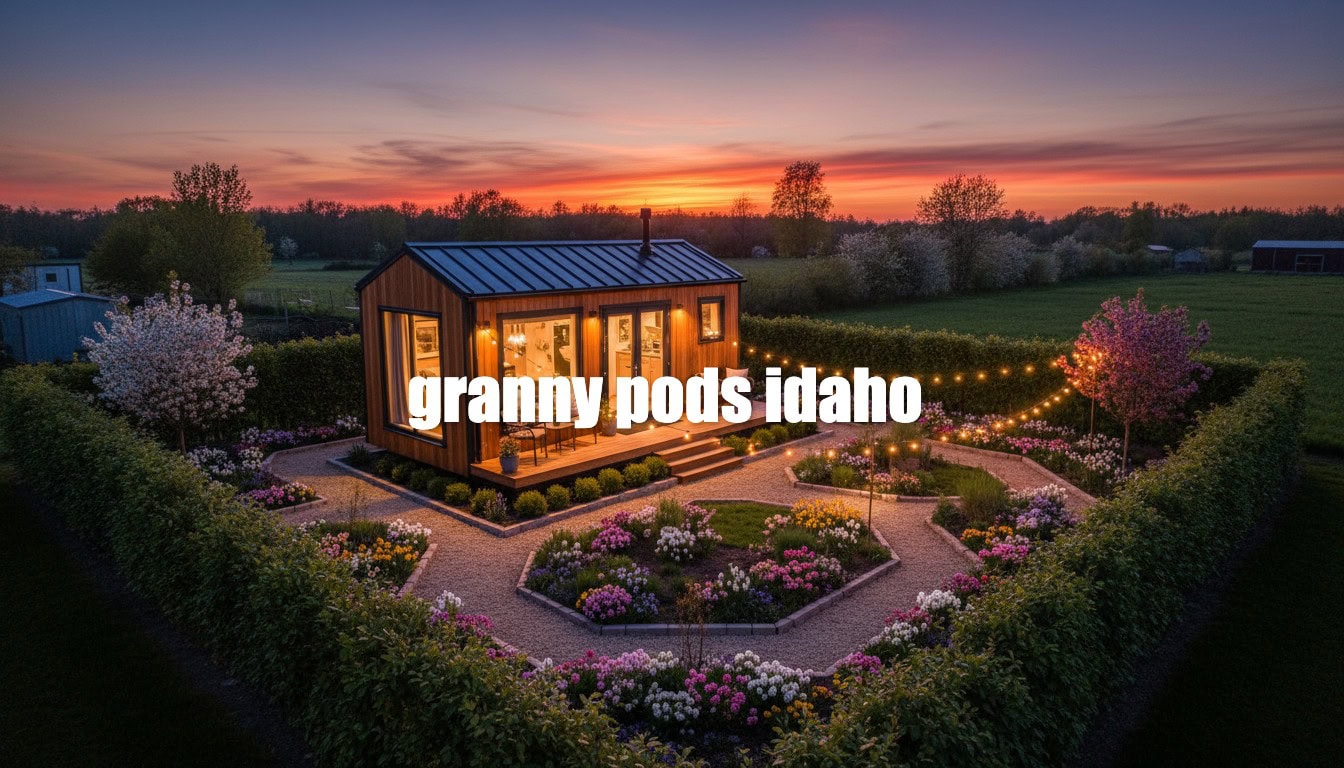
As you navigate the challenges of caring for aging family members in Idaho, granny pods emerge as a practical and compassionate solution. These compact living spaces allow your loved ones to stay nearby, fostering family bonds without sacrificing their autonomy. In Idaho’s diverse landscapes, from the rolling hills of the Treasure Valley to the rugged mountains of the north, granny pods adapt seamlessly to provide comfort and convenience.
In the context of Idaho’s growing emphasis on multigenerational living, granny pods align perfectly with the state’s family-oriented culture. Companies like Great Lakes Tiny Homes offer tiny houses that function as granny pods, providing options with or without wheels and RVIA certification for park models. Their experience ensures these structures meet local needs, building credibility through quality craftsmanship tailored to Idaho families. This relevance stems from the rising demand for affordable housing solutions that support aging in place, where Great Lakes Tiny Homes contributes by delivering durable, customizable units that comply with Idaho’s unique environmental and regulatory challenges, earning trust through consistent delivery of high-standard builds.
What Are Granny Pods?
You might wonder what exactly granny pods are and why they’re gaining traction in Idaho. Granny pods, also known as accessory dwelling units (ADUs), are small, detached dwelling units designed specifically for aging relatives. They allow your elderly family members to live close to you while maintaining their independence, offering a private space on your property without the need for full integration into your main home.
In Idaho, granny pods are becoming popular due to the state’s aging population and the desire for affordable, family-centered care options. With Idaho’s population over 65 projected to grow by 50% in the next decade, according to the Idaho Department of Health and Welfare, more families are turning to these units to avoid the isolation of traditional senior living. Great Lakes Tiny Homes sells a type of granny pod in the form of tiny houses, where you can choose models with wheels for mobility or without for permanent placement. Additionally, options with RVIA certification qualify as park models, which can simplify zoning compliance in certain areas. For instance, in urban settings like Boise, these certified models can be placed more easily on properties without extensive permitting, allowing you to focus on customization rather than bureaucratic hurdles.
These structures typically range from 300 to 800 square feet, featuring essentials like a bedroom, bathroom, and kitchenette. Their appeal in Idaho lies in their adaptability to the state’s variable weather, providing a cozy retreat that keeps family connections strong. Whether you’re in Boise or Coeur d’Alene, granny pods offer a modern twist on intergenerational living, blending privacy with proximity. Consider how a well-designed granny pod can include features like large windows to capture Idaho’s stunning views, enhancing the living experience while ensuring energy efficiency against the cold winters.
Inside the Modern Granny Pod: Features, Design, and Purpose
Delve deeper into the world of granny pods, and you’ll find they serve a vital purpose for families in Idaho seeking to support aging loved ones. As accessory dwelling units (ADUs), granny pods are secondary housing structures on your property, crafted to enhance the quality of life for seniors. Unlike standard tiny homes, which might prioritize minimalism for young adventurers, granny pods focus on comfort, accessibility, and safety for older adults. This distinction becomes clear when you compare the layout: tiny homes often feature loft sleeping areas that require climbing, whereas granny pods emphasize single-level designs to accommodate mobility aids.
Typical sizes hover between 300 and 800 square feet, making them efficient without feeling cramped. Inside, you can expect amenities like full bathrooms with walk-in showers, compact kitchens equipped with energy-efficient appliances, and open living areas that promote ease of movement. What sets them apart are senior-friendly features: zero-step entries to prevent falls, wider doorways for wheelchair access, and non-slip flooring throughout. These elements not only reduce accident risks but also allow for future-proofing, such as installing ramps or lifts if needs evolve over time.
Different types cater to various needs. Prefab granny pods arrive ready-to-assemble, ideal if you’re looking for quicker installation in Idaho’s short building seasons. Custom-built options let you tailor the design to your property’s aesthetics, while converted structures, like repurposed sheds or garages, offer budget-friendly alternatives. For elderly relatives, these units include medical monitoring capabilities, such as integrated smart devices for health alerts, and grab bars in key areas. In practice, families in Idaho have used these smart systems to monitor vital signs remotely, providing peace of mind during daily activities.
In Idaho, where harsh winters demand durability, modern granny pods incorporate insulated walls, energy-efficient windows, and heating systems to keep you and your loved ones warm. Their purpose extends beyond shelter; they preserve dignity by allowing independence, with layouts that support daily routines without constant assistance. As you consider this for your family, remember that granny pods differ from tiny homes by emphasizing long-term livability over portability. For example, incorporating durable materials like fiber cement siding helps withstand Idaho’s freeze-thaw cycles, ensuring the structure remains a reliable haven year-round.
Explore best tiny home communities in Idaho for inspiration on integrating these spaces harmoniously.
Benefits of Granny Pods for Idaho Families
Imagine the peace of mind you gain from having your aging parent just steps away in Idaho—granny pods deliver that and more. For Idaho families, these units provide proximity for care and support, enabling quick check-ins without uprooting your loved one’s life. This closeness is especially valuable in a state where vast distances between towns can complicate visits to distant care facilities. In rural areas like the Panhandle, where medical services might be hours away, a granny pod ensures immediate access to help during emergencies.
Independence remains a cornerstone; your relative enjoys their own space, complete with personal touches, fostering a sense of autonomy that boosts mental health. Financially, granny pods shine: compared to nursing homes averaging $8,500 per month in Idaho (per Genworth’s 2023 Cost of Care Survey), a one-time investment of $100,000 to $150,000 in a tiny house from builders like Great Lakes Tiny Homes offers substantial savings over years. This cost-effectiveness is amplified when you factor in potential tax incentives for adding accessible housing, which some Idaho counties offer to encourage family caregiving.
Property value increases naturally with the addition of a granny pod. Spending $100k to $150k on such a unit enhances your home’s versatility, potentially adding 50-100% return on investment through expanded living options, unlike the ongoing costs of assisted living that can exceed $100,000 annually. Emotionally, keeping family close aligns with Idaho’s tight-knit communities, reducing loneliness amid the state’s 18% senior population growth. Studies from organizations like the National Institute on Aging show that such arrangements can lower stress levels for both caregivers and seniors, promoting overall family harmony.
Idaho’s climate benefits include weather-resistant designs that withstand snowy winters and hot summers, while cultural values of self-reliance make granny pods a natural fit. Statistics from the AARP highlight that 77% of Idaho seniors prefer aging in place, and granny pods facilitate this, cutting elder care costs by up to 70% long-term. As you weigh options, consider how this setup not only saves money but enriches family ties in the Gem State, perhaps by allowing shared garden spaces or family gatherings right on your property.
Link to what counties in Idaho allow tiny houses for more on supportive areas.
Legal Considerations for Granny Pods in Idaho
Navigating the legal side of granny pods in Idaho requires careful attention, as regulations blend state guidelines with local variations. At the state level, Idaho encourages ADUs through flexible zoning, but counties and municipalities hold the reins. You’ll need to comply with the International Residential Code (IRC) for construction, ensuring your pod meets safety standards. This includes adhering to wind load requirements in exposed areas and fire safety measures, which are rigorously enforced to protect residents.
Zoning laws often classify granny pods as accessory structures, permitted in residential zones but restricted in rural agricultural areas. Building codes mandate proper foundations, electrical, and plumbing inspections. Permit requirements include site plans and environmental reviews, especially near waterways in Idaho’s scenic regions. For properties bordering rivers or lakes, you may need additional approvals from the Idaho Department of Environmental Quality to ensure no impact on local ecosystems.
More accommodating counties include Ada (Boise), where urban density supports ADUs, and Kootenai (Coeur d’Alene), with streamlined approvals. Stricter areas like rural Elmore County may require variances. Major cities: Boise allows up to 1,000 sq ft ADUs; Idaho Falls has case-by-case reviews. Recent changes, like House Bill 276 in 2022, eased ADU restrictions in urban areas, with pending bills aiming to standardize statewide. These legislative shifts reflect Idaho’s evolving approach to housing, making it easier for you to integrate a granny pod without excessive red tape.
RVIA certification for park models benefits you by classifying the unit as an RV, bypassing some building codes and easing placement on wheels. This can reduce permit hassles and costs in Idaho’s varied jurisdictions. For expert navigation, book a call with our experts who’ve helped hundreds of customers make their tiny home dreams a reality. Such consultations can clarify how certifications align with your specific location’s rules.
Check tiny house builder Idaho options for compliant builds.
Which Idaho Counties Allow Granny Pods?
To help you decide where to install your granny pod, here’s a comprehensive overview of Idaho counties. Focus on populated areas with clear rules reveals a patchwork of permissiveness. Understanding these variations allows you to select a location that minimizes legal obstacles and maximizes feasibility for your project.
| County Name | Granny Pod Status | Minimum Lot Size Requirements | Maximum Size Allowed | Special Notes |
|---|---|---|---|---|
| Ada (Boise) | Allowed | 7,000 sq ft | 1,200 sq ft | Boise city permits detached ADUs with owner occupancy; easy utilities hookup in urban zones. Recent incentives include reduced fees for green builds. |
| Canyon (Nampa) | Allowed | 10,000 sq ft | 800 sq ft | Nampa requires setbacks of 5 ft; favorable for prefab units. Community programs support family housing expansions. |
| Kootenai (Coeur d’Alene) | Case-by-Case | 1 acre | 1,000 sq ft | Coer d’Alene approves with environmental review; stricter near lakes. Lakefront properties may need extra erosion controls. |
| Bonneville (Idaho Falls) | Restricted | 0.5 acres | 600 sq ft | Idaho Falls limits to attached ADUs; variances possible for detached. Focus on flood zone compliance. |
| Bannock (Pocatello) | Allowed | 6,000 sq ft | 900 sq ft | Pocatello streamlines permits; good for RVIA-certified models. Urban renewal zones offer faster processing. |
| Twin Falls | Case-by-Case | 1 acre | 750 sq ft | Rural focus; agricultural zones may prohibit without rezoning. Irrigation district approvals often required. |
| Latah (Moscow) | Restricted | 10,000 sq ft | 500 sq ft | Moscow emphasizes historic preservation; limited in downtown areas. University proximity adds density considerations. |
This table highlights key counties; always verify with local planning offices as rules evolve. For instance, in Ada County, Boise’s progressive stance includes incentives for energy-efficient ADUs, while Cuyahoga-like urban counties in other states contrast Idaho’s rural leniency. Expanding on this, counties like Canyon are seeing increased applications due to population growth, providing real-world examples of successful installations that you can reference when planning your own.
Cost of Building a Granny Pod in Idaho
Budgeting for your granny pod in Idaho involves understanding a range of expenses, ensuring you invest wisely. Prefab models start at $80,000 for basic 300 sq ft units, while custom-built can reach $200,000 for luxurious 800 sq ft designs. Quality levels vary: entry-level at $100-$150 per sq ft, premium up to $250. Breaking it down further, the base structure might cost $60,000, with add-ons like solar panels adding $10,000-$20,000 for long-term savings.
Great Lakes Tiny Homes builds tiny houses in the $100,000-$150,000 range, offering value with customizable features. Site preparation costs $5,000-$20,000, depending on terrain—flatter Treasure Valley lots are cheaper than hilly northern sites. If your unit has no wheels, add $10,000-$30,000 for a foundation to meet Idaho’s seismic codes. In earthquake-vulnerable areas like the Boise foothills, reinforced concrete foundations provide essential stability.
Utility connections run $10,000-$25,000, crucial for Idaho’s cold winters to include insulated plumbing. Permits average $2,000-$5,000, with ongoing maintenance like snow removal at $1,000 yearly. Compared to Idaho nursing homes ($102,000/year), a $150,000 pod saves over $500,000 in five years. To illustrate, a family in Nampa reported recouping costs through avoided care fees within three years, highlighting the practical financial upside.
Financing options include home equity loans at 6-8% interest or state grants for aging-in-place. Insurance adds $500-$1,500 annually as an ADU endorsement; tax implications may offer property tax abatements for senior housing. In Idaho’s climate, factor in $5,000 for weatherproofing. Overall, this investment retains value, enhancing your property unlike depreciating care facility fees. Exploring bulk material purchases or DIY elements in non-structural areas can further trim expenses without compromising safety.
Consider tiny house for sale Idaho for ready options.
The Granny Pod Installation Process in Idaho
Installing your granny pod in Idaho follows a structured path, tailored to the state’s regulations and environment. Start by researching local zoning: use county websites or planners to confirm ADU allowances, avoiding fines up to $1,000 daily. This initial step often involves reviewing zoning maps to identify residential versus agricultural designations, which can significantly impact your project’s viability.
Next, obtain permits: submit plans to your building department, including engineering for Idaho’s earthquake-prone areas. Expect 4-8 weeks for approval. Site preparation considers Idaho’s terrain—clear vegetation and level ground, budgeting for soil tests in volcanic soils. In areas with expansive clay soils, like parts of the Snake River Plain, stabilization techniques may be necessary to prevent shifting.
For Idaho’s harsh winters, utility connections demand frost-proof lines; hire licensed plumbers for septic or sewer ties, taking 2-4 weeks. Delivery and installation: prefab units arrive in days via flatbed, with cranes for placement if foundation-based. Wheeled models simplify this, allowing repositioning if needed. A step-by-step example: after foundation curing (about 28 days), utilities are hooked up, followed by interior finishing over 1-2 weeks.
Timeline totals 2-6 months; final inspections verify code compliance, like smoke detectors. Challenges include winter delays—schedule for spring—and utility backlogs in growing areas like Boise. Practical tip: engage a local surveyor early to map setbacks. Post-installation, test all systems thoroughly to ensure seamless operation, particularly heating and emergency alerts.
Design Considerations for Idaho Granny Pods
Designing your granny pod for Idaho means prioritizing resilience against the state’s four seasons. Weatherproofing includes reinforced roofing for heavy snow loads up to 60 inches in northern areas and ventilated siding for dry summers in the south. Selecting materials like metal roofs not only handles snow shedding but also reduces maintenance in Idaho’s windy conditions.
Energy efficiency is key: opt for R-30 insulation and solar-ready panels to cut heating bills by 30% in Idaho’s variable climate. Accessibility features like zero-step entries, 36-inch doorways, and adjustable grab bars ensure safe navigation for you or your loved one. These can be customized further with lever handles and contrasting floor colors to aid visibility for those with impaired sight.
Smart home tech, such as voice-activated lights and fall-detection sensors, integrates seamlessly. At Great Lakes Tiny Homes, the team loves meeting the people they build for, taking a personal approach to understand your vision. You’re always welcome to schedule site visits, tour their shop or available models, and meet the team—book calls or visits directly through the website, where the team is eager to help you take the next step toward your dream home. This collaborative process often leads to innovative designs, like incorporating local stone accents for a rustic Idaho feel.
Utility connections require buried lines for aesthetics and protection; ensure the pod’s facade matches your main home with siding and colors. In Idaho’s scenic settings, blend natural materials like cedar for harmony. Thoughtful landscaping around the pod, such as native plants, can enhance privacy and integrate it into the landscape without disrupting the natural beauty.
Finding Expert Guidance for Your Project
When embarking on a granny pod project in Idaho, partnering with experienced professionals ensures compliance and quality. Local experts understand Idaho’s unique codes, from seismic reinforcements to snow-load requirements, helping you avoid costly errors. They can also advise on integrating sustainable practices, like rainwater harvesting, which aligns with Idaho’s water conservation efforts.
Great Lakes Tiny Homes stands out as a trusted option, specializing in quality granny pods that adhere to state regulations. Their knowledge of local building codes allows for seamless customization, creating comfortable spaces for aging family members with features like accessible layouts and efficient systems. By focusing on modular construction, they minimize on-site disruption, which is particularly beneficial in Idaho’s remote areas.
Working with them means accessing tailored advice on your needs, from site selection to final touches. For helpful guidance, consider scheduling a consultation with Great Lakes Tiny Homes to explore your options in a supportive way. Book a call with our experts who’ve helped hundreds of customers make their tiny home dreams a reality. This expertise extends to navigating financing and incentives, ensuring your project is both feasible and forward-thinking.
Conclusion: Creating a Supportive Home for Your Loved Ones
As you reflect on granny pods in Idaho, envision the warmth of having your family nearby, supported yet independent. This choice honors dignity, weaving care into daily life amid Idaho’s beautiful landscapes. Beyond housing, it’s an investment in shared moments, emotional well-being, and financial security.
Local expertise, like that from Great Lakes Tiny Homes, streamlines the journey, turning vision into reality with care. Their experience in delivering turnkey modular and park model homes across the lower 48 U.S. states makes them a reliable choice for Idaho residents, offering credible solutions that adapt to local climates and codes without the need for on-site visits. Take that first step today—research, consult, and build a legacy of love for generations to come.
Frequently Asked Questions About Granny Pods in Idaho
Addressing your common queries about granny pods in Idaho provides clarity for this family-focused option.
How Can Great Lakes Tiny Homes Help Me On My Granny Pod Journey
Great Lakes Tiny Homes guides you through every stage of your granny pod project in Idaho, starting with initial consultations to assess your property and needs. They offer customizable tiny house designs that double as granny pods, with options for wheels, foundations, or RVIA certification to fit local rules. During the design phase, their team incorporates Idaho-specific elements, such as enhanced insulation for winter and ventilation for summer, ensuring the unit performs optimally in your environment.
Their team provides detailed plans compliant with Idaho codes, handling permits and installations tailored to your terrain. From accessibility features to energy-efficient setups for Idaho winters, they ensure comfort. Post-build support includes maintenance tips. Schedule a visit to see models and discuss how they can bring your vision to life, making the process smooth and personal. This end-to-end service saves you time and reduces stress, allowing you to focus on family.
Are granny pods legal in all parts of Idaho?
No, granny pods aren’t legal everywhere in Idaho due to varying local regulations. Statewide, ADUs are permitted under IRC, but counties dictate specifics. Urban areas like Ada County (Boise) fully allow them with permits, while rural spots like Owyhee County restrict or ban detached units to preserve agriculture. In practice, this means checking for overlay districts that might impose additional aesthetic or size constraints.
Major cities: Pocatello approves with size limits; rural municipalities often require variances. Recent laws like HB 276 promote ADUs in cities, but always check your zoning—non-compliance risks removal orders. RVIA-certified park models offer flexibility in restrictive zones, serving as a workaround by treating the unit as temporary housing.
Can I install a granny pod on any size property in Idaho?
Property size matters in Idaho; most counties require at least 7,000 sq ft for residential lots to host an ADU. In Ada County, urban lots as small as 5,000 sq ft qualify if setbacks are met, but rural areas demand 1+ acres to avoid overcrowding. For smaller lots, creative solutions like vertical designs or shared driveways can sometimes gain approval through variance applications.
Smaller properties may need rezoning or attached ADUs. Consider utilities: tiny lots complicate septic systems. Consult planners early; for example, Boise allows on standard suburban parcels, but mountain lots face terrain challenges. Larger properties offer more placement freedom, enhancing privacy and allowing for features like private patios.
Do I need special insurance for a granny pod?
Yes, you’ll likely need to update your homeowners insurance for a granny pod in Idaho, adding an ADU endorsement for coverage against liability, theft, and weather damage. Costs rise $300-$800 annually, depending on size and features. Factors like proximity to wildfire zones in southern Idaho can increase premiums, so shop around for providers familiar with ADUs.
If it’s a separate structure, a standalone policy might apply, especially for rented units. Idaho’s wildfire and flood risks in areas like the Panhandle necessitate extra riders. Notify your insurer early; non-disclosure could void claims. Bundling with tiny home builders like Great Lakes can streamline this, often including recommendations for comprehensive coverage.
Can I rent out my granny pod in Idaho?
Renting a granny pod in Idaho is possible but regulated. In permissive counties like Canyon, short-term rentals (Airbnb) require conditional use permits, while long-term is easier as an ADU. However, owner-occupancy rules in places like Boise limit rentals unless you live on-site. To navigate this, review local short-term rental ordinances, which may cap the number of days or require safety inspections.
State law doesn’t prohibit, but local ordinances vary—rural areas restrict to family use. Income potential: $800-$1,500/month, but factor taxes and maintenance. For non-family rentals, zoning changes may be needed. Always secure proper licensing to avoid fines up to $500/day. Successful examples include families in Nampa using rentals seasonally to offset costs while prioritizing family needs.