

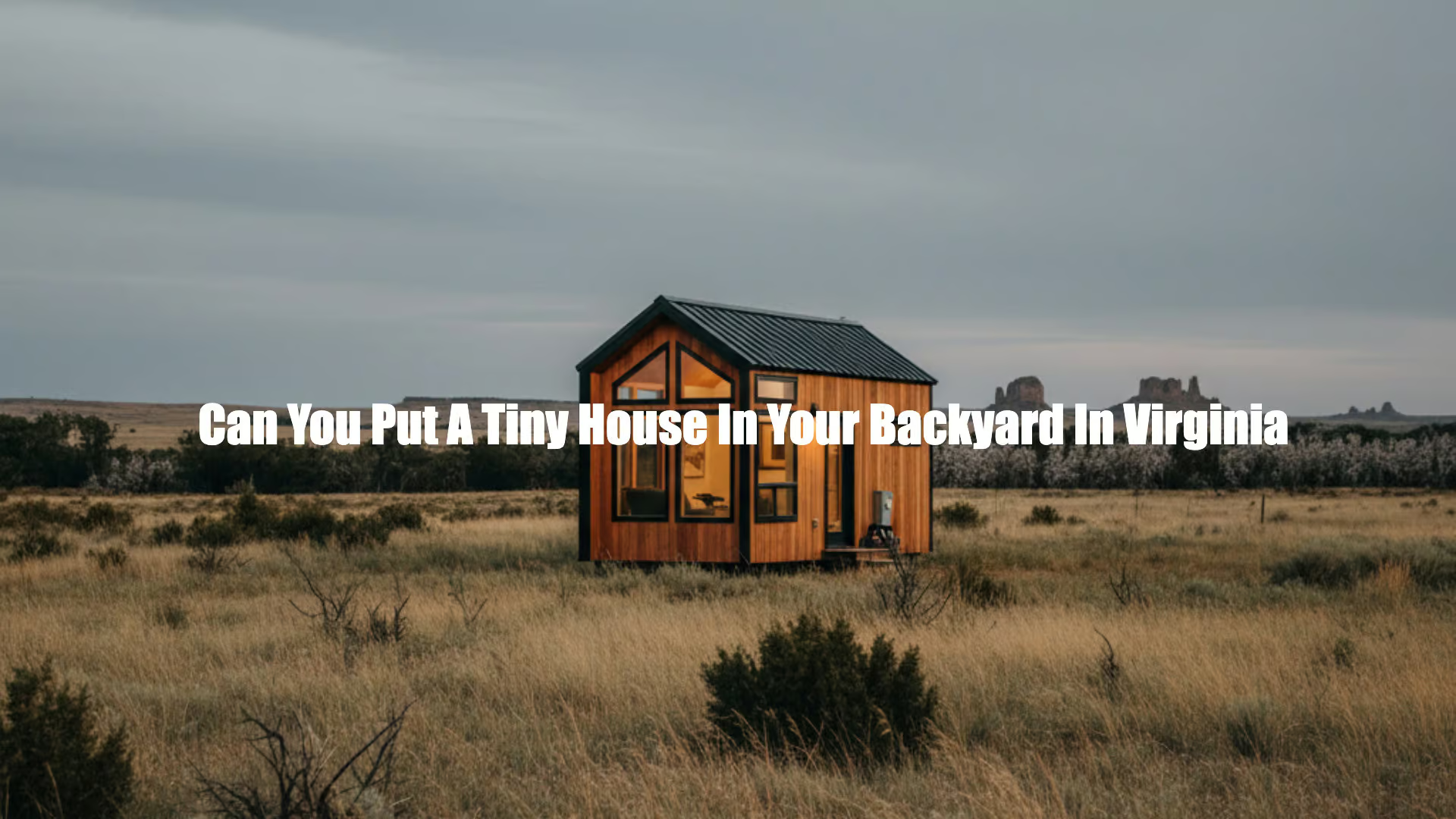
In Virginia, placing a tiny house in your backyard is generally allowed as an accessory dwelling unit (ADU) on a permanent foundation in many counties, provided it complies with the International Residential Code (IRC) Appendix Q for structures under 400 square feet. Tiny houses on wheels (THOWs) are often classified as recreational vehicles and restricted for permanent residency, typically limited to RV parks or temporary use. Always verify local zoning laws, as regulations vary by county and municipality.
Virginia permits backyard tiny houses primarily as ADUs in residential zones, with minimum sizes around 200-400 square feet depending on the county. Permanent foundations are required for full-time living, while THOWs face mobility restrictions. Consult your local planning department for specific approvals and permits.
In recent years, we’ve seen a surge in interest around alternative housing options, and tiny houses have captured our collective imagination as a way to embrace simpler, more sustainable living. The question on many minds is whether we can place a tiny house in our backyard in Virginia. This compact dwelling, often under 400 square feet, offers affordability and flexibility, but navigating the legal landscape requires careful consideration. From state codes to local zoning, understanding the rules helps us turn this idea into reality. Moreover, as housing costs rise and environmental concerns grow, tiny houses represent a practical response to these challenges, allowing us to maximize our existing property without the need for expansive new developments.
As we explore the possibilities of backyard tiny houses, it’s worth noting that at Great Lakes Tiny Homes, we specialize in designing and building structures that align with regional regulations. Our experience with modular and tiny homes across various states positions us to offer insights tailored to Virginia’s unique environment, ensuring our clients achieve compliant and comfortable setups. We provide full-service manufacturing of modular, park model, and tiny homes, delivering turnkey builds to all 48 lower U.S. states, with options for wheels or permanent foundations, and RVIA certification where applicable—our models with RVIA certification are often called Park Models. If you’re ready to dive deeper, book a call with our experts to discuss your project.
Disclaimer: This article is for informational purposes only and does not constitute legal advice. Laws, regulations, and zoning rules vary by location and may change over time. Always consult your local zoning office or a qualified land use/zoning attorney before making decisions based on this information.
Understanding Virginia’s Legal Framework for Backyard Tiny Houses
We’ve delved into Virginia’s approach to regulating tiny houses, and it’s clear that the state takes a balanced stance, deferring much of the decision-making to county and municipal levels. This decentralized system allows for localized policies that reflect community needs, but it also means we must research specific areas thoroughly. At the state level, Virginia adopts the International Residential Code (IRC), which includes Appendix Q for tiny houses—provisions that address reduced size requirements for dwellings under 400 square feet. This appendix covers everything from ceiling heights to stair dimensions, making it easier for us to build safe, functional spaces that comply without unnecessary bulk. The Virginia Department of Housing and Community Development oversees the Uniform Statewide Building Code (USBC), ensuring consistent safety standards across the commonwealth.
A key distinction we encounter is between tiny houses on wheels (THOWs) and those on permanent foundations. THOWs, often classified as recreational vehicles (RVs), can be more mobile but face restrictions on permanent residency, typically limited to RV parks or temporary setups. In contrast, permanent foundation tiny houses are treated as real property, subject to full building codes but eligible for integration as accessory dwelling units (ADUs). ADUs provide a viable pathway for backyard placement, allowing us to add habitable space to our property for family, guests, or rental purposes. For example, in suburban settings, an ADU can serve as a home office or elder care suite, enhancing multigenerational living arrangements. Recent legislative efforts, such as House Bill 2033 passed in 2020, have further encouraged ADU-friendly policies by streamlining approvals in urban areas like Richmond and Alexandria.
Virginia’s Building Code, enforced through the Department of Housing and Community Development, mandates compliance with standards for safety and habitability. Some counties have gone further, enacting specific tiny house ordinances to streamline approvals. For instance, pilot programs in select municipalities test innovative zoning for THOWs, reflecting a growing recognition of tiny houses as solutions to housing affordability. These initiatives often involve community input, helping us adapt designs to local preferences while maintaining structural integrity. As we navigate this framework, consulting official resources becomes essential for our planning. This layered approach, while complex, ultimately empowers us to create personalized living solutions that fit within Virginia’s diverse landscapes.
Disclaimer: This article is for informational purposes only and does not constitute legal advice. Laws, regulations, and zoning rules vary by location and may change over time. Always consult your local zoning office or a qualified land use/zoning attorney before making decisions based on this information.
Zoning Laws and Local Regulations: What You Need to Know
Zoning laws form the backbone of where we can place a tiny house in our Virginia backyard, dictating land use to maintain community character. Residential zones like R-1 (single-family) often permit ADUs but with conditions, while R-2 or higher-density zones may offer more flexibility for multiple units. We must understand how these classifications influence allowances—for example, R-1 zones might restrict tiny houses to one per lot, tied to the primary residence. In practice, this means evaluating our property’s zoning certificate first, which can be obtained from county records offices, to avoid surprises during planning. The Virginia Department of Housing and Community Development provides statewide guidelines, but local ordinances add specificity, such as minimum lot sizes of 10,000 square feet in some rural areas.
Setback requirements, typically 5-10 feet from property lines, ensure space for access and privacy, while lot coverage ratios limit the percentage of land built upon, often capping at 35-50%. Height restrictions, usually 15-35 feet, prevent overshadowing neighbors. These metrics not only promote orderly development but also consider environmental factors like sunlight access for gardens. To proceed, we recommend checking with local planning departments early; they provide zoning maps and ordinance details. Obtaining permits involves submitting site plans, elevations, and engineering reports, with fees ranging from $500 to $2,000 depending on the county. Best practices include attending pre-application workshops offered by many departments, which can clarify requirements and build a positive rapport. For instance, in Fairfax County, workshops cover ADU specifics, helping us prepare comprehensive applications.
HOA restrictions add another layer, sometimes overriding local zoning by prohibiting non-conforming structures in covenants. We advise reviewing HOA documents and seeking variances if needed. Ultimately, we always recommend consulting local authorities before any project to avoid costly setbacks. By integrating these regulations into our initial vision, we ensure a smoother path to realization, balancing innovation with community harmony. For more on specific areas, explore tiny house for sale in Richmond, where urban policies are evolving rapidly.
Disclaimer: This article is for informational purposes only and does not constitute legal advice. Laws, regulations, and zoning rules vary by location and may change over time. Always consult your local zoning office or a qualified land use/zoning attorney before making decisions based on this information.
Virginia Counties That Allow Backyard Tiny Houses
Virginia’s counties vary widely in their tiny house policies, with several embracing backyard placements through ADU provisions or specific ordinances. We’ve compiled a scannable table of key counties that permit them, highlighting size requirements, permit processes, and restrictions. This focuses on those with favorable stances, but we urge verifying current rules as they evolve. Understanding these variations helps us select locations where our projects align seamlessly with local priorities, such as preserving green spaces or promoting affordable housing initiatives. The table below draws from official county planning documents to ensure accuracy.
| County/City | Min Sq Ft | Zoning Type | Key Requirements | Source | Verified |
|---|---|---|---|---|---|
| Fairfax County | 300 | R-1 Residential | Permanent foundation required; owner/family use only; no short-term rentals; setbacks 5 ft sides, 10 ft rear; apply via online portal with site plans. | Fairfax County Zoning Ordinance | Yes |
| Arlington County | 250 | R Residential | Detached ADUs up to 750 sq ft or 50% of main home; owner occupancy required; max height 20 ft; 3-person limit; submit to Department of Human Services. | Arlington County ADU Program | Yes |
| Loudoun County | 200 | R-1 Rural Residential | Lots over 10,000 sq ft; utility tie-ins mandatory; pre-application meetings required; no THOWs for permanent use; Building and Development Department review. | Loudoun County ADU Guidelines | Yes |
| Prince William County | 400 | R-R Rural Residential | Appendix Q compliance; no flood zones without elevation; environmental impact assessments; Planning Office submission; 5-10 week timeline. | Prince William County Zoning | Yes |
| Henrico County | 350 | R-3 Residential | Conditional use permit; height limit 20 ft; architectural match to main home; septic evaluations; Community Development application. | Henrico County ADU Ordinance | Yes |
| Chesterfield County | 300 | R-7 Residential | Conditional Use Permit; full kitchen required; coverage under 40%; neighbor notifications; Planning Department review. | Chesterfield County Planning | Yes |
| Virginia Beach City | 250 | R Residential | Hurricane-resistant designs; coastal impact studies; elevated in flood zones; City Planning submission; 7-10 weeks. | Virginia Beach Planning Department | Yes |
For a full overview, see our guide on what counties in Virginia allow tiny houses. These policies reflect Virginia’s push toward affordable housing, but local nuances demand direct inquiry. By choosing counties with progressive stances, we can leverage incentives like density bonuses that encourage innovative, space-efficient living. For builder options in specific areas, check tiny house builder in Fairfax.
Disclaimer: This article is for informational purposes only and does not constitute legal advice. Laws, regulations, and zoning rules vary by location and may change over time. Always consult your local zoning office or a qualified land use/zoning attorney before making decisions based on this information.
Major Virginia Cities and Their Tiny House Policies
Richmond
Richmond has become increasingly supportive of tiny houses, allowing ADUs in R-7 residential zones with minimum sizes of 300 square feet and maximums up to 1,200 square feet. The permitting process involves submitting applications to the Department of Planning and Development Review, including detailed site plans, architectural drawings, and proof of code compliance. Fees range from $750 to $1,200, with processing times of 8-12 weeks, often including public hearings for community input. Recent 2022 ordinances have streamlined approvals, including pilots for THOWs in select districts, reflecting the city’s focus on addressing housing shortages through innovative solutions. For those interested in urban tiny living, Richmond’s policies emphasize integration with existing neighborhoods, requiring designs that match architectural styles. To explore options, view tiny house for sale in Richmond, where local builders offer compliant models.
Unique to Richmond, the city’s ADU program includes incentives like fee reductions for affordable units, making it attractive for first-time builders. Environmental considerations, such as stormwater management, are mandatory in flood-prone areas along the James River. Best practices involve early engagement with planners to navigate variances, ensuring projects align with the city’s comprehensive plan for sustainable growth. This approach not only facilitates backyard additions but also supports multigenerational housing needs in a rapidly expanding urban center.
Norfolk
Norfolk permits tiny houses as ADUs starting at 400 square feet, with a focus on workforce housing through its 2023 pilot program. Applications go through the Planning and Community Development Department, requiring income verification for participants and design standards that complement neighborhood character. Processing takes 10 weeks, with fees around $1,000, including flood zone reviews due to the city’s coastal location. The program mandates licensed contractors and multi-stage inspections, ensuring resilience against hurricanes and sea-level rise. For coastal tiny living, Norfolk’s policies prioritize elevated foundations and impact-resistant materials, reflecting its vulnerability to environmental challenges.
Norfolk’s initiative targets urban infill, allowing tiny houses in designated areas to combat affordability issues. Utility connections must tie into city systems, with energy efficiency exceeding standard codes. Engaging early with the department helps tailor applications, incorporating community feedback to foster acceptance. This structured approach positions Norfolk as a leader in innovative housing, balancing density with disaster preparedness in Tidewater Virginia.
Virginia Beach
Virginia Beach supports backyard ADUs from 250 square feet, emphasizing coastal resilience in its policies. Submit to the Planning Department with erosion studies and hurricane-resistant designs, fees at $900, and timelines of 7-10 weeks. Elevated structures are required in flood zones, aligning with FEMA guidelines for the area’s vulnerability. The city’s 2021 updates favor eco-friendly builds, including solar-ready roofs and permeable surfaces for stormwater management.
Unique ordinances mandate wind-load compliance up to 130 mph, ensuring safety in hurricane-prone regions. Community workshops aid in navigating approvals, promoting designs that enhance beachside aesthetics. For resort-like tiny living, Virginia Beach’s rules integrate tourism considerations, allowing short-term rentals in approved zones. This blend of environmental and economic factors makes it a dynamic choice for coastal tiny house enthusiasts.
Alexandria
Alexandria allows 350+ square foot ADUs, with $1,100 fees and 6-10 week processing via online submission to the Department of Planning and Zoning. The 2021 initiative reduced barriers for family ADUs, requiring architectural harmony and utility tie-ins. Digital portals enable real-time tracking, streamlining reviews in this historic urban setting. Policies emphasize preservation, mandating designs that respect Potomac River views and heritage districts.
Alexandria’s focus on density bonuses encourages tiny houses in multifamily zones, supporting transit-oriented development. Early documentation of compliance expedites approvals, with variances available for creative adaptations. This progressive stance aids in addressing housing needs while maintaining the city’s charm, offering a model for urban tiny integration.
Disclaimer: This article is for informational purposes only and does not constitute legal advice. Laws, regulations, and zoning rules vary by location and may change over time. Always consult your local zoning office or a qualified land use/zoning attorney before making decisions based on this information.
Permanent Foundation vs. Tiny Houses on Wheels: Legal Differences
Understanding the legal differences between permanent foundation tiny houses and THOWs is crucial for our Virginia projects. Permanent tiny houses, anchored to the ground, are classified as ADUs and must adhere to the full IRC, including Appendix Q for sizes under 400 sq ft. This setup offers stability and equity as real property but requires rigorous inspections for foundations, roofing, and insulation. In Virginia’s variable climate, permanent foundations provide superior protection against humidity and storms, ensuring longevity. The Virginia Department of Housing and Community Development’s USBC outlines foundation standards, emphasizing load-bearing capacity and frost protection.
THOWs, built on chassis, are often regulated as RVs under Virginia’s DMV and health codes, allowing mobility but limiting permanent occupancy to 180 days in one spot without RV park zoning. Pros of permanent: Long-term security, easier financing, full utility integration. Cons: Higher upfront costs ($10,000-$20,000 for foundation) and less flexibility. THOWs pros: Lower cost ($50,000-$100,000 total), quick setup; cons: Financing challenges, potential resale issues, and utility hookup restrictions. For families planning seasonal use, THOWs offer versatility, while permanent suits full-time residency. DMV registration for THOWs requires annual inspections, adding to maintenance.
Minimum sizes for permanent structures hover at 400 sq ft for habitability, though ADUs can be smaller with variances, versus THOWs’ flexible 100-400 sq ft. Utility connections for permanent are straightforward via municipal lines, while THOWs may need temporary setups. For legal security, permanent wins in Virginia’s evolving codes, as it aligns with property tax benefits and inheritance planning. For more on builders, see tiny house builder in Norfolk.
Disclaimer: This article is for informational purposes only and does not constitute legal advice. Laws, regulations, and zoning rules vary by location and may change over time. Always consult your local zoning office or a qualified land use/zoning attorney before making decisions based on this information.
Building Permits and Code Compliance Requirements
Securing building permits for our backyard tiny house in Virginia involves a structured process to ensure safety and legality. Step 1: Research zoning via county portals. Step 2: Submit applications with blueprints, energy calculations, and soil tests—documentation varies but typically includes Form DP-1. Step 3: Pay fees ($500-$3,000) and await review (4-12 weeks). Step 4: Schedule inspections for foundation, framing, electrical, and final occupancy. Additional steps may involve environmental reviews in sensitive areas, ensuring holistic compliance. The USBC requires adherence to IRC standards, including seismic and wind load provisions tailored to Virginia’s geography.
Virginia’s Uniform Statewide Building Code mandates IRC compliance: Electrical per NEC with GFCI outlets; plumbing to UPC standards, including low-flow fixtures; structural for wind loads up to 115 mph. Septic systems require health department approval if not on sewer, with percolation tests. Fire safety includes smoke detectors and egress windows. These standards not only safeguard occupants but also future-proof structures against climate shifts, like increased rainfall in the Tidewater region. For coastal counties, additional FEMA compliance ensures flood resilience, with elevation certificates often needed.
Working with certified builders protects our investment, preserving property values and avoiding fines up to $2,500 daily. Proper permits also facilitate insurance and resale. Great Lakes Tiny Homes ensures all our builds meet Virginia building standards and can guide the permitting process, from drawings to inspections. Methodologies like BIM modeling help visualize compliance early, reducing revisions. For sales in key areas, explore tiny house for sale in Virginia Beach.
Disclaimer: This article is for informational purposes only and does not constitute legal advice. Laws, regulations, and zoning rules vary by location and may change over time. Always consult your local zoning office or a qualified land use/zoning attorney before making decisions based on this information.
Utility Connections and Infrastructure Considerations
Connecting utilities to our Virginia backyard tiny house demands planning for reliability and compliance. For electricity, we can run subpanels from the main house (cost $1,000-$3,000) or install separate meters ($5,000+ with utility approval). Dominion Energy oversees connections, requiring load calculations. In rural setups, solar integration can offset costs, with incentives like federal tax credits reducing net expenses. The Virginia State Corporation Commission regulates utility providers, ensuring fair access for small structures.
Water options include tying into existing lines ($500-$2,000) or drilling wells ($10,000-$20,000); sewer via municipal hookups or septic ($3,000-$15,000). Internet and cable can use buried conduits from the primary home, adding $200-$500. Cost estimates total $5,000-$25,000, depending on site. Factors like soil type influence septic feasibility, often requiring geotechnical surveys for optimal placement. Health departments mandate percolation tests for septic, ensuring environmental protection in groundwater-sensitive areas.
Proper planning ensures legal ties and comfort—off-grid solar/wind systems are permitted in rural counties but need variance in urban ones, with battery storage codes. We emphasize permits for all connections to avoid violations. In coastal areas like Virginia Beach, corrosion-resistant materials are key. Comprehensive infrastructure audits before starting prevent disruptions, ensuring seamless daily operations in our tiny homes. For community insights, see best tiny home communities in Virginia.
Disclaimer: This article is for informational purposes only and does not constitute legal advice. Laws, regulations, and zoning rules vary by location and may change over time. Always consult your local zoning office or a qualified land use/zoning attorney before making decisions based on this information.
HOA Restrictions and Neighborhood Considerations
Even if zoning allows our tiny house, HOA rules in Virginia communities can halt progress. Covenants often ban RVs or unapproved structures, so we review CC&Rs thoroughly and seek amendments. Written board approval is non-negotiable, submitted with plans 60 days prior. Analyzing past HOA decisions can reveal patterns, guiding our approach to variances. The Virginia Property Owners Association Act provides recourse for disputes, but prevention through dialogue is preferable.
Approaching HOAs: Present tiny houses as value-adding ADUs, sharing data on increased property worth (up to 10-20%). Address aesthetics with matching designs. For neighbors, host informal meetings to discuss benefits like multigenerational living, alleviating value concerns. Visual aids, such as 3D renderings, help demystify the project and build consensus. In dense areas like Arlington, community buy-in prevents disputes, with surveys showing 70% approval when benefits are highlighted.
Architectural reviews focus on scale and materials—submit elevations early. As good neighbors, we maintain landscaping and noise limits, fostering harmony. Strategies like phased introductions—starting with temporary setups—can ease transitions and demonstrate responsible stewardship. For builder support in HOA-heavy areas, consider tiny house builder in Arlington.
Disclaimer: This article is for informational purposes only and does not constitute legal advice. Laws, regulations, and zoning rules vary by location and may change over time. Always consult your local zoning office or a qualified land use/zoning attorney before making decisions based on this information.
Tiny House Prices in Virginia
Tiny house prices in Virginia vary significantly based on factors like size, construction type (permanent foundation or wheels), RVIA certification, utility connections, and local zoning requirements. Basic DIY builds can start around $40,000, while professionally constructed models range from $80,000 to $150,000, with luxury options exceeding $200,000. These costs reflect Virginia’s diverse regulatory environment, where urban areas like Fairfax may add expenses for compliance, while rural counties offer more flexibility for off-grid setups. Foundation work alone can add $10,000-$20,000, and utility tie-ins $5,000-$25,000, making site-specific budgeting essential. Market trends show a 10-15% increase in demand-driven pricing since 2022, influenced by housing affordability challenges.
Understanding these variables helps us make informed investments, as tiny houses often appreciate 5-10% annually in value, especially in high-demand areas. For instance, a 300 sq ft ADU in Richmond might cost $90,000 total, including permits, while a THOW in Buckingham County could be $60,000 with off-grid features. Long-term savings on utilities—up to 50% less than traditional homes—offset initial outlays. We recommend consulting local appraisers for ROI projections, factoring in rental potential of $800-$1,500 monthly in urban zones.
Great Lakes Tiny Homes Pricing
Great Lakes Tiny Homes offers comprehensive tiny house solutions in the $100,000 to $150,000 range, providing turnkey delivery and setup services throughout Virginia and the lower 48 states. Our pricing reflects the quality construction, professional design, and full-service approach that ensures your tiny house meets all applicable codes and regulations while delivering exceptional value for your investment. The pricing includes professional design consultation, high-quality materials and construction, transportation to your site, and setup services that eliminate the complexity and uncertainty often associated with tiny house projects. This comprehensive service model is particularly valuable in Virginia’s complex regulatory environment, where compliance with local codes and zoning requirements can significantly impact project costs and timelines. Our experienced team understands Virginia’s regulatory landscape and ensures that your tiny house meets all applicable requirements while maximizing your investment value. The investment in a Great Lakes Tiny Home includes ongoing support and warranty coverage that protects your investment and provides peace of mind throughout the ownership experience.
Great Lakes Tiny Homes Model Options
Great Lakes Tiny Homes offers a diverse range of model options designed to meet different lifestyle preferences, zoning requirements, and budget considerations throughout Virginia. Our model selection includes options that work well in various regulatory environments, from restrictive urban zoning to permissive rural counties. Each model can be customized to meet specific local requirements while maintaining the design integrity and quality construction that defines our brand.
- Modular Homes: Permanent foundation models ideal for jurisdictions requiring traditional construction methods and permanent placement
- A-Frame: Distinctive architectural style that maximizes interior space while meeting minimum square footage requirements
- Cabin: Traditional design that blends well with rural Virginia settings and meets most county building codes
- Park Models: RVIA-certified units that offer financing advantages and regulatory compliance in RV-friendly jurisdictions
- Tiny House on Wheels: Mobile options perfect for counties like Buckingham that welcome THOWs with flexible placement options
The choice of model depends largely on your intended location’s zoning requirements, with permanent foundation models working best in jurisdictions that require traditional construction methods, while wheeled models offer flexibility in counties that accommodate mobile tiny houses. Our design team works closely with customers to ensure their chosen model aligns with local regulations while meeting their lifestyle and aesthetic preferences. This collaborative approach helps avoid costly modifications or compliance issues that can arise when model selection doesn’t match local requirements. Understanding how zoning impacts model choice is crucial for successful tiny house placement in Virginia, and our team provides guidance throughout the selection process to ensure optimal outcomes. Whether you’re planning placement in a restrictive urban environment or a permissive rural county, we help you choose the model that best balances your preferences with regulatory requirements. If you’d like expert guidance on selecting the right model for your specific Virginia location and needs, you can book a call with our experts who understand the nuances of Virginia’s diverse regulatory landscape.
Pricing disclaimer: Tiny house prices fluctuate based on materials costs, labor availability, and market conditions. Prices shown are estimates and should be verified with builders and suppliers.
Disclaimer: This article is for informational purposes only and does not constitute legal advice. Laws, regulations, and zoning rules vary by location and may change over time. Always consult your local zoning office or a qualified land use/zoning attorney before making decisions based on this information.
Practical Tips for Successfully Adding a Tiny House to Your Backyard
For Virginia residents like us, success starts with site selection: Choose flat, accessible spots away from trees for drainage. Work with licensed contractors vetted via state boards; get multiple bids. Evaluating contractor portfolios for Virginia-specific projects ensures alignment with local codes. Soil testing early identifies issues like poor drainage in clay-heavy Piedmont soils, preventing foundation problems.
Manage permits by organizing docs digitally and following up weekly. Timeline: 3-6 months from planning to occupancy. Avoid mistakes like skipping surveys (causing setback issues) or underestimating winter delays in mountainous areas. Lessons include allocating buffer time for weather and supply chain hiccups. Digital tools like county GIS maps aid in visualizing placements, optimizing for sunlight and views.
Site prep includes grading for runoff and access paths. Designs should suit Virginia’s humid climate—elevated foundations for floods, insulated for cold snaps. Great Lakes Tiny Homes’ local expertise helps us sidestep pitfalls, delivering on-time completions. Best practices involve soil testing early and incorporating smart home tech for efficiency. From concept to completion, methodical planning yields enduring satisfaction. For community options, explore best tiny home communities in Virginia.
Disclaimer: This article is for informational purposes only and does not constitute legal advice. Laws, regulations, and zoning rules vary by location and may change over time. Always consult your local zoning office or a qualified land use/zoning attorney before making decisions based on this information.
Future Outlook: Virginia’s Evolving Tiny House Landscape
Virginia’s tiny house scene is transforming, driven by affordability crises pushing median home prices over $400,000. Policies are shifting: Senate Bill 1080 proposes statewide ADU standards, easing local barriers. This bill’s emphasis on standardization could reduce approval times by 30%, benefiting urban and rural applicants alike. The Virginia Housing Development Authority supports these efforts with grants for innovative housing, fostering growth in underserved areas.
Pilot programs in Richmond and Fairfax test THOW zoning, signaling broader acceptance. The movement gains traction via groups like the Tiny House Institute, advocating for code updates. Homeowners benefit from innovative living amid urbanization. Resources like annual conferences provide networking and policy insights. As remote work amplifies demand, tiny houses position us for resilient, adaptable lifestyles in an uncertain economy.
Stay informed through Virginia Housing Development Authority resources. Great Lakes Tiny Homes leads in this market, crafting forward-thinking solutions for Virginia’s future. For builder assistance, see tiny house builder in Chesterfield.
Disclaimer: This article is for informational purposes only and does not constitute legal advice. Laws, regulations, and zoning rules vary by location and may change over time. Always consult your local zoning office or a qualified land use/zoning attorney before making decisions based on this information.
Conclusion: Your Path to Backyard Tiny House Success in Virginia
We’ve covered the essentials: Virginia’s framework favors tiny houses with planning, from zoning to utilities. Compliance with counties like Fairfax and cities like Richmond makes it feasible. By prioritizing research and professional guidance, we can realize sustainable, space-efficient living that enhances our properties and lifestyles.
Check local regs, secure permits, and partner with pros. Contact planning departments today, and consider consulting Great Lakes Tiny Homes for guidance—book a call. With preparation, we unlock tiny living’s promise in Virginia, embracing sustainable futures. At Great Lakes Tiny Homes, our experience in delivering turnkey modular and park model homes across the lower 48 U.S. states makes us a reliable partner for Virginia projects, offering credible guidance from design to delivery. To explore your options further, book with our experts today.
FAQ
Q: Is it legal to put a tiny house in my backyard in Virginia?
A: Yes, placing a tiny house in your backyard is generally legal in Virginia when built as an accessory dwelling unit (ADU) that complies with the International Residential Code (IRC) Appendix Q for structures under 400 square feet. However, approval depends on local zoning laws, which vary by county and municipality, so always verify with your local planning department. Regulations can change, and a disclaimer: this information is for general guidance; consult official sources for current rules.
Q: What’s the difference between tiny houses on wheels and those on permanent foundations in Virginia?
A: Tiny houses on wheels (THOWs) are treated as recreational vehicles, offering mobility but typically restricted to temporary use or RV parks for residency. Tiny houses on permanent foundations are classified as real property, subject to full building codes, and can be integrated as ADUs for habitable space like family suites or rentals. The choice impacts permitting and long-term placement options under Virginia’s decentralized regulatory framework.
Q: What state-level regulations apply to tiny houses in Virginia?
A: Virginia adopts the International Residential Code (IRC), including Appendix Q, which provides provisions for tiny houses under 400 square feet, covering aspects like ceiling heights and stair dimensions. The state defers much decision-making to counties and municipalities, with enforcement through the Department of Housing and Community Development. Recent laws like House Bill 2033 encourage ADU-friendly policies.
Q: How do zoning laws impact backyard tiny houses in Virginia?
A: Zoning laws dictate land use in residential zones (e.g., R-1 for single-family homes), often permitting one ADU per lot tied to the primary residence. Key factors include setback requirements (5-10 feet from property lines), lot coverage ratios (35-50%), and height limits (15-35 feet). Check your property’s zoning certificate from county records and consult local planning departments for maps and ordinances.
Q: Which counties in Virginia allow backyard tiny houses?
A: Several counties permit backyard tiny houses as ADUs, including Fairfax (min 300 sq ft, owner/family use), Arlington (min 250 sq ft, 6 ft setbacks), Loudoun (min 200 sq ft, lots over 10,000 sq ft), Prince William (min 400 sq ft, no flood zones), Henrico (min 350 sq ft, height limit 20 ft), Chesterfield (min 300 sq ft, coverage under 40%), and Virginia Beach (min 250 sq ft, hurricane-resistant designs). Always verify current rules as they evolve.
Q: What is the permit process for a tiny house in Virginia?
A: The process involves submitting site plans, elevations, engineering reports, and utility plans to the local planning or building department. Fees range from $500 to $2,000, with processing times of 4-12 weeks depending on the county. Pre-application workshops are recommended, and additional requirements may include environmental assessments, neighbor notifications, or HOA approvals.
Q: Do HOA restrictions apply to tiny houses in Virginia backyards?
A: Yes, homeowners associations (HOAs) may impose restrictions that override local zoning through covenants, potentially prohibiting non-conforming structures. Review HOA documents and seek variances if needed to ensure compliance.
Q: What are the costs associated with a tiny house in Virginia?
A: Building a tiny house in Virginia can cost between $30,000 and $100,000, covering construction, materials, and foundation or wheels, with additional expenses for permits, utilities, and site work. Costs vary by design complexity and location-specific regulations. Exploring best tiny home communities in Virginia can provide insights into budget-friendly compliant options.