

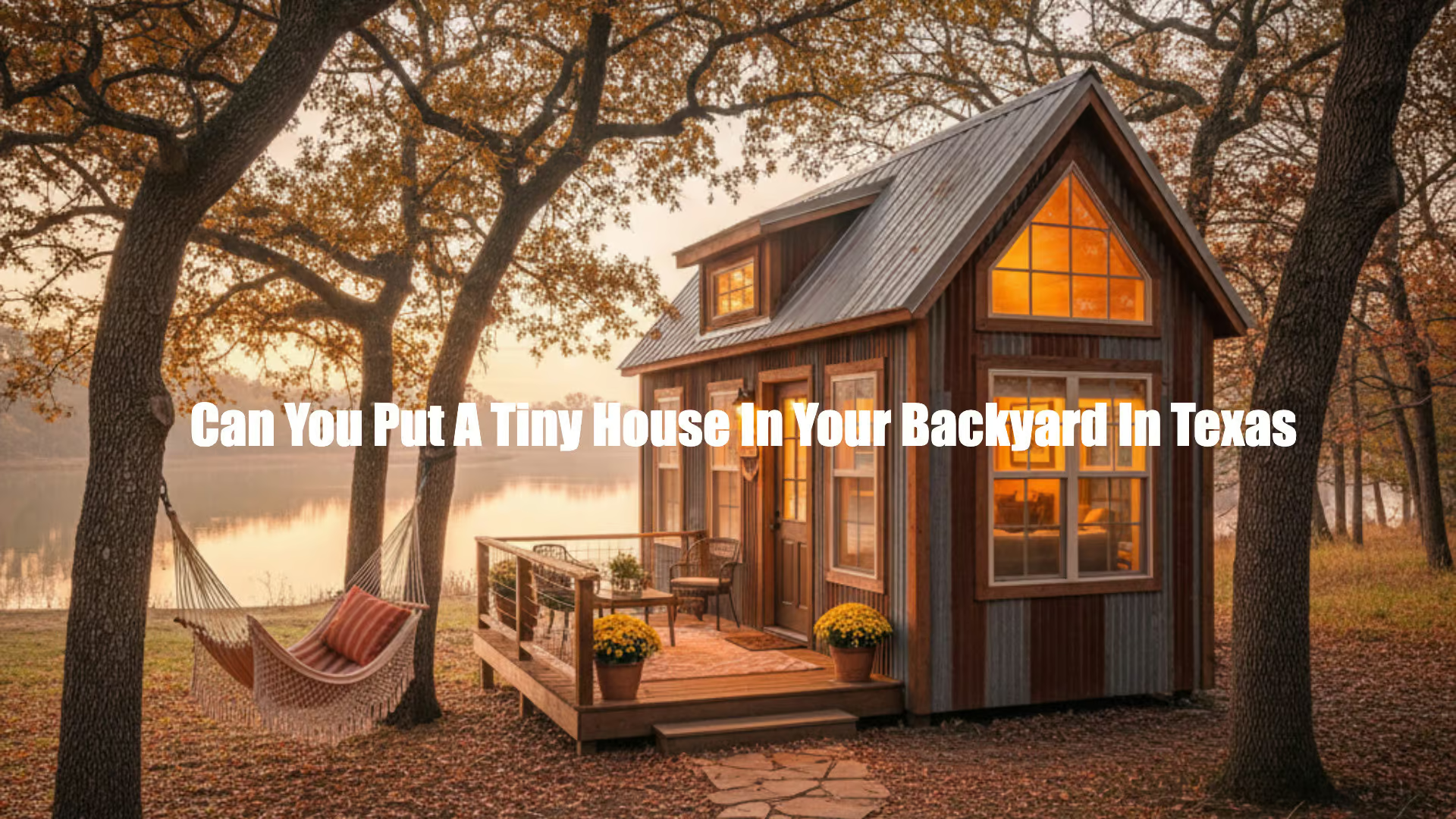
Texas allows tiny houses in backyards as accessory dwelling units (ADUs) in many counties and cities, provided they comply with local zoning and the International Residential Code (IRC), typically requiring at least 400 square feet on a permanent foundation. Tiny houses on wheels are often classified as RVs and restricted for permanent residency, limited to temporary use or RV parks. Always verify with your local zoning office, as rules vary by location and may include setbacks, permits, and utility connections.
Are we dreaming of adding a tiny house to our backyard in Texas? The idea of a compact, efficient living space right at home appeals to many of us seeking affordability, sustainability, or extra family room. But can we actually put a tiny house in our backyard in Texas? The answer is yes, in many areas, but it depends on local regulations, zoning laws, and how we classify the structure. As the tiny house movement grows across the US, Texas is embracing these innovative homes more than ever, offering opportunities for us to downsize or expand thoughtfully. This trend reflects broader shifts toward minimalism and self-sufficiency, especially in a state known for its vast landscapes and diverse climates, from humid coastal areas to arid plains.
Texas’s legal landscape for backyard tiny houses is evolving, with counties and cities adopting rules that balance innovation with safety. From urban centers like Austin to rural expanses, options range from permanent ADUs to temporary THOWs, each with specific requirements for permits and compliance. This guide covers zoning, permits, costs, and more, helping us navigate the process confidently. At Great Lakes Tiny Homes, we specialize in full-service manufacturing of modular, park model, and tiny homes, delivering turnkey builds to all 48 lower U.S. states. Our options include structures with or without wheels, and those with RVIA certification—often called park models—tailored to meet Texas’s varied regulations. To get started on your journey, book a call with our experts for personalized advice.
Disclaimer: This article is for informational purposes only and does not constitute legal advice. Laws, regulations, and zoning rules vary by location and may change over time. Always consult your local zoning office or a qualified land use/zoning attorney before making decisions based on this information.
Understanding Texas’s Legal Framework for Backyard Tiny Houses
In Texas, the legal framework for backyard tiny houses is shaped by a decentralized approach, where the state sets broad guidelines but leaves most decisions to counties and municipalities. This flexibility allows for innovation but requires us to research local rules diligently. At the state level, Texas adopts the International Residential Code (IRC) with amendments, which influences how tiny houses are regulated. However, enforcement varies widely. The IRC provides foundational standards for construction, including requirements for light, ventilation, and safety features that apply to smaller dwellings, helping us ensure our tiny houses are safe and habitable regardless of location. For instance, Appendix Q of the IRC specifically addresses tiny homes under 400 square feet, outlining allowances for lofts and compact stairs that make efficient use of space.
A key distinction lies between tiny houses on wheels (THOWs) and those on permanent foundations. THOWs are often treated as recreational vehicles (RVs), subject to RV park zoning or temporary placement rules, limiting long-term backyard residency. Permanent foundation tiny houses, on the other hand, are viewed as accessory dwelling units (ADUs) or standalone homes, requiring compliance with full building codes. Texas has no statewide tiny house-specific law, but some counties have adopted ordinances to accommodate them, such as allowing ADUs on single-family lots. For instance, these ordinances might specify maximum heights or integration with existing landscapes to maintain neighborhood harmony. This approach supports diverse needs, from urban density solutions to rural retreats, while prioritizing public safety through standardized inspections.
ADUs provide a popular legal pathway for backyard tiny houses, enabling us to add secondary living spaces for aging parents, grown children, or rental income. Recent legislative developments, like House Bill 1920 in 2021, have eased restrictions on ADUs in certain areas, promoting housing density. Cities like Austin and Dallas show growing acceptance, with pilot programs testing tiny house villages. As we explore options, understanding these layers helps us avoid pitfalls and build confidently. Moreover, the state’s approach encourages sustainable practices, such as energy-efficient designs that align with Texas’s variable weather patterns, from scorching summers to occasional freezes. By staying informed through resources like the Texas Department of Housing and Community Affairs, we can anticipate changes that further support tiny house integration.
Texas’s building code, based on the 2015 IRC, mandates safety standards for structures under 400 square feet if used as dwellings. We’ve seen counties like Travis and Bexar create tailored rules, recognizing tiny houses’ role in addressing the state’s housing shortage. For us, this evolving landscape means more opportunities, but always verify with local authorities. In practice, this might involve reviewing historical zoning changes or consulting state resources like the Texas Department of Housing and Community Affairs for broader insights into affordable housing initiatives. These efforts not only facilitate personal projects but also contribute to statewide goals of increasing accessible housing stock amid population growth.
Zoning Laws and Local Regulations: What You Need to Know
Zoning laws are the backbone of whether we can place a tiny house in our Texas backyard. These regulations divide land into districts like residential (R1 for single-family, R2 for duplexes), commercial, or agricultural, each with rules on what structures we can build. In R1 zones, common in suburbs, tiny houses as ADUs are often permitted if they meet size and setback criteria, but standalone tiny homes might be restricted. For example, in more rural R zones, agricultural allowances can provide leeway for larger setups, while urban R1 areas prioritize density control to prevent overcrowding. These designations ensure orderly development, protecting property values and community character while allowing for innovative housing solutions like tiny homes.
Setback requirements—distances from property lines—typically mandate 5-10 feet from sides and rear, and 20-25 feet from the street, ensuring space for access and privacy. Lot coverage ratios limit how much of our yard the tiny house can occupy, often capping at 40-50% including the main home. Height restrictions, usually 15-35 feet, prevent overshadowing neighbors. These vary by locality; for instance, urban areas might be stricter to maintain density. Understanding these metrics involves reviewing comprehensive zoning maps, which often include overlays for flood zones or historic districts that could further influence our plans. Compliance with these rules not only avoids fines but also fosters good neighbor relations in diverse Texas communities.
We must check with local planning departments early, as they provide zoning maps and ordinance details. Obtaining permits involves submitting site plans, elevations, and engineering reports. Homeowners associations (HOAs) add another layer, with covenants that can override zoning by prohibiting ‘temporary’ structures like THOWs. In planned communities, we might need board approval even if the city allows it. A practical step is to request a pre-application meeting with planners to discuss variances, which can sometimes relax strict rules for innovative projects like eco-friendly tiny homes. This proactive engagement can streamline approvals and uncover incentives for sustainable builds.
Our recommendation is clear: always consult local authorities before any project. This step saves time and money, ensuring our tiny house fits seamlessly into the neighborhood. By understanding these regulations, we empower ourselves to pursue backyard living without surprises. Additionally, staying informed about annual zoning updates through public hearings can help us anticipate changes that favor tiny house placements. For those in rapidly growing areas, tracking urban planning initiatives can reveal opportunities for policy advocacy, potentially shaping future ordinances to better support alternative housing.
Texas Counties That Allow Backyard Tiny Houses
Texas’s 254 counties offer a patchwork of policies on backyard tiny houses, with progressive ones embracing ADUs and tiny homes to tackle affordability. We focus here on counties known for permissive rules, detailing size requirements, permits, and restrictions. Always confirm current status, as policies evolve. This diversity stems from Texas’s history of local governance, allowing counties to respond to unique regional needs like urban sprawl in the east or rural expansion in the west. These variations reflect the state’s vast geography, from Gulf Coast flood zones to Panhandle plains, influencing how tiny houses must be sited and built.
| County/City | Min Sq Ft | Zoning Type | Key Requirements | Source | Verified |
|---|---|---|---|---|---|
| Travis County (Austin area) | 400 | R-1 Residential | ADUs up to 1,000 sq ft on lots over 7,500 sq ft; permits require site plans and utility connections; process takes 4-6 weeks, costing $500-$1,500; owner-occupied primary residence required; no short-term rentals. | City of Austin Tiny Homes | Yes |
| Dallas County | 400 | SF-A Residential | ADUs under 800 sq ft on permanent foundation; application includes architectural review; fees around $800; setbacks of 10 feet; no separate utility addresses. | City of Dallas ADU Program | Yes |
| Harris County (Houston area) | 400 | Residential | THOWs for up to 180 days/year; permanent structures minimum 400 sq ft with IRC compliance; permit timeline 2-4 weeks, $300-$1,000; connect to public sewer if available; elevated foundations in flood zones. | City of Houston Planning | Yes |
| Bexar County (San Antonio) | 400 | R-6 Residential | ADUs up to 900 sq ft; $400-$1,200 fees, 3-5 weeks; eco-friendly designs with rebates; height limit 20 feet; affidavit for owner occupancy. | City of San Antonio Development Services | Yes |
| Tarrant County (Fort Worth) | 400 | Single-Family Residential | Guest quarters under 600 sq ft without kitchen; full ADU permits $600, 4 weeks; no independent metering; ties to main utilities; eco-pilot for sustainable builds. | City of Fort Worth Planning | Yes |
| Williamson County (Round Rock) | 400 | Residential | Up to 750 sq ft on foundations; environmental impact statement required; $700-$1,400, 5-7 weeks; 20% lot coverage max; off-grid with solar approvals. | Williamson County Official Site | Yes |
| Denton County | 400 | Rural Residential | ADUs over 1 acre in rural areas; urban lots 500 sq ft max; online portal permits $500, 3 weeks; off-grid options with solar; no separate utilities. | Denton County Official Site | Yes |
Disclaimer: This article is for informational purposes only and does not constitute legal advice. Laws, regulations, and zoning rules vary by location and may change over time. Always consult your local zoning office or a qualified land use/zoning attorney before making decisions based on this information.
These counties represent hotspots for tiny house enthusiasts. For more on specific areas, explore what counties in Texas allow tiny houses. Linking to communities can enhance our options—check best tiny home communities in Texas.
Major Texas Cities and Their Tiny House Policies
Major Texas cities are at the forefront of tiny house adoption, with tailored regulations balancing growth and preservation. We highlight key metros below, noting how each city’s unique economic drivers, like tech in Austin or energy in Houston, influence policy evolution. These urban centers often lead in innovation, piloting programs that set precedents for surrounding counties and encourage sustainable development amid rapid population increases.
Austin: Austin’s code allows ADUs up to 800 sq ft in single-family zones. Permit costs $1,000-$2,500; application via online portal with plans and fees, expecting 6-8 weeks. Recent changes include a 2022 pilot for tiny house districts, easing bureaucracy. To navigate, attend planning meetings and build rapport with officials—transparency speeds approvals. For instance, engaging early has helped applicants secure variances for creative designs, such as lofted spaces that maximize vertical efficiency in the city’s hilly terrain. Austin’s progressive stance reflects its status as a tech hub, where flexible housing supports a diverse workforce facing high living costs.
Dallas: Permits backyard tiny houses as ADUs under 1,000 sq ft; costs $800-$1,800, 4-6 weeks via development services. A 2023 ordinance update allows THOWs in backyards with utilities. Advice: Submit early drafts for feedback; join city workshops for relationships. This has facilitated projects in diverse neighborhoods, from upscale Preston Hollow to revitalizing Oak Cliff, promoting inclusive housing solutions. Dallas’s policies address urban density, integrating tiny houses into revitalization efforts that enhance community resilience.
Houston: Flexible with no zoning in unincorporated areas; city proper allows ADUs up to 900 sq ft, $500-$1,200 fees, 3-5 weeks. Pilot programs test tiny villages. Tip: Use the city’s permit tracker app; network at community boards. Post-Harvey resilience standards add scrutiny to waterproofing, ensuring tiny houses withstand the region’s intense storms. Houston’s approach suits its sprawling layout, allowing tiny houses to fill gaps in affordable housing without traditional zoning constraints.
San Antonio: ADUs permitted up to 750 sq ft; $600-$1,500, 5 weeks. 2021 policy shift added incentives for affordable units. Practical: Prepare impact studies; engage council members early. Military families often utilize these for in-law suites, aligning with the city’s veteran support initiatives. San Antonio’s rules emphasize cultural preservation, requiring designs that complement historic neighborhoods.
Fort Worth: Allows tiny houses under 600 sq ft as accessory structures; $700 fees, 4 weeks. Recent eco-pilot encourages sustainable builds. Advice: Leverage local advocacy groups for guidance. Cowtown’s blend of western heritage and modern growth makes tiny houses ideal for backyard ranchettes. Fort Worth’s policies support family-oriented expansions, reflecting its suburban appeal.
For builders in these cities, see tiny house builder Austin or similar. Sales options at tiny house for sale Dallas.
Disclaimer: This article is for informational purposes only and does not constitute legal advice. Laws, regulations, and zoning rules vary by location and may change over time. Always consult your local zoning office or a qualified land use/zoning attorney before making decisions based on this information.
Permanent Foundation vs. Tiny Houses on Wheels: Legal Differences
Choosing between a permanent foundation tiny house and a tiny house on wheels (THOW) profoundly impacts our legal path in Texas. Permanent tiny houses are classified as ADUs or site-built homes, requiring adherence to the IRC for structural integrity, insulation, and egress. They must typically exceed 400 square feet to qualify as habitable without variances, offering stability but demanding full permits. This classification integrates them into property records, potentially increasing assessed value but providing mortgage eligibility. Permanent options also align better with long-term residency goals, as they avoid RV restrictions and support full utility integration, making them ideal for family expansions or income-generating rentals.
THOWs, built on chassis, are regulated as RVs under Texas Transportation Code, allowing mobility but restricting permanent backyard placement to 180 days in many counties. They bypass some building codes but need RVIA certification and can’t always connect permanently to utilities. In practice, this means THOWs suit nomadic lifestyles or testing backyard feasibility before committing to foundations. However, for year-round living, THOWs may require skirting and anchoring to meet wind resistance standards, especially in tornado-prone areas like North Texas, adding to setup complexity.
Pros of permanent: Long-term security, equity building, full amenities. Cons: Higher costs ($50,000+), lengthy approvals. THOW pros: Affordability ($30,000-$60,000), quick setup. Cons: Mobility limits residency, potential resale issues. Utility connections for permanent are straightforward via extensions; THOWs often use hookups like campgrounds. For Texas’s extreme weather, permanent options with reinforced foundations better withstand winds up to 130 mph in coastal zones. This choice ultimately depends on our lifestyle—settled or adventurous—and local enforcement, with permanent structures offering greater permanence and value appreciation over time.
At Great Lakes Tiny Homes, our expertise in building code-compliant structures for Texas residents ensures seamless integration. We’ve helped many achieve their visions. Book a call with our experts—we’ve helped 100s of customers make their tiny home dreams a reality.
Building Permits and Code Compliance Requirements
Securing building permits for a Texas backyard tiny house involves a structured process to ensure safety and legality. Step 1: Verify zoning with the county or city planning office, often starting with a zoning confirmation letter. Step 2: Submit an application including site plans, floor plans, elevations, and structural calculations—digital submissions speed things up. Include energy efficiency reports to meet green building incentives. Step 3: Pay fees ($500-$3,000 based on size) and await review (2-8 weeks), during which revisions may be requested. Step 4: Schedule inspections for foundation, framing, electrical, plumbing, and final occupancy, with phased approvals to allow progressive construction. This methodical approach minimizes delays and ensures our project meets Texas’s rigorous standards for habitable spaces.
Texas Building Code, aligned with IRC Appendix Q for tiny homes, covers electrical (NEC compliance), plumbing (IPC standards), and structural (wind-resistant for hurricane zones). Septic systems need health department approval if not on city sewer; fire codes require smoke detectors and extinguishers. These standards protect against common risks like electrical fires or plumbing leaks, especially in tiny spaces where systems are compact. For example, in flood-prone areas like Houston, elevated foundations and impact-resistant windows are mandatory, adding resilience to our designs. Compliance not only avoids fines up to $2,000 per violation but also enhances safety, particularly in Texas’s variable climate.
Working with certified builders mitigates risks, protecting property values and lives. Proper permits increase resale appeal by 10-20%. Utility ties must meet codes, like grounded electrical runs. Great Lakes Tiny Homes ensures all our builds meet Texas standards and can assist with permitting, streamlining your project from concept to completion. Best practices include documenting every step for audits and consulting engineers for site-specific challenges like soil composition. By prioritizing code adherence, we create durable, future-proof tiny houses that stand the test of time and elements.
Disclaimer: This article is for informational purposes only and does not constitute legal advice. Laws, regulations, and zoning rules vary by location and may change over time. Always consult your local zoning office or a qualified land use/zoning attorney before making decisions based on this information.
Utility Connections and Infrastructure Considerations
Connecting utilities to our Texas backyard tiny house is crucial for livability and compliance. For electricity, we can extend from the main panel (subpanel install, $1,000-$3,000) or add a separate meter ($2,000-$5,000) for independence, requiring utility company approval. Trenching for lines must avoid existing infrastructure, and surge protectors are advisable for storm-prone areas. In rural spots, solar arrays with batteries ($10,000-$20,000) offer off-grid freedom, but need permitting for grid-tie options. These connections ensure reliable power, essential for Texas’s hot summers where AC demands peak.
Water options include tying to the main house line ($500-$2,000) or drilling a well ($5,000-$15,000) in rural areas, with filtration systems for quality. Sewer: Connect to existing ($1,500-$4,000) or install septic ($3,000-$10,000), per health codes, including percolation tests for soil suitability. Internet and cable run via underground conduits ($500-$1,500), with fiber options in urban spots for high-speed needs. Rainwater harvesting, legal in Texas with no collection limits, supplements supplies in drought areas, requiring storage tanks and filtration. Proper sizing prevents overloads, like ensuring septic capacity matches household use.
Total costs: $5,000-$20,000 depending on setup. Off-grid solar ($10,000-$25,000) and composting toilets are viable in permissive counties like Denton, but need variances and inspections. Proper planning avoids fines and ensures comfort—always coordinate with providers early. In Texas, where droughts occur, rainwater harvesting can supplement systems, subject to local water rights. Infrastructure decisions impact daily life, from water pressure to internet reliability, so consulting engineers early optimizes efficiency and cost.
HOA Restrictions and Neighborhood Considerations
Even if zoning permits our tiny house, HOAs can veto it through covenants restricting outbuildings or aesthetics. We start by reviewing the HOA’s CC&Rs for clauses on accessory structures—many cap sizes at 500 sq ft or ban wheels. Cross-referencing with state laws can reveal enforceability limits, as some covenants conflict with ADU rights. In Texas, Property Code Section 202 allows reasonable restrictions but prohibits those violating public policy, like banning accessible housing. This legal nuance empowers us to challenge overly restrictive rules through mediation or court if needed.
Seek written approval via board submission of plans highlighting design harmony. Approach neighbors with open houses or meetings, addressing value concerns (tiny houses often boost equity via ADU potential). For architectural review, emphasize quality materials and landscaping integration, perhaps including 3D renderings to visualize impact. In diverse Texas neighborhoods, from Houston suburbs to Dallas enclaves, cultural sensitivities matter—designs blending with local styles foster acceptance. Building alliances early can turn skeptics into supporters, enhancing community ties.
Tips for harmony: Limit noise, share benefits like guest space, and comply visibly. Positive relationships foster support, turning potential opponents into allies in our tiny house endeavor. Community events showcasing successful tiny homes can educate and build consensus over time. For HOAs with strict guidelines, proposing amendments through resident petitions can pave the way for future projects, contributing to broader neighborhood evolution.
Tiny House Prices in Texas
Tiny house prices in Texas vary significantly based on several key factors that influence overall costs and suitability for backyard placement. Size plays a major role, with structures under 400 square feet generally costing less due to reduced materials and labor, while larger ADUs up to 1,000 square feet command higher prices for added space and features. Foundation type is another determinant: permanent foundations add $5,000-$15,000 for concrete work and engineering, ensuring stability in Texas’s variable soils, whereas wheels enable mobility but may require additional anchoring for wind resistance. RVIA certification, essential for THOWs to meet safety standards, increases costs by 10-20% through inspections and compliant materials like reinforced framing. Utility hookups further impact pricing, with connections to existing systems costing $5,000-$10,000, while off-grid setups like solar panels and composting toilets can range from $8,000-$25,000 depending on capacity. Local codes and zoning also affect expenses, as urban areas like Austin may impose stricter permitting fees ($1,000-$3,000) compared to rural counties with minimal oversight.
These variables make Texas an attractive market for tiny houses, where costs can be 50-70% lower than traditional homes, appealing to those seeking affordable expansions amid rising property values. For backyard projects, budgeting for site preparation like grading and drainage is crucial, especially in flood-prone regions, adding $2,000-$8,000 to ensure compliance and longevity. Overall, these factors allow for customized solutions that balance initial investment with long-term savings on utilities and maintenance, making tiny houses a smart choice for Texas’s diverse climates and lifestyles.
Great Lakes Tiny Homes Pricing
At Great Lakes Tiny Homes, our pricing for Texas backyard projects typically ranges from $100,000 to $150,000 for turnkey builds, encompassing design, manufacturing, delivery, and basic setup. This range covers modular and park model options tailored to local regulations, with costs scaling based on customizations like energy-efficient windows or expanded lofts. We provide full-service support, including permit assistance, ensuring seamless integration into your property without hidden fees. Our transparent pricing model helps Texas customers plan effectively, factoring in state-specific needs like hurricane-rated materials for coastal areas. Delivery to all lower 48 states keeps logistics straightforward, with on-site assembly minimizing disruption. This investment yields durable, high-quality homes that enhance property value and functionality for years.
Great Lakes Tiny Homes Model Options
- Modular Homes – Ideal for permanent foundations in zoned areas, offering customizable layouts up to 1,000 sq ft that comply with IRC standards for backyard ADUs.
- A-Frame – Compact and stylish for sloped lots, these models under 400 sq ft suit rural counties with minimal setbacks, providing cozy, efficient living.
- Cabin – Rustic designs blending with Texas landscapes, perfect for agricultural zones allowing standalone structures with off-grid capabilities.
- Park Models – RVIA-certified options for temporary or semi-permanent use, fitting RV-friendly ordinances in counties like Denton for flexible backyard placement.
- Tiny House on Wheels – Mobile THOWs for testing sites before commitment, compliant with 180-day rules in urban areas while allowing relocation if zoning changes.
Choosing the right model depends on local zoning, such as permanent modular for strict ADU rules or THOWs for flexible rural setups. Our designs prioritize compliance, ensuring your selection aligns with Texas’s varied regulations. If zoning impacts your choice, our team can recommend adaptations like foundation conversions. Book a call with our experts to discuss how these models fit your backyard vision.
Practical Tips for Successfully Adding a Tiny House to Your Backyard
For us in Texas, success starts with site selection: Choose sunny, level spots with drainage to avoid flooding—common in the state. Conduct geotechnical surveys to assess soil stability, preventing foundation cracks. Work with licensed contractors experienced in local codes; get multiple bids and references, verifying insurance and past projects. These steps ensure our tiny house withstands Texas’s expansive clays and seasonal shifts, avoiding costly repairs down the line. Early soil testing, around $500-$1,500, pays off by informing foundation choices suited to the terrain.
Manage permits by organizing docs digitally and following up weekly. Timeline: 3-6 months from planning to move-in, accounting for seasonal delays like rainy springs. Avoid mistakes like underestimating utilities or ignoring soil tests. Lessons: Buffer for weather delays; prioritize ventilation for humid climates, using cross-breezes or mechanical systems. Incorporating smart tech like automated shading helps manage heat, reducing energy costs in summer peaks.
Design for Texas heat: Insulate well, add porches. Great Lakes Tiny Homes’ local expertise helps dodge pitfalls, ensuring our projects finish on time and within budget. Incorporating smart home tech early enhances usability and future-proofs the space. Community input through neighborhood associations can preempt issues, fostering support for our sustainable addition.
Disclaimer: This article is for informational purposes only and does not constitute legal advice. Laws, regulations, and zoning rules vary by location and may change over time. Always consult your local zoning office or a qualified land use/zoning attorney before making decisions based on this information.
Future Outlook: Texas’s Evolving Tiny House Landscape
Texas’s tiny house scene is booming, driven by affordability crises pushing ADU expansions. Trends include relaxed zoning in suburbs and state bills like proposed HB 253 for tiny home standards, which could standardize certifications statewide. Pilot programs in Austin and Houston test communities, signaling broader acceptance. The movement’s momentum means easier approvals ahead, benefiting future homeowners with diverse options. Economic factors, like remote work, amplify demand for flexible backyard spaces. Advocacy from groups like the Texas Tiny House Association continues to influence policy, potentially leading to statewide guidelines by 2025.
As urban areas grow, tiny houses address housing shortages, with projections showing 20% more ADU permits by 2030. Rural counties may follow suit, easing restrictions for agritourism. Sustainability drives innovation, like net-zero designs qualifying for rebates. For us, this evolution opens doors to eco-friendly living. Staying engaged through legislative alerts ensures we capitalize on changes, from tax incentives to streamlined permitting.
Great Lakes Tiny Homes leads in this market, innovating for Texas’s unique needs, from hurricane-resistant builds to drought-tolerant features. Our forward-thinking designs position us for the state’s tiny house surge.
Tiny House FAQs in Texas
Is it legal to place a tiny house in my backyard in Texas?
Yes, tiny houses are legal in many Texas counties and cities as accessory dwelling units (ADUs), provided they meet local zoning laws and the International Residential Code (IRC). However, rules vary significantly by location, so always consult your local zoning office for specific regulations, as this information does not constitute legal advice.
Tiny houses on wheels are often treated as RVs and restricted to temporary use rather than permanent backyard residency.
What is the difference between tiny houses on wheels and those on permanent foundations in Texas?
Tiny houses on wheels (THOWs) are classified as recreational vehicles (RVs) in Texas, limiting them to temporary placement in backyards or designated RV areas, with restrictions on long-term living. Permanent foundation tiny houses are considered ADUs or primary dwellings, requiring compliance with full building codes for safety and habitability.
Local ordinances may differ, so verify with your municipality to ensure your structure fits the appropriate category; this is not legal advice.
What is the minimum size requirement for a tiny house in Texas?
Under the IRC adopted in Texas, permanent tiny houses typically need at least 400 square feet, but Appendix Q allows for smaller dwellings under 400 square feet with provisions for lofts, compact stairs, and other space-saving features. Minimum sizes can vary by local jurisdiction, emphasizing safety standards like light and ventilation.
Always check with your local building department, as regulations may include additional requirements.
Where can I place a tiny house on my property in Texas?
Tiny houses as ADUs can be placed in backyards on single-family lots in many areas, subject to setbacks from property lines, maximum height limits, and lot coverage rules to preserve neighborhood aesthetics. Placement is generally not allowed in front yards or areas that violate zoning for primary structures.
For detailed zoning considerations, see the Understanding Texas’s Legal Framework section; confirm with local authorities for your specific property.
What permits and utilities are required for a backyard tiny house in Texas?
Permits often include zoning approval, building permits, and inspections for electrical, plumbing, and structural elements, especially for permanent foundations. Utilities such as water, sewer, and electricity must connect to approved systems, complying with local codes to ensure safe habitation.
Requirements vary by location, so contact your county or city zoning office early in the process; this guidance is informational only.
Conclusion: Your Path to Backyard Tiny House Success in Texas
Putting a tiny house in our Texas backyard is achievable with diligent planning, from understanding state frameworks to securing permits. Key: Research local rules, comply with codes, and engage pros. This guide equips us with the knowledge to proceed confidently, turning vision into reality amid Texas’s supportive yet varied landscape.
Contact your planning department today and consider consulting Great Lakes Tiny Homes for guidance. With preparation, we unlock tiny living’s joys—affordable, eco-friendly homes amid Texas’s growth. At Great Lakes Tiny Homes, our experience in delivering turnkey modular and park model homes across the lower 48 U.S. states makes us a reliable partner for your project, no matter where you are. Contact us today to explore how we can support your tiny house vision.