

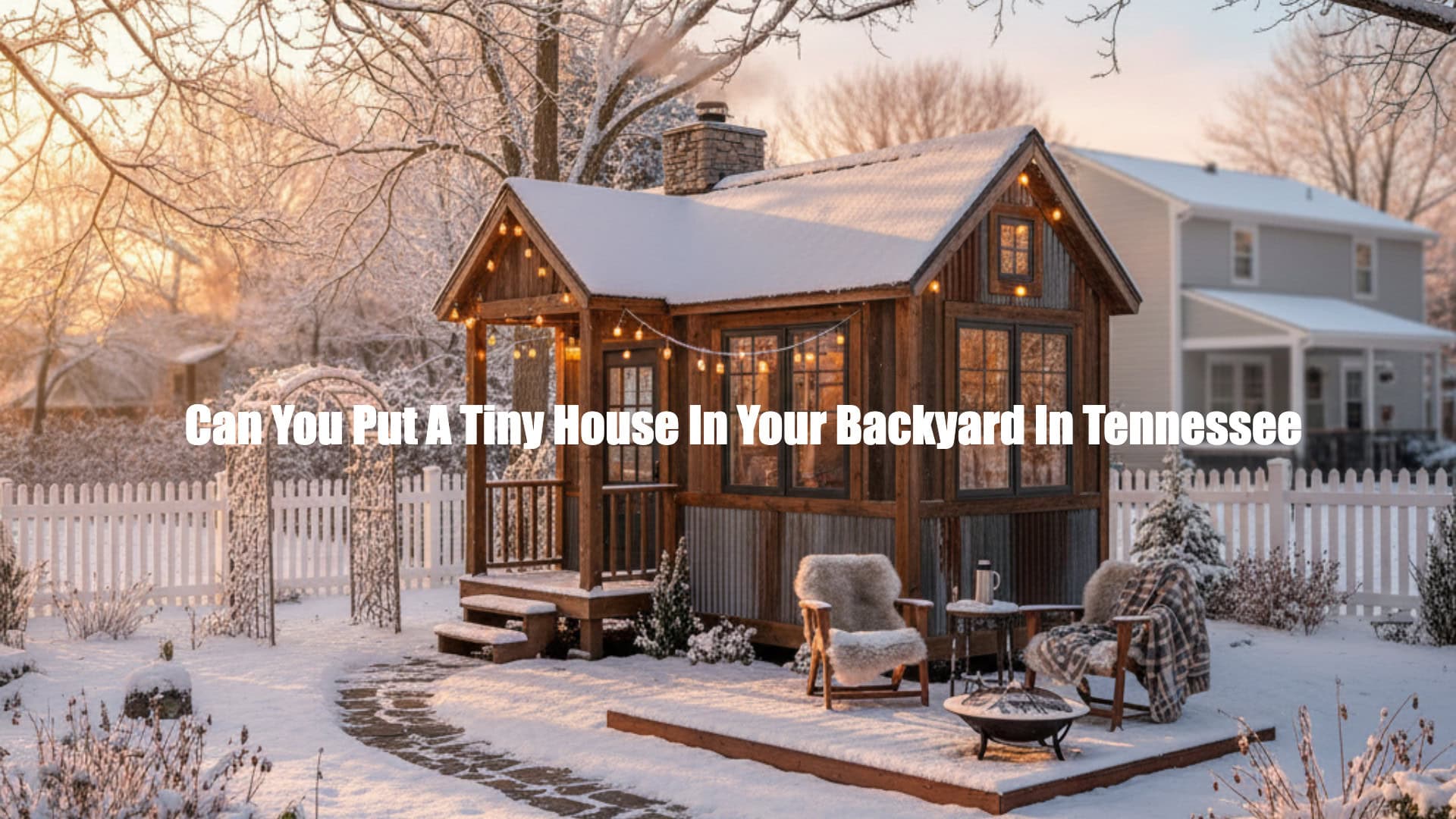
Can You Put a Tiny House in Your Backyard in Tennessee?
Tennessee allows tiny houses in backyards primarily as accessory dwelling units (ADUs) in many counties, with minimum sizes often starting at 200-400 square feet depending on local zoning. Tiny houses on wheels are generally restricted for permanent residence and treated as RVs, while permanent foundation structures must comply with the International Residential Code (IRC). Always verify with your local planning department, as regulations vary by county and municipality.
In recent years, the tiny house movement has gained significant momentum across the United States, driven by rising housing costs, a desire for sustainable living, and the appeal of simplified lifestyles. In Tennessee, with its diverse geography from the rolling hills of the east to the flatlands of the west, many residents are exploring whether they can put a tiny house in their backyard to accommodate family members, guests, or even generate rental income. The answer is frequently yes, but it hinges on navigating a patchwork of local zoning laws, building codes, and permit requirements that differ by county and city. This guide provides a comprehensive overview of the legal framework, practical considerations, and steps to successfully add a tiny house to your property, helping you make informed decisions amid evolving regulations.
Understanding these rules is essential not just for compliance but also for maximizing the benefits of tiny living, such as reduced utility bills and environmental impact. Tennessee’s adoption of the International Residential Code (IRC), including Appendix Q for tiny houses under 400 square feet, offers a statewide baseline, but local interpretations create unique opportunities and challenges. For those ready to proceed, Great Lakes Tiny Homes serves as a full-service manufacturer of modular, park model, and tiny homes, delivering turnkey builds to all 48 lower U.S. states. Our options include homes with or without wheels and with or without RVIA certification—where certified models are often referred to as park models—ensuring flexibility to meet Tennessee’s varied requirements. If you’d like personalized guidance on your backyard project, you can book a call with our experts.
Disclaimer: This article is for informational purposes only and does not constitute legal advice. Laws, regulations, and zoning rules vary by location and may change over time. Always consult your local zoning office or a qualified land use/zoning attorney before making decisions based on this information.
Understanding Tennessee’s Legal Framework for Backyard Tiny Houses
Tennessee’s regulatory approach to tiny houses emphasizes local control, with no uniform statewide mandate dictating backyard placements. Instead, the state relies on the adoption of the 2018 International Residential Code (IRC) as a foundation, which includes Appendix Q specifically tailored for tiny houses of 400 square feet or less. This appendix addresses unique aspects like loft requirements, ceiling heights (minimum 6 feet 8 inches in living areas), and emergency egress, providing a safety net for compact dwellings. However, counties and municipalities interpret and amend these codes, often classifying backyard tiny houses as accessory dwelling units (ADUs) to allow secondary housing on single-family lots. This classification supports multigenerational living or income generation while preserving neighborhood character, but it requires tying into existing utilities and meeting setback distances to avoid overburdening infrastructure.
The distinction between tiny houses on wheels (THOWs) and permanent structures is pivotal. THOWs are frequently regulated under recreational vehicle (RV) laws, limiting their use to temporary stays—typically no more than 180 days per year in backyards—due to mobility and sanitation concerns. Permanent tiny houses, built on foundations, are treated as fixed real property, subjecting them to full building inspections for electrical, plumbing, and structural integrity. Recent trends show increasing flexibility, with some areas piloting programs for ADU expansions to combat housing shortages, incorporating features like energy-efficient designs to align with state sustainability goals. For rural counties, fewer restrictions may apply, but urban areas like Nashville impose stricter aesthetic and size limits to maintain visual harmony. Navigating this framework involves early consultation with local authorities to align your project with both state baselines and community-specific ordinances.
Disclaimer: Regulations can evolve, so verify current requirements with your local planning office. This decentralized system fosters innovation but demands thorough research; for instance, flood-prone eastern Tennessee may require elevated foundations, adding to costs but enhancing resilience against regional weather patterns.
Zoning Laws and Local Regulations: What You Need to Know
Zoning ordinances are the primary gatekeepers for backyard tiny houses in Tennessee, defining permissible uses based on district classifications. In single-family residential zones (often R-1), ADUs are commonly allowed as detached structures, provided the lot exceeds minimum sizes like 7,500 square feet and the tiny house doesn’t exceed 50% of the primary home’s footprint. These zones prioritize family-oriented developments, so tiny houses must support that intent—such as housing relatives—rather than commercial rentals in some areas. Multi-family zones (R-2 or higher) offer more leeway, potentially permitting multiple units, but with increased scrutiny on parking and traffic impacts. Setback rules ensure spatial balance: typically 25-30 feet from the front property line, 5-10 feet from sides, and 20-30 feet from the rear, preventing encroachments that could affect neighbors’ privacy or sunlight access.
Lot coverage and height limits further shape feasibility; coverage caps at 35-50% preserve open space, while accessory structure heights rarely exceed 15-20 feet to avoid overshadowing the main residence. Homeowners associations (HOAs) can impose additional covenants, such as material matching or screening requirements, even if zoning permits the build. Variances—exceptions to standard rules—may be sought through planning boards, often requiring public hearings where demonstrating minimal neighborhood impact is key. For example, proving the tiny house enhances property values through added utility can sway approvals. Urban planning trends in Tennessee are shifting toward inclusivity, with some cities relaxing rules for affordable housing, but rural areas might lack such updates, relying solely on state IRC minimums. Always obtain a zoning compliance letter pre-construction to document approvals and mitigate future disputes.
Practical navigation involves using county GIS tools for property verification and attending zoning workshops for insights. This proactive stance not only ensures compliance but also uncovers incentives like density bonuses for green features. For community-specific advice, explore best tiny home communities in Tennessee, where established precedents can inform backyard projects.
Tennessee Counties That Allow Backyard Tiny Houses
Tennessee’s counties exhibit a spectrum of policies toward backyard tiny houses, influenced by population density, housing needs, and economic factors. Urban counties tend to formalize ADU allowances to address affordability, while rural ones offer flexibility through minimal oversight. Below is an updated table summarizing key counties, drawing from official planning documents and recent ordinance reviews. This overview highlights permissive areas but underscores the need for site-specific verification, as policies can shift with new council approvals or state amendments.
| County/City | Min Sq Ft | Zoning Type | Key Requirements | Source | Verified |
|---|---|---|---|---|---|
| Davidson County (Nashville) | 300 sq ft | R-1 to R-10 (ADU permitted) | Lots over 5,000 sq ft; owner-occupied primary; no short-term rentals; setbacks 5-20 ft | Nashville Codes Administration | Yes |
| Shelby County (Memphis) | 800 sq ft max | Residential zones (ADU allowed) | 1+ acre lots; utility connections required; zoning approval first; 10 ft setbacks | Shelby County Planning & Development | Yes |
| Knox County (Knoxville) | 400 sq ft | R-1 to R-4 (permanent ADU) | IRC Appendix Q compliance; THOWs up to 180 days; inspections required; 50% lot coverage | Knoxville Codes Administration | Yes |
| Hamilton County (Chattanooga) | 600 sq ft | R-1 to R-3 (ADU ordinances) | Environmental reviews; fire sprinklers in dense areas; 50% coverage max; aesthetic compatibility | Hamilton County Regional Planning Agency | Yes |
| Williamson County (Franklin) | 50% of main house | Agricultural/Residential (1+ acre) | Environmental reviews; neighborhood aesthetics; no separate addresses; setbacks 10-25 ft | Williamson County Planning Department | Yes |
| Rutherford County (Murfreesboro) | 350 sq ft | Agricultural/Residential | Permanent foundation; SSDS connection; combined permits; no mailing addresses for ADUs | Rutherford County Building Codes | Yes |
Disclaimer: Table data is based on current public records; confirm with county offices for updates. Rural counties like Sevier may permit with fewer restrictions but require additional septic planning. For community options, see best tiny home communities in Tennessee.
Major Tennessee Cities and Their Tiny House Policies
Nashville (Davidson County) has embraced ADUs through its 2022 ordinance, allowing up to 1,000 square feet on multi-family zoned lots, with streamlined reviews for family use. Permits cost $750-$1,500 and take 8-12 weeks, including public input for variances. The Metro Codes Department emphasizes sustainability, offering incentives for solar-integrated designs that reduce urban heat islands. Contact: (615) 862-6530 or visit their portal for applications; recent pilots test corner-lot bonuses, enhancing backyard feasibility.
Memphis (Shelby County) updated policies in 2023 to ease ADU restrictions for seniors, permitting under 800 square feet on 1+ acre lots with mandatory utility ties. Fees range $600-$1,200, processed in 6-10 weeks by the Planning Division, focusing on flood zone compliance near the Mississippi River. Accessible features like ramps are encouraged, supporting multigenerational setups. Reach out at (901) 222-5600; workshops on alternative housing provide networking opportunities.
Knoxville (Knox County) follows IRC Appendix Q strictly, allowing 400+ square foot permanents and seasonal THOWs, with online permitting at $400-$900 taking 4-8 weeks. Since 2021, green material incentives apply, aligning with the city’s eco-initiatives. The Codes Administration at (865) 215-2500 offers pre-submittal help; volunteer in advocacy to influence expansions.
Chattanooga (Hamilton County) streamlined 2024 reviews for eco-tiny houses up to 600 square feet, charging $500-$1,000 over 5-9 weeks via the Regional Planning Agency. Rainwater systems qualify for bonuses, fitting the riverfront focus. Call (423) 643-5832; GIS tools aid zoning checks, and neighborhood presentations build support.
For builders, explore tiny house builders in Tennessee. These cities’ policies reflect housing innovation, but early engagement is key.
Permanent Foundation vs. Tiny Houses on Wheels: Legal Differences
Permanent foundation tiny houses in Tennessee are regulated as ADUs under full IRC standards, requiring engineered foundations to handle loads like 110 mph winds and seismic activity from the New Madrid fault. They integrate seamlessly with property utilities, offering equity as real estate but demanding geotechnical surveys ($500-$1,500) for soil stability in karst-prone areas. Pros include long-term security, easier mortgages, and appreciation potential (5-10% annually in growing metros); cons involve higher upfront costs ($10,000+ for concrete slabs) and immobility. These structures suit committed backyard additions, with inspections ensuring compliance for plumbing (UPC standards) and electrical (NEC with arc-fault protection).
THOWs, chassis-mounted for towing, fall under RV classifications, capping residency at 180 days in many backyards to address sanitation and permanence issues. Built to RVIA standards, they bypass some building codes but need annual registrations and may require skirting for aesthetics. Advantages: Quick setup ($5,000-$15,000), relocation ease, and sizing flexibility under 400 square feet; drawbacks: Storm vulnerability (secure tie-downs essential), personal property financing (higher rates), and rezoning risks. In Tennessee, THOWs excel for trials or nomads, but permanent use often needs variances. For sales, view tiny houses for sale in Tennessee.
Utility differences: Permanents use direct ties with backflow preventers; THOWs rely on RV hookups like 30-amp services, needing maintenance for hoses. Analysis favors permanents for families, THOWs for flexibility; Great Lakes Tiny Homes crafts both, incorporating humidity controls for Tennessee’s climate.
Building Permits and Code Compliance Requirements
The permitting journey for a Tennessee backyard tiny house begins with zoning verification, submitting sketches for feedback to confirm ADU eligibility. Documentation includes site plans (scaled 1:20), elevations, load calculations, and energy forms per IECC, with floodplain checks in vulnerable areas like the Cumberland Basin. Filing incurs $500-$2,000 fees, followed by 2-4 week reviews addressing revisions like reinforced framing for tornado resilience. Inspections—foundation (frost depth 12 inches), framing (shear walls), electrical (GFCI in baths), plumbing (PEX with traps), and final (CO detectors)—span months, ensuring habitability.
Tennessee’s 2018 IRC mandates wind-resistant designs (ASCE 7 standards), septic percolation tests for off-sewer lots ($300-$600), and fire safety like Class A roofing. Off-grid elements like solar require UL-listed inverters; variances for composting toilets need health board nods. Certified builders streamline this, avoiding $1,000/day fines and qualifying for rebates up to $2,000. Great Lakes Tiny Homes handles drawings to finals, ensuring seamless compliance.
Disclaimer: Consult local offices for updates; this process safeguards against liabilities while enabling safe, innovative living.
Utility Connections and Infrastructure Considerations
Utility integration for backyard tiny houses in Tennessee requires balancing cost, reliability, and code adherence. Electricity subpanels from the main meter ($1,000-$3,000) use trenched conduits (18 inches deep) for safety; separate services ($2,000-$5,000) demand utility easements. Water taps include pressure regulators ($500-$1,500) to match municipal PSI (40-80); wells ($3,000-$8,000) need bacterial testing per TDEC rules. Sewer connections or septics ($3,000-$10,000) involve perc tests for clay soils, with mound systems in high-water tables.
Internet via buried fiber ($200-$800) or Starlink ($599 kit + $120/month) suits remote spots; cable follows similar paths. Off-grid solar (5kW at $15,000) with batteries meets net metering, but permits ensure grid-tie safety. Estimates total $5,000-$15,000, influenced by 100-200 ft runs; pros recommend load audits to handle AC peaks (2-3 tons in humid summers). For rural setups, hybrid systems blend grid and renewables for resilience.
Planning averts overloads; professional engineers optimize for Tennessee’s variable terrain, ensuring efficient, compliant infrastructure.
HOA Restrictions and Neighborhood Considerations
HOAs in Tennessee subdivisions can veto tiny houses via CC&Rs emphasizing uniformity, often predating modern ADU laws. Review documents for clauses on outbuildings (size, materials) and seek board pre-approval with visuals demonstrating harmony, like cedar siding matching the main home. Variances require hearings; highlight value adds (10-20% via usability) with planner reports on low density impact.
Neighbor engagement mitigates concerns: Share plans via meetings, using buffers like evergreens for privacy and soundproofing (R-19 insulation) for quiet. Offer community perks, such as emergency shelter use, to build alliances. Legal recourse exists if HOAs overreach, but amicable resolutions preserve relations. In non-HOA areas, focus on municipal rules; this diplomacy turns potential conflicts into endorsements for sustainable additions.
Tiny House Prices in Tennessee
Tiny house prices in Tennessee fluctuate based on several factors, reflecting the state’s diverse economic and regulatory landscape. Size plays a primary role, with smaller 200-square-foot units costing less due to reduced materials and labor, while larger 400-square-foot models command higher prices for added features like full kitchens. Foundation choices—permanent versus wheels—affect costs significantly; permanent setups require site preparation and utility integrations, often adding $10,000-$20,000, whereas wheeled options prioritize road-legal construction. RVIA certification, essential for park model classifications, increases expenses through compliance testing but expands placement options in RV-friendly zones. Utility hookups vary by location: urban connections to municipal systems might cost $5,000-$10,000, while rural septic and well installations can reach $15,000-$25,000. Local codes influence pricing too, with stricter inspections in counties like Davidson adding permit fees of $500-$2,000, whereas rural areas like Sevier offer savings through minimal oversight.
Overall, Tennessee’s market sees base prices from $40,000 for basic THOWs to $120,000 for custom permanents, with averages around $80,000 excluding land and infrastructure. Economic factors, such as Nashville’s booming real estate, inflate costs by 15-20% compared to eastern rural spots, where affordability drives demand. Buyers should budget 20-30% above base for customizations like energy-efficient windows or hurricane-rated roofs, vital in tornado-prone areas. Financing options, from RV loans at 6-9% interest to home equity lines, further impact total outlay, with cash purchases common for under $60,000 builds. For those navigating these variables, consulting builders familiar with Tennessee’s codes ensures value without overages.
Great Lakes Tiny Homes Pricing
Great Lakes Tiny Homes offers comprehensive builds in the $100,000 to $150,000 range, providing full-service turnkey delivery that includes Tennessee regulatory compliance from initial design through final installation. This pricing encompasses premium materials selected for durability in Tennessee’s humid climate and temperature variations, plus customization options to meet specific county zoning requirements. Our turnkey approach handles transportation, site preparation coordination, utility connections, and initial inspections, minimizing owner involvement while ensuring professional results. The transparent pricing model eliminates surprise costs while focusing on long-term value through quality construction and efficient design, positioning tiny house living as an accessible option without compromising on regulatory adherence across Tennessee’s diverse landscape.
Great Lakes Tiny Homes Model Options
- Modular Homes – Ideal for counties requiring permanent foundations, offering rapid on-site assembly while meeting traditional building code requirements.
- A-Frame – Perfect for Tennessee’s mountainous regions, providing distinctive architecture that complies with scenic zoning districts.
- Cabin – Suited for rural properties and woodland settings, aligning with traditional architectural preferences in heritage districts.
- Park Models – RVIA-certified for maximum placement flexibility, ideal for communities and transitional zoning situations.
- Tiny House on Wheels – Optimal for RV-friendly counties and mobile lifestyles, offering relocation capability around changing regulations.
Model selection should align with local zoning requirements, as foundation-based options suit permanent residency rules in counties like Knox, while wheeled versions provide flexibility in areas with evolving tiny house policies. Zoning requirements significantly impact model viability and long-term satisfaction, making professional consultation valuable for matching your vision with local regulations. If you’d like an expert second opinion on your specific situation, you can book a call with the Great Lakes Tiny Homes team.
Practical Tips for Successfully Adding a Tiny House to Your Backyard
Site selection is foundational: Opt for level, drained spots 50 feet from wetlands, conducting soil borings ($400-$700) to evaluate bearing capacity in Tennessee’s red clay expanses. Collaborate with licensed contractors holding BC-1 classifications; solicit three bids with scopes detailing IRC adherence, verifying insurance for liability coverage up to $1 million. Permit tracking via apps like Buildertrend keeps timelines (3-6 months) on course, buffering for spring rains that delay pours.
Common pitfalls include utility underestimation—factor surge protectors for grid fluctuations—and setback oversights; past projects reveal neighbor buy-in via shared mockups averts appeals. Enhance drainage with swales ($800-$2,000) and permeable pavers for runoff management, crucial in flash-flood zones. Design for resilience: Impact windows (Miami-Dade rated) and generator hookups prepare for outages, with lofts ventilated to combat summer mugginess. Great Lakes Tiny Homes’ phased approaches minimize disruptions, delivering compliant, enduring backyard enhancements.
For builder recommendations, check tiny house builders in Tennessee. These strategies ensure projects not only succeed but elevate property functionality.
Future Outlook: Tennessee’s Evolving Tiny House Landscape
Tennessee’s tiny house trajectory accelerates amid 2023 median prices surpassing $300,000, spurring ADU legislation like 2024’s proposed standardization clarifying THOW tenancies. Pilots in Knoxville and Memphis experiment with infill zoning, rewarding low-impact designs with fee waivers up to 50%. The Tennessee Tiny House Association advocates via petitions, tracking bills on tn.gov for alerts on expansions like off-grid allowances in conservation districts.
Climate imperatives drive integrations: Storm-rated builds and microgrids address tornado risks, with rebates for resilient features. Great Lakes Tiny Homes innovates here, supplying modular solutions for Tennessee’s adaptive future, from urban ADUs to rural retreats. As acceptance grows, early adopters shape policies favoring equity and ecology.
Tiny House FAQs in Tennessee
Q: Is it legal to put a tiny house in my backyard in Tennessee?
A: Yes, it is generally legal in many parts of Tennessee, but it depends on local zoning laws and whether the tiny house qualifies as an accessory dwelling unit (ADU). Counties and municipalities handle most regulations, often allowing ADUs on single-family lots to address housing needs. Regulations can vary and change, so always consult your local planning department for the most current rules.
Q: What is the difference between tiny houses on wheels and those on permanent foundations in Tennessee?
A: Tiny houses on wheels (THOWs) are typically classified as recreational vehicles, which may restrict long-term backyard residency and subject them to RV park rules rather than full residential codes. In contrast, tiny houses on permanent foundations are treated as real property and must comply with the International Residential Code (IRC) for structural and safety standards. The classification impacts permitting, utilities, and resale value, so choose based on your intended use.
Q: What is the minimum size for a tiny house in Tennessee?
A: Tennessee’s adoption of IRC Appendix Q recognizes tiny houses as small as under 400 square feet, with specific provisions for lofts and egress. However, local codes may enforce minimum habitable space of 150-200 square feet for safety and livability. Verify exact requirements with your county building department, as interpretations can differ.
Q: Where can I place a tiny house on my property in Tennessee?
A: Tiny houses are usually placed in the backyard as detached ADUs, adhering to setback rules like 5-10 feet from side property lines and 20-30 feet from the rear. Placement must fit within lot coverage limits (often 35-50%) and zoning for residential areas like R-1. For location-specific guidance, see our guide on what counties in Tennessee allow tiny houses; always confirm with local zoning maps.
Q: What permits and utilities are required for a backyard tiny house in Tennessee?
A: Building permits, zoning approvals, and inspections are essential, along with connections to water, sewer, or septic systems compliant with health codes. Tiny houses must meet IRC standards for electrical, plumbing, and ventilation. Due to varying local regulations, contact the Tennessee Department of Commerce and Insurance and your municipal office early in the process to avoid delays.
Conclusion: Your Path to Backyard Tiny House Success in Tennessee
Integrating a tiny house into your Tennessee backyard demands navigating zoning, permits, and utilities with precision, but the rewards—affordable expansion, sustainability, and family proximity—make it worthwhile. From Davidson’s urban allowances to rural flexibilities, opportunities abound for compliant, innovative living. Prioritize local consultations and expert partnerships to sidestep pitfalls, ensuring your project thrives amid Tennessee’s dynamic landscape.
Great Lakes Tiny Homes stands ready to support your vision with code-compliant, customizable builds delivered statewide. If you’d like an expert second opinion on your specific situation, you can book a call with the Great Lakes Tiny Homes team. As Tennessee’s tiny house policies evolve, proactive planning unlocks enduring, space-smart solutions for modern life.