

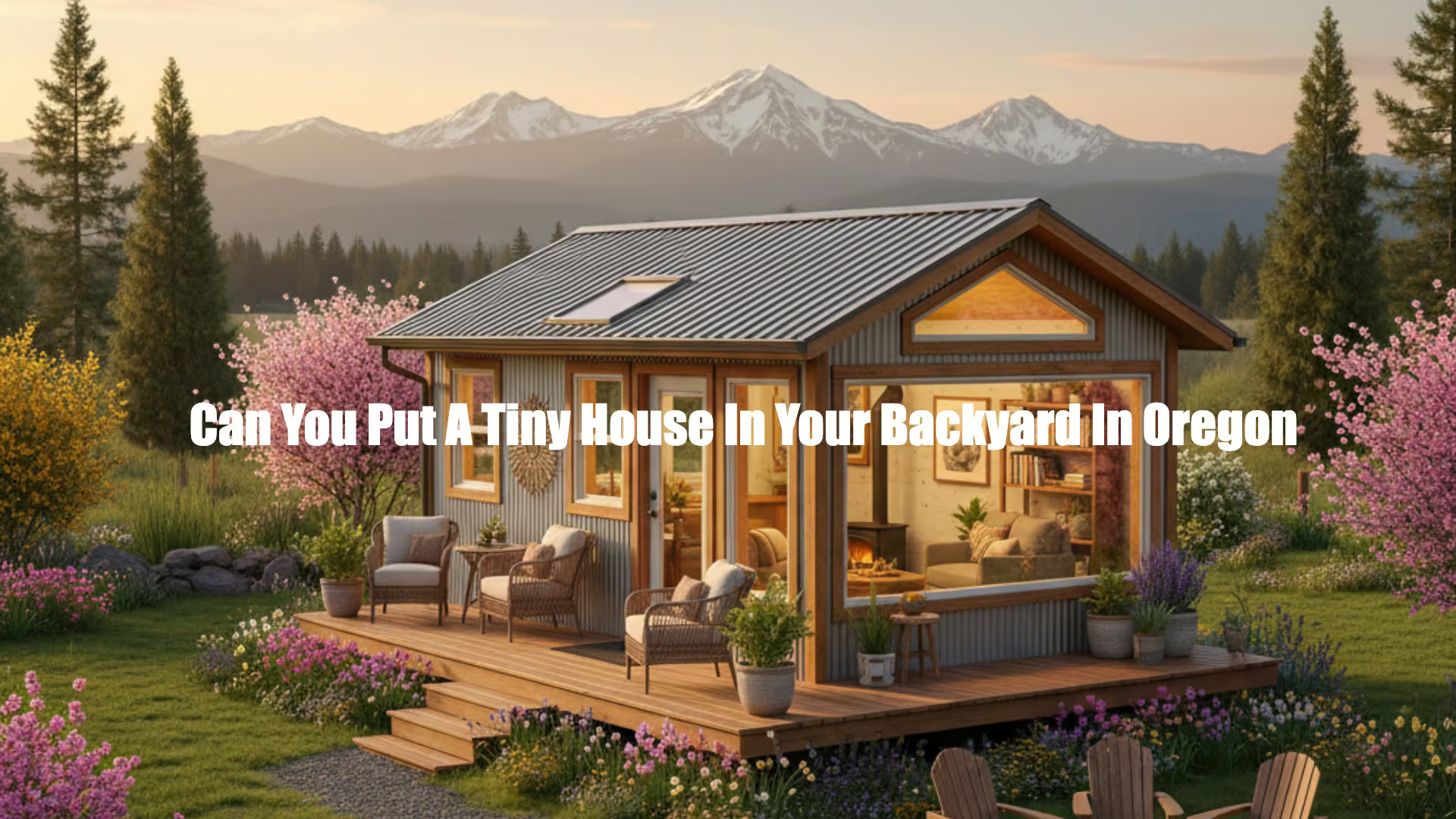
Oregon allows tiny houses in backyards primarily as accessory dwelling units (ADUs) on properties zoned for single-family residential use, with a maximum size of 900 square feet under state law (Senate Bill 391). Tiny houses on wheels (THOWs) are generally classified as recreational vehicles and restricted to temporary use or RV parks, though some counties like Clackamas, Deschutes, and Lane have adopted rules permitting long-term placement on rural lots with owner-occupied primary homes. Always verify local zoning with county planning departments, as rules vary by jurisdiction and may require permits for foundations, utilities, and setbacks.
At Great Lakes Tiny Homes, we’re passionate about helping families embrace simpler, more sustainable living through innovative housing solutions. The idea of adding a tiny house to our backyard in Oregon appeals to many of us seeking affordable, eco-friendly options amid rising housing costs. Whether we’re downsizing, accommodating multigenerational living, or creating a guest space, understanding the legal landscape is our first step toward success. Oregon’s unique blend of urban innovation and rural charm makes it an ideal setting for such projects, but navigating the rules requires careful attention to detail. From the rainy coasts to the sunny high desert, our state’s diverse climates also influence design choices, ensuring that tiny houses not only comply with laws but also thrive in their environments.
As experts in tiny home construction, we at Great Lakes Tiny Homes have seen how backyard tiny houses can transform properties across the US. Our focus on code-compliant builds ensures that our clients navigate local rules with confidence. We offer full-service manufacturing of modular, park model, and tiny homes, delivering turnkey builds to all 48 lower U.S. states. Options include homes with or without wheels, and those with RVIA certification—often called park models—for enhanced mobility and compliance. If you’re considering this for your Oregon property, we invite you to book a call with our experts to discuss your vision.
Disclaimer: This article is for informational purposes only and does not constitute legal advice. Laws, regulations, and zoning rules vary by location and may change over time. Always consult your local zoning office or a qualified land use/zoning attorney before making decisions based on this information.
Understanding Oregon’s Legal Framework for Backyard Tiny Houses
In Oregon, we approach tiny house regulations at the state level with a framework that delegates most authority to counties and municipalities, allowing for localized flexibility. This means that while the state provides overarching guidelines, the specifics of placing a tiny house in our backyard often depend on where we live. For instance, Oregon’s adoption of the International Residential Code (IRC) Appendix Q in 2018 has been a game-changer, specifically addressing tiny houses under 400 square feet and making them more viable as permanent dwellings. This appendix outlines requirements for lofts, stairs, and emergency escapes, which we must incorporate to ensure safety and habitability. The Oregon Residential Specialty Code (ORSC), effective as of the 2021 edition, incorporates these standards statewide, emphasizing energy efficiency and seismic resilience given our earthquake-prone regions.
We distinguish between tiny houses on wheels (THOWs) and those on permanent foundations. THOWs, often classified as recreational vehicles (RVs), can be more mobile but face restrictions on long-term placement in residential zones, typically limited to RV parks or temporary use. In practice, this mobility appeals to those of us who value flexibility, such as seasonal residents in coastal areas, but it complicates insurance and financing. Permanent foundation tiny houses, on the other hand, are treated like traditional structures and must comply with full building codes, offering greater stability and integration into our property. These foundations, often concrete piers or slabs, anchor the home against Oregon’s seismic activity, a critical consideration given our location on the Cascadia Subduction Zone. According to the Oregon Building Codes Division, all permanent structures must undergo plan reviews and inspections to verify compliance with ORSC provisions for structural integrity and fire safety.
The Oregon Residential Specialty Code, based on the IRC, applies statewide, requiring tiny houses to meet standards for safety, energy efficiency, and accessibility. This includes R-21 insulation for walls in cooler regions and energy-efficient windows to reduce heating costs during wet winters. Some counties, like those in the Willamette Valley, have developed dedicated tiny house ordinances to streamline approvals, such as predefined checklists for ADU applications that cut down on paperwork. Accessory dwelling units (ADUs) provide another pathway; Oregon law, updated in 2019 and further in 2022 via Senate Bill 391, encourages ADUs in urban and rural areas alike, allowing us to build secondary units on our lots without excessive hurdles. These laws removed owner-occupancy requirements in many cases, opening doors for rental opportunities and family care setups. For detailed state code references, see the Oregon Building Codes Division.
Recent legislative developments reflect growing acceptance. House Bill 2001 in 2021 expanded housing options, indirectly supporting tiny homes by promoting density in urban growth boundaries, while cities like Portland have piloted ADU incentives, including grants for low-income builders. We see this trend continuing as Oregon addresses its housing shortage, with more municipalities warming to tiny houses as innovative solutions. For example, rural counties are increasingly viewing them as tools for agricultural workers’ housing. To explore options in your area, check out our guide on what counties in Oregon allow tiny houses. This evolving framework not only legalizes but also incentivizes sustainable living, aligning with our state’s environmental ethos.
Disclaimer: This article is for informational purposes only and does not constitute legal advice. Laws, regulations, and zoning rules vary by location and may change over time. Always consult your local zoning office or a qualified land use/zoning attorney before making decisions based on this information.
Zoning Laws and Local Regulations: What You Need to Know
Zoning laws form the backbone of where we can place a tiny house in our Oregon backyard, dictating land use to maintain community character and safety. Residential zones like R1 (single-family) often permit accessory structures but with limits on size and use, such as no separate kitchens to prevent independent living without approval, while R2 or higher-density zones may allow more flexibility for ADUs, accommodating up to two units per lot in some areas. Understanding these classifications helps us assess feasibility; for instance, in suburban R1 zones common around Salem, we might need a variance for anything over 200 square feet. The Oregon Department of Land Conservation and Development outlines statewide planning goals that influence local zoning, emphasizing urban growth boundaries to direct development away from farmland.
Setback requirements typically mandate that structures be at least 5-10 feet from property lines, depending on the county, to prevent overcrowding and allow for fire access. In wildfire-prone areas like eastern Oregon, these can extend to 15 feet on the sides. Lot coverage ratios limit how much of our land can be built upon—often 35-50%—ensuring space for yards and drainage, which is vital in our rainy climate to avoid erosion issues. Height restrictions cap tiny houses at 15-20 feet to blend with neighborhoods, preserving skyline views in places like the hills of Portland. For county-specific zoning maps, refer to resources like the Oregon Department of Land Conservation and Development.
We always emphasize checking with local planning departments early. They provide zoning maps and can clarify if our property qualifies, often through free consultations that reveal hidden easements or flood zones. Obtaining permits involves submitting site plans, elevations, and engineering reports, with fees ranging from $500 to $2,000, and sometimes public hearings for larger projects. Homeowners associations (HOAs) add another layer; their rules can supersede zoning, prohibiting tiny houses outright or requiring aesthetic approvals, such as color matching to the main home. In practice, HOAs in areas like Beaverton often require board pre-approval, which can add 30-60 days to timelines.
Our recommendation is to consult local authorities before any project begins. This proactive step avoids costly revisions, like redesigning for non-compliant setbacks. In real-world scenarios, we’ve noted that early engagement can expedite approvals by 30-50%. For broader insights, we link to resources like best tiny home communities in Oregon, where regulations align with community living. Best practices include documenting all communications and using GIS tools online to map our site preliminarily. See tiny house for sale Portland for examples of compliant builds in urban settings.
Disclaimer: This article is for informational purposes only and does not constitute legal advice. Laws, regulations, and zoning rules vary by location and may change over time. Always consult your local zoning office or a qualified land use/zoning attorney before making decisions based on this information.
Oregon Counties That Allow Backyard Tiny Houses
Oregon’s diverse counties offer varying degrees of support for backyard tiny houses, with policies evolving to meet housing needs. We focus on those permitting placement as ADUs or accessory structures, organized below for easy reference. Always verify with county offices, as rules change, and consider consulting planners for site-specific advice. These policies often stem from a balance between urban density pressures and rural preservation efforts, reflecting Oregon’s commitment to smart growth. The table below summarizes key counties, drawing from official county planning documents.
| County | Min Sq Ft | Zoning Type | Key Requirements | Source | Verified |
|---|---|---|---|---|---|
| Multnomah County | 150 sq ft | Residential (R1-R10) | ADUs up to 800 sq ft; must connect to public utilities; no off-grid; permits via land use review (60-90 days) | Portland Bureau of Development Services – Accessory Dwelling Units | Yes |
| Clackamas County | 200 sq ft | Rural Residential | Permanent foundations in RR zones; 20-ft setbacks; septic approval required; online portal for permits (30-60 days) | Clackamas County Planning Division | Yes |
| Washington County | 150 sq ft | Urban Residential | ADUs up to 800 sq ft; neighbor notifications; energy audits required; no THOWs permanent | Washington County Land Use & Transportation | Yes |
| Lane County | 120 sq ft | Agricultural/Residential | Tiny houses in AG/R zones; environmental reviews; fire-resistant materials; 60-day permits | Lane County Building Safety – Tiny Homes | Yes |
| Jackson County | 200 sq ft | Rural Residential | Guest quarters up to 500 sq ft; solar-ready; soil tests; 90-day process | Jackson County Development Services | Yes |
These counties represent progressive areas; for a full list, refer to what counties in Oregon allow tiny houses. Each has tailored processes to balance growth and preservation, often incorporating public input sessions for transparency. Deeper analysis reveals that counties with higher urban sprawl, like Multnomah, have more rigorous aesthetic guidelines to maintain neighborhood harmony. For rural placements, see best tiny home communities in Oregon.
Disclaimer: This article is for informational purposes only and does not constitute legal advice. Laws, regulations, and zoning rules vary by location and may change over time. Always consult your local zoning office or a qualified land use/zoning attorney before making decisions based on this information.
Major Oregon Cities and Their Tiny House Policies
Oregon’s major cities have tailored regulations to foster tiny house adoption, often through ADU programs. We detail Portland, Eugene, Salem, and Bend below, including costs and tips. These urban centers are at the forefront of housing innovation, driven by population growth and affordability initiatives that make tiny houses a practical response to high real estate prices. Policies here often include streamlined processes for ADUs, with incentives like fee waivers in high-need areas.
Portland: As a tiny house pioneer, Portland’s Bureau of Development Services handles ADU permits ($3,000-$5,000 fees, 2-4 months timeline). Recent 2023 updates reduced barriers, including a pilot for energy-efficient designs that offers rebates for solar integrations. To navigate bureaucracy, we suggest attending community meetings and building rapport with planners—start with pre-application consultations, where you can discuss variances for unique lot shapes. In one case, a homeowner expedited approval by presenting a 3D model showing minimal visual impact. For local options, explore tiny house for sale Portland. The city’s focus on equity means priority for low-income applicants, with resources available through the Portland Housing Bureau.
Eugene: Permits cost $1,500-$3,000, with applications via the city’s planning division (1-3 months). A 2022 policy change allows THOWs in backyards for up to 6 months, ideal for testing setups before committing to foundations. Advice: Document your project’s benefits to housing diversity when meeting officials, such as how it supports local workforce retention. The city’s eco-focus means emphasizing sustainable materials can strengthen your case. See tiny house builder Eugene for compliant designs. Eugene’s Community Development Block Grant program sometimes funds ADU infrastructure upgrades.
Salem: Marion County oversight means $800-$2,000 fees and 45-90 day reviews. Pilot programs for affordable ADUs offer fee waivers for income-qualified applicants, targeting middle-class families. We recommend joining local advocacy groups to influence approvals and foster relationships, perhaps by volunteering for housing committees. Timeline tips include submitting during off-peak seasons to avoid delays. Check tiny house for sale Salem. Salem’s urban growth boundary expansions have opened more lots for ADUs, per the city’s comprehensive plan.
Bend: Deschutes County processes ($1,200-$4,000, 2-3 months) emphasize wildfire compliance, requiring ember-resistant vents and vegetation buffers. 2024 changes streamlined for lots over 10,000 sq ft, with fast-track options for pre-approved designs. Tip: Prepare detailed renderings to ease architectural reviews, and consider hiring a local surveyor for precise boundary markings. Bend’s high desert climate necessitates additional insulation standards. View tiny house for sale Bend. The city’s ADU ordinance includes provisions for shared driveways to maximize lot use.
For city-specific builds, explore tiny house builder Portland. These cities show increasing friendliness toward our tiny house goals, with ongoing workshops educating residents on the process. For community-focused options, see best tiny home communities in Oregon.
Disclaimer: This article is for informational purposes only and does not constitute legal advice. Laws, regulations, and zoning rules vary by location and may change over time. Always consult your local zoning office or a qualified land use/zoning attorney before making decisions based on this information.
Permanent Foundation vs. Tiny Houses on Wheels: Legal Differences
We navigate crucial legal differences between permanent foundation tiny houses and THOWs in Oregon to choose the best fit. Permanent ones are classified as ADUs, requiring adherence to the Oregon Residential Code, including seismic reinforcements and insulation standards. They offer permanence but demand foundations inspected for stability, often involving geotechnical reports in earthquake-vulnerable areas like the Portland metro. This setup allows for full mortgage eligibility, unlike THOWs. The ORSC specifies foundation types like continuous footings for load-bearing, ensuring compliance with wind and snow loads varying by region—up to 50 psf in the Cascades.
THOWs, treated as RVs under Oregon RVIA guidelines, bypass some building codes but can’t stay year-round in backyards without zoning variances—often limited to 180 days. In rural spots, this works for vacation use, but urban enforcement is stricter. Pros of permanent: Long-term security, easier financing, full utility integration, and potential tax deductions as home improvements. Cons: Higher costs ($20,000+ for foundation) and stricter permits, plus longer build times due to curing periods. THOWs pros: Mobility for relocation within Oregon’s varied landscapes, lower initial cost ($40,000-$80,000 total), flexible sizing under 400 sq ft, and quicker setup. Cons: Resale challenges due to RV classification, utility hookup limits like no permanent septic ties, and vulnerability to towing in disputes. For THOW specifics, see the Oregon DMV RV Registration.
Minimum sizes: Permanent typically 400+ sq ft for habitability to qualify as dwellings, while THOWs allow 100-400 sq ft with loft options for extra space. At Great Lakes Tiny Homes, our expertise in building code-compliant structures helps Oregon residents select and construct options that meet local needs, from customizable floor plans to material sourcing. See tiny house builder Eugene for foundation vs. wheel options. This distinction affects everything from insurance premiums—permanent homes qualify for standard policies—to resale value, where foundations add equity.
Ready to decide? Book a call with our experts who’ve helped hundreds of customers make their tiny home dreams a reality. For community placements, explore best tiny home communities in Oregon.
Disclaimer: This article is for informational purposes only and does not constitute legal advice. Laws, regulations, and zoning rules vary by location and may change over time. Always consult your local zoning office or a qualified land use/zoning attorney before making decisions based on this information.
Building Permits and Code Compliance Requirements
Obtaining building permits for our Oregon backyard tiny house involves a structured process to ensure safety and legality. Step 1: Research zoning via county portals, identifying any overlays like historic districts. Step 2: Submit applications with site plans, blueprints, structural calculations, and energy compliance forms (fees $500-$3,000), often requiring a licensed architect’s stamp. Step 3: Await review (30-120 days), involving inter-departmental checks for environmental and traffic impacts, followed by phased inspections for foundation, framing, electrical, plumbing, and final occupancy. The Oregon Building Codes Division mandates electronic submissions in many counties, speeding up initial reviews.
Oregon’s code mandates 200-amp service for electrical to handle modern appliances, PEX piping for plumbing with backflow preventers, and engineered trusses for structures to withstand wind and snow loads up to 30 psf in mountainous areas. Septic systems need DEQ approval if not on sewer, costing $5,000-$15,000, with designs based on daily flow estimates. Fire safety includes smoke detectors, carbon monoxide alarms, and egress windows at least 5.7 sq ft, plus sprinklers in high-risk zones. For code details, consult the Oregon Residential Specialty Code. Compliance also covers accessibility features like 36-inch doorways for universal design.
Working with certified builders protects our investment and property value by avoiding DIY pitfalls like improper anchoring. Proper permits prevent fines up to $10,000 and ensure insurability, while compliance boosts resale appeal. Great Lakes Tiny Homes ensures all our builds meet Oregon standards and can guide the permitting process seamlessly, from initial sketches to final sign-off, saving time and reducing stress. See tiny house builder Salem for permit-assisted projects. Best practices include third-party inspections for added assurance in variable climates.
Disclaimer: This article is for informational purposes only and does not constitute legal advice. Laws, regulations, and zoning rules vary by location and may change over time. Always consult your local zoning office or a qualified land use/zoning attorney before making decisions based on this information.
Utility Connections and Infrastructure Considerations
Connecting utilities to our backyard tiny house requires careful planning in Oregon. For electricity, we can extend from the main panel (under 100 feet, $1,000-$3,000, using trenched conduits) or install a sub-meter ($2,000-$5,000), complying with NEC standards via licensed electricians who handle load calculations for appliances like heat pumps. In off-grid scenarios, solar arrays with batteries add $10,000-$20,000 but need utility interconnection agreements. The Oregon Public Utility Commission regulates these ties, ensuring safe integration without grid overloads.
Water options include tying into the home’s system ($500-$2,000, with pressure regulators) or drilling a well ($10,000+, requiring groundwater permits). Sewer: Connect to municipal lines ($1,500, digging trenches carefully to avoid roots) or add septic ($8,000-$20,000, including leach fields sized for 2-4 bedrooms). Internet via buried fiber ($500, for reliable work-from-home setups) or wireless providers like Starlink in remote areas. Cable and gas follow similar paths, with costs varying by distance. DEQ guidelines for septic emphasize soil suitability, often requiring percolation tests in clay-rich Willamette soils.
Costs total $5,000-$25,000, depending on site; factor in trenching ($50-$100 per foot) and potential upgrades to main systems. Off-grid solar and composting toilets are permitted in rural areas but need variances and health department nods, offering independence but higher upfront investments. Proper planning ensures compliance and comfort; we advise budgeting 20% extra for surprises, like rocky soil complicating digs, and consulting utilities early for easements. For rural utility tips, see best tiny home communities in Oregon. Integration with smart meters can further reduce costs through energy monitoring.
Disclaimer: This article is for informational purposes only and does not constitute legal advice. Laws, regulations, and zoning rules vary by location and may change over time. Always consult your local zoning office or a qualified land use/zoning attorney before making decisions based on this information.
HOA Restrictions and Neighborhood Considerations
Even if zoning allows, HOAs in Oregon can restrict tiny houses through covenants limiting accessory structures to storage or sheds under 120 sq ft. We review CC&Rs thoroughly, often hiring attorneys for $500-$1,000 to interpret fine print, and seek written board approval early to amend rules if needed via member votes. In communities like those in Lake Oswego, HOAs may require design reviews to match architectural themes, such as Craftsman-style facades.
Approach boards with proposals highlighting benefits like increased property value (up to 10% per appraisals) and multigenerational support. Present plans addressing aesthetics—use matching materials, landscaping screens, and low-profile roofs. Engage neighbors via meetings or newsletters, sharing how tiny houses enhance community without impacting views, perhaps by citing studies on ADU density not lowering values. Oregon’s sunshine laws support transparent HOA meetings, allowing us to voice concerns effectively.
Architectural reviews take 30-60 days; prepare visuals like elevations and material samples. As good neighbors, we maintain screening with native plants, control noise with insulation, and share access paths. Best practices include follow-up communications to build trust, turning potential opponents into allies in Oregon’s close-knit neighborhoods. For HOA-friendly designs, check tiny house for sale Bend. Mediation services through county dispute resolution can resolve conflicts amicably.
Disclaimer: This article is for informational purposes only and does not constitute legal advice. Laws, regulations, and zoning rules vary by location and may change over time. Always consult your local zoning office or a qualified land use/zoning attorney before making decisions based on this information.
Tiny House Prices in Oregon
State-Level Pricing Context
Tiny house prices in Oregon vary significantly based on several key factors that influence overall costs and feasibility. Size plays a major role, with structures under 400 square feet generally costing less due to reduced materials and labor, while larger ADUs approaching 900 square feet can add thousands to the budget for additional framing and finishes. Foundation choices also impact pricing: permanent foundations like concrete slabs add $10,000-$20,000 for engineering and pouring, essential in seismic zones, whereas wheels enable mobility but may require RVIA certification at an extra $2,000-$5,000 to meet transport standards. Utility hookups further escalate expenses, with full connections to sewer, water, and electricity running $5,000-$15,000 in urban areas like Portland, compared to off-grid solar setups at $15,000-$30,000 in rural counties. Local codes and zoning add variability; stricter urban regulations often necessitate professional inspections and permits totaling $1,000-$3,000, while rural placements might qualify for streamlined approvals but still require septic evaluations. These elements combine to create a range where basic THOWs start at $50,000, and turnkey ADUs reach $150,000 or more, reflecting Oregon’s emphasis on durable, code-compliant construction.
Regional differences within Oregon also affect pricing dynamics. Coastal counties like Clatsop face higher costs for corrosion-resistant materials against salty air, potentially increasing siding and roofing by 15-20%, while high-desert areas in Deschutes demand enhanced insulation for temperature swings, adding $3,000-$5,000. Labor rates vary too, with urban builders in Multnomah charging premium hourly fees due to demand, versus more affordable options in eastern counties. Financing considerations tie into these factors, as banks favor permanent structures for loans, often at 4-6% interest, while THOWs might rely on RV loans with higher rates. Overall, budgeting 20% above estimates accounts for unforeseen code adjustments, ensuring projects stay on track amid Oregon’s fluctuating material prices influenced by supply chain issues.
Great Lakes Tiny Homes Pricing
At Great Lakes Tiny Homes, our pricing for Oregon builds typically ranges from $100,000 to $150,000 for turnkey projects, encompassing design, manufacturing, delivery, and basic site setup. This all-inclusive approach covers everything from custom floor plans to compliance with ORSC standards, allowing flexibility for both wheeled and foundation models. Factors like RVIA certification for park models add value without significantly inflating costs, ensuring our homes meet transport and residency requirements across the state. Delivery to Oregon sites is streamlined, with flatbed transport for THOWs and crane services for foundations, keeping logistics efficient even in remote areas. Our transparent quoting process breaks down expenses, helping clients anticipate total investments while maximizing value through durable, energy-efficient features tailored to local climates.
Great Lakes Tiny Homes Model Options
- Modular Homes: Ideal for permanent ADUs in urban zones, these factory-built units assemble quickly on-site, complying with foundation requirements and offering customizable layouts up to 900 sq ft.
- A-Frame: Suited for sloped rural lots, this design maximizes vertical space with lofts, fitting zoning height limits while providing cozy, efficient living under 400 sq ft.
- Cabin: Rustic yet modern, perfect for Oregon’s forested areas, these models blend with natural surroundings and meet setback rules for backyard placements.
- Park Models: RVIA-certified for mobility, these are great for temporary or semi-permanent use in RV-friendly counties, with full amenities under 400 sq ft.
- Tiny House on Wheels: Flexible for zoning variances, THOWs allow relocation and suit lots where permanent builds face restrictions, with chassis designs for easy towing.
Model selection should align with local zoning; for example, modular or cabin styles work best in residential districts requiring foundations, while park models and THOWs fit areas permitting RVs. This zoning-aware approach ensures compliance and optimizes your investment.
Understanding how zoning influences model choice is key to a successful project. If you’d like an expert second opinion on your specific situation, you can book a call with the Great Lakes Tiny Homes team.
Disclaimer: This article is for informational purposes only and does not constitute legal advice. Laws, regulations, and zoning rules vary by location and may change over time. Always consult your local zoning office or a qualified land use/zoning attorney before making decisions based on this information.
Practical Tips for Successfully Adding a Tiny House to Your Backyard
For Oregon residents, we select sites with southern exposure for solar gain and good drainage to avoid flooding in our wet seasons—test soil percolation and elevation. Partner with licensed contractors experienced in local codes; vet via references and check for IBEW/PLB certifications. Manage permits by tracking deadlines with apps and preparing backups like alternative designs. Timeline: 3-6 months from planning to occupancy, with buffers for weather delays in winter. Avoid mistakes like undersizing utilities (plan for 50% future growth) or ignoring setbacks, which can require costly relocations. Lessons: Over-communicate with officials and involve engineers early for seismic compliance.
Prep involves grading ($2,000-$5,000) for level pads, drainage swales to direct rainwater, and access paths with permeable pavers for eco-friendliness. Choose designs with insulated walls (R-30 for roofs) for rainy climates and durable siding against moss. Great Lakes Tiny Homes’ local expertise helps us sidestep pitfalls for smooth completion, offering virtual walkthroughs of past projects. Explore tiny house builder Bend for tailored advice. Additional best practices: Conduct noise studies if near roads and incorporate smart home tech for efficiency. For sales in key areas, see tiny house for sale Salem.
Disclaimer: This article is for informational purposes only and does not constitute legal advice. Laws, regulations, and zoning rules vary by location and may change over time. Always consult your local zoning office or a qualified land use/zoning attorney before making decisions based on this information.
Future Outlook: Oregon’s Evolving Tiny House Landscape
Oregon’s tiny house scene is advancing amid affordability challenges, with 2023 bills proposing ADU expansions to include more lot sizes and reduced parking mandates. Pilot programs in Portland and Eugene test streamlined approvals, such as digital permitting portals that cut processing by half, while rural initiatives explore tiny house villages for workforce housing. The movement gains traction, offering solutions to homelessness and aging in place, with data showing ADUs housing 10% more families in pilot areas. Advocacy like Oregon Tiny House Coalition keeps us informed via newsletters, webinars, and legislative alerts, empowering residents to participate in policy shaping.
As a key player, Great Lakes Tiny Homes supports this growth with compliant, innovative builds for Oregon’s market, focusing on modular designs that adapt to regulatory shifts and emphasize sustainability. For community insights, visit best tiny home communities in Oregon. Ongoing efforts include integrating tiny houses into state housing plans, potentially unlocking more grants for eco-friendly builds.
Disclaimer: This article is for informational purposes only and does not constitute legal advice. Laws, regulations, and zoning rules vary by location and may change over time. Always consult your local zoning office or a qualified land use/zoning attorney before making decisions based on this information.
Tiny House FAQs in Oregon
Is it legal to place a tiny house in my backyard in Oregon?
Oregon permits tiny houses in backyards mainly as accessory dwelling units (ADUs) on properties zoned for single-family residential use, with a maximum size of 900 square feet under state law such as Senate Bill 391. However, regulations vary significantly by county and municipality, so legality depends on local zoning rules. Always consult your local planning department or a qualified attorney for current requirements, as laws may change over time.
What is the difference between tiny houses on wheels and those on permanent foundations in Oregon?
Tiny houses on wheels (THOWs) are typically classified as recreational vehicles, limiting them to temporary use or RV parks, though counties like Clackamas, Deschutes, and Lane allow long-term placement on certain rural lots with an owner-occupied primary home. Permanent foundation tiny houses are regulated as standard dwellings under the Oregon Residential Specialty Code (ORSC), requiring full building permits and inspections for structural integrity, especially in seismic areas. The foundation option provides greater stability and easier financing but reduces mobility compared to THOWs.
Is there a minimum size requirement for tiny houses in Oregon?
Oregon’s adoption of IRC Appendix Q addresses tiny houses under 400 square feet, focusing on safety features like lofts and emergency escapes, but it does not impose a strict minimum size. Habitability standards in the ORSC require adequate space for essential functions such as sleeping, cooking, and sanitation. Local jurisdictions may add their own guidelines, so verification with county building officials is recommended to ensure compliance.
Where can I place a tiny house on my property in Oregon?
Tiny houses can be placed as ADUs on single-family zoned lots, subject to setbacks, lot coverage limits, and proximity to the primary residence, which vary by location from urban areas like Portland to rural counties. Placement is often encouraged within urban growth boundaries to promote housing density, per laws like House Bill 2001. Check with your local zoning office for site-specific rules and potential restrictions in environmentally sensitive areas.
What permits and utilities are required for a backyard tiny house in Oregon?
Permanent tiny houses need building permits, plan reviews, and inspections through the local building department to meet ORSC standards for energy efficiency, fire safety, and seismic resilience. Utilities including water, sewer, electricity, and possibly septic systems must connect to the main home or be independently approved, often requiring additional permits for extensions. For detailed state code references, see the Oregon Building Codes Division; local variations apply, so professional consultation is advised.
Conclusion: Your Path to Backyard Tiny House Success in Oregon
Placing a tiny house in our Oregon backyard is achievable with diligent planning, from understanding state frameworks to securing permits and utilities. We stress verifying local rules, complying with codes, and partnering with pros to navigate complexities like seismic standards and utility ties. Contact your planning department today and consider consulting Great Lakes Tiny Homes for guidance. With opportunities expanding, our preparation paves the way for rewarding tiny house living in Oregon. At Great Lakes Tiny Homes, we deliver turnkey modular and park model homes across the lower 48 U.S. states, drawing on our experience to provide reliable solutions tailored to diverse regulations and climates. Whether you’re in Oregon or beyond, our expertise ensures a seamless path to your goals—book with our experts to get started.