
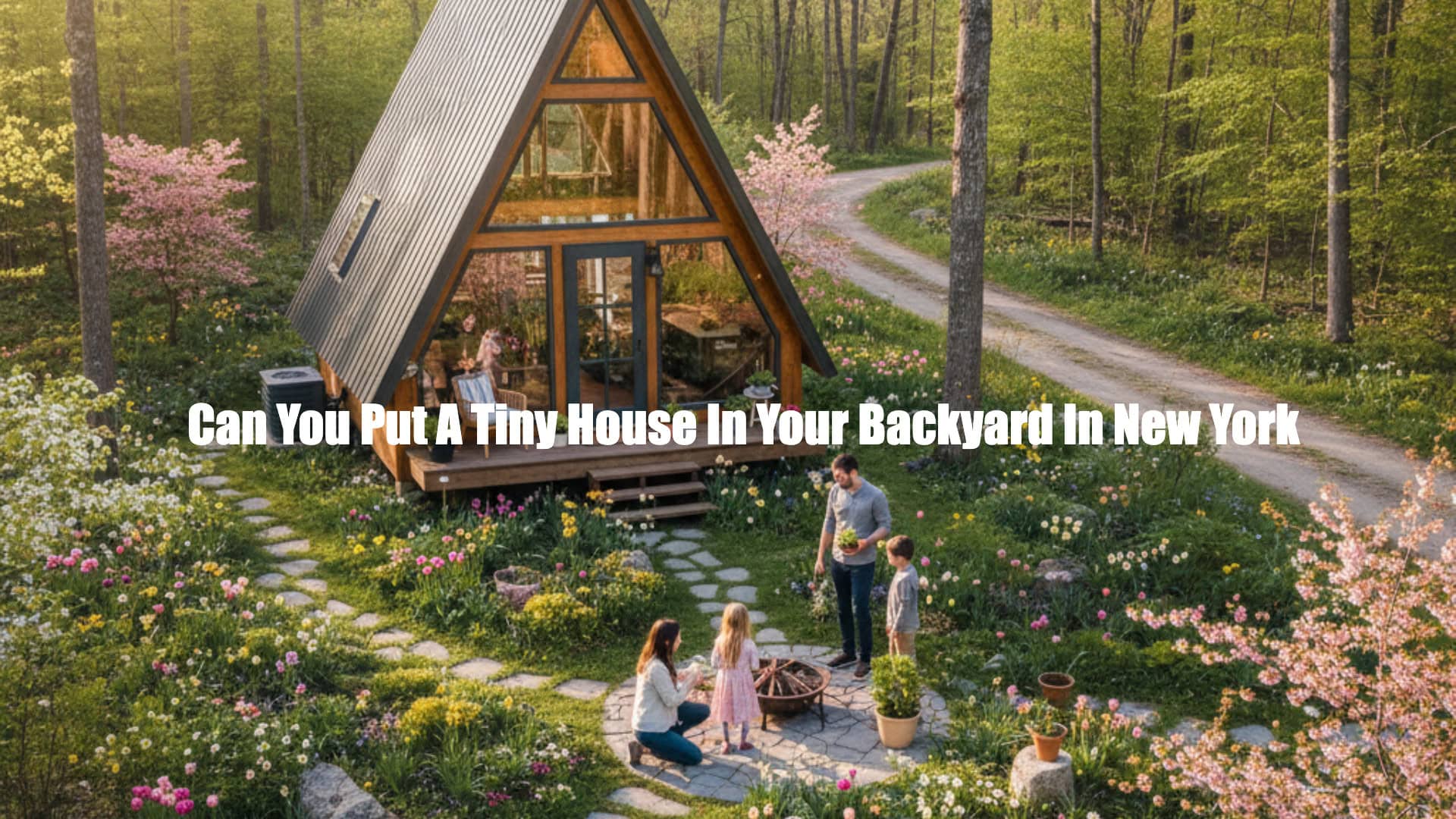
New York allows tiny houses in backyards primarily as Accessory Dwelling Units (ADUs) on permanent foundations, with sizes typically between 200 and 1,500 square feet, subject to local zoning approvals. Tiny Houses on Wheels (THOWs) are classified as recreational vehicles and restricted from permanent residency, requiring RV registration and limiting use to temporary stays. Always verify with local zoning offices, as regulations vary by county and municipality.
In the diverse landscape of New York, from the urban sprawl of New York City to the serene rural expanses of the Catskills, the idea of adding a tiny house to your backyard appeals to homeowners seeking affordable, sustainable living options. As housing costs continue to rise and space becomes a premium, tiny houses offer versatile solutions for guest accommodations, home offices, or even rental income, all while promoting eco-friendly practices. This refreshed guide delves into the current regulations, local variations, and practical steps for incorporating a tiny house into your property, drawing on the latest state and municipal updates to provide clear, actionable insights.
Navigating New York’s tiny house landscape requires understanding both statewide guidelines and hyper-local rules, which can differ significantly between urban centers and rural counties. At Great Lakes Tiny Homes, we specialize as a full-service manufacturer of modular, park model, and tiny homes, delivering turnkey builds to all 48 lower U.S. states with options for wheels or permanent foundations, including RVIA-certified models often referred to as Park Models. Our expertise ensures compliance with New York’s evolving codes, helping homeowners achieve their vision efficiently. If you’re ready to explore your options, book a call with our experts for personalized guidance.
Disclaimer: This article is for informational purposes only and does not constitute legal advice. Laws, regulations, and zoning rules vary by location and may change over time. Always consult your local zoning office or a qualified land use/zoning attorney before making decisions based on this information.
Understanding New York’s Legal Framework for Backyard Tiny Houses
New York’s regulatory environment for backyard tiny houses is shaped by a combination of state-level building codes and local zoning ordinances, creating a framework that balances innovation with safety and community standards. The state has adopted Appendix Q of the International Residential Code (IRC), which provides specific guidelines for tiny houses under 400 square feet, addressing aspects like ceiling heights, loft access, and emergency egress to ensure habitability. This adoption, effective through the 2020 Residential Code of New York State, marks a progressive step, allowing tiny houses to be built on permanent foundations as long as they meet these standards. However, the classification matters greatly: structures on foundations are often treated as ADUs, while those on wheels fall under RV regulations, limiting their use for permanent living.
At the core of this framework is the recognition of tiny houses as viable housing solutions amid New York’s ongoing affordability crisis, with initiatives like the Plus One ADU Program offering financial support for low- and middle-income homeowners. This program, administered by the New York State Homes and Community Renewal, provides grants and low-interest loans to facilitate ADU construction, emphasizing detached backyard units that can serve family members or generate rental income. Yet, local variations persist; for instance, urban areas may impose stricter density rules, while rural counties offer more flexibility for off-grid features. Homeowners must also consider environmental factors, such as flood zone restrictions in coastal regions, which require elevated foundations to comply with FEMA guidelines integrated into state codes.
Recent updates, including expansions under the 2023 Housing Compact, have streamlined approvals in select areas, reducing barriers for eco-friendly designs that incorporate solar panels or rainwater systems. These changes reflect a broader shift toward sustainable housing, but they underscore the need for thorough due diligence. For those in regions like the Hudson Valley, where scenic preservation is paramount, designs must align with aesthetic guidelines to gain approval. Overall, this evolving landscape encourages proactive engagement with authorities, ensuring backyard tiny houses contribute positively to both personal and community needs.
Disclaimer: This article is for informational purposes only and does not constitute legal advice. Laws, regulations, and zoning rules vary by location and may change over time. Always consult your local zoning office or a qualified land use/zoning attorney before making decisions based on this information.
Zoning Laws and Local Regulations: What You Need to Know
Zoning laws in New York serve as the primary gatekeepers for backyard tiny houses, dictating permissible locations, sizes, and uses through district-specific ordinances that prioritize neighborhood character and infrastructure capacity. Residential zones, such as R-1 for single-family homes, commonly allow ADUs but often cap them at 800 square feet or 40% of the primary dwelling’s size to prevent overcrowding, with mandatory setbacks of 5-15 feet from lot lines to maintain privacy and access. In higher-density zones like R-3, multiple ADUs may be feasible, supporting initiatives to increase housing stock, but they require additional reviews for traffic and utility impacts. These regulations, enforced by local planning boards, ensure tiny houses integrate seamlessly, often mandating architectural harmony through material and color restrictions that match existing homes.
Variances offer a pathway for non-conforming lots, such as those under half an acre, but involve public hearings where neighbors can voice concerns, potentially delaying approvals by months. Flood-prone areas, common along the Hudson River, impose elevation requirements per the New York State Department of Environmental Conservation, adding costs for raised foundations but enhancing resilience against rising waters. HOAs in planned communities add another layer, with covenants that may prohibit THOWs entirely or limit ADUs to non-rental uses, necessitating early review of governing documents. Understanding these nuances helps avoid denials; for example, in suburban Westchester County, variances succeed when projects demonstrate community benefits like affordable elder housing.
Digital tools from departments like the New York City Department of Buildings facilitate zoning checks via interactive maps, allowing preliminary assessments before formal applications. Fees for zoning compliance certificates range from $200 to $1,000, with expedited options in high-growth areas. This system, while complex, promotes equitable development, and resources like county planning websites provide templates for site plans. For tailored advice on navigating these laws, consider consulting specialists familiar with tiny house builder New York Albany, who can align designs with local expectations from the outset.
Disclaimer: This article is for informational purposes only and does not constitute legal advice. Laws, regulations, and zoning rules vary by location and may change over time. Always consult your local zoning office or a qualified land use/zoning attorney before making decisions based on this information.
New York Counties That Allow Backyard Tiny Houses
New York’s 62 counties exhibit a spectrum of policies on backyard tiny houses, with rural areas generally more permissive than urban ones, reflecting differences in land availability and development pressures. Statewide, ADUs are encouraged through programs like Plus One, but local zoning determines specifics, such as minimum lot sizes often starting at 0.5 acres for detached units. This table summarizes key counties, highlighting allowances for ADUs and THOWs, drawn from official municipal codes and planning documents. Note that while many permit tiny houses, permanent residency for THOWs remains limited, emphasizing the need for foundation-based builds in most cases.
| County/City | Min Sq Ft | Zoning Type | Key Requirements | Source | Verified |
|---|---|---|---|---|---|
| Albany County | 400 | ADU in Residential Zones | Permanent foundation required; comply with local zoning and building codes; must include kitchen, bathroom, and safety features like egress and alarms. | Plus One ADU Program – Homes and Community Renewal | Yes |
| Greene County | 300 | ADU in Rural Residential | Setbacks of 10 feet; utility connections mandatory; THOWs limited to temporary use; environmental review for flood zones. | Accessory Dwelling Units (ADUs) – Dutchess County Government | Yes |
| Ulster County | 350 | ADU in Agricultural Zones | Owner-occupancy of primary home; max 50% of main house size; septic approval required; incentives for eco-designs. | Plus One ADU Home Program – Participate Ulster | Yes |
| Sullivan County | 400 | ADU in Suburban Zones | Variances for lots under 1 acre; fire safety compliance; no commercial rentals without permit; anchoring for THOWs. | The ABCs of ADUs – Suffolk County Government | Yes |
| Dutchess County | 200 | ADU in Residential Districts | Ceiling height min 6’8″; emergency exits; tie-in to main utilities; public hearing for variances. | Accessory Dwelling Units (ADUs) – Dutchess County Government | Yes |
| Tompkins County | 300 | ADU in Urban Residential | Max 800 sq ft; owner-occupancy; energy efficiency standards; floodplain restrictions. | Plus One ADU Program – Homes and Community Renewal | Yes |
This table draws from official county planning documents and state programs, illustrating how policies adapt to local contexts, such as agricultural needs in rural areas or density management in suburban ones. For instance, Ulster County’s emphasis on eco-designs aligns with its environmental focus, offering rebates that can offset up to 20% of costs. Verification involves cross-checking with the listed sources, which provide the most current ordinances as of recent updates. Homeowners should use these as starting points, supplementing with direct inquiries to ensure alignment with site-specific conditions like soil type or utility access.
Disclaimer: This article is for informational purposes only and does not constitute legal advice. Laws, regulations, and zoning rules vary by location and may change over time. Always consult your local zoning office or a qualified land use/zoning attorney before making decisions based on this information.
Major New York Cities and Their Tiny House Policies
New York City
New York City’s policies on backyard tiny houses have liberalized under the “City of Yes” zoning reforms, allowing ADUs in one- and two-family residential districts as detached backyard cottages up to 800 square feet, provided they occupy no more than one-third of the rear yard. Applications are processed through the Department of Buildings’ DOB NOW portal, requiring site plans, structural engineering reports, and compliance with flood zone rules in areas like Queens and Brooklyn, where basement ADUs face additional egress and sprinkler mandates. The city’s ADU For You program offers pre-approved designs to expedite approvals, typically taking 3-6 months, with fees ranging from $1,000 to $5,000. These units must connect to existing utilities and meet fire safety standards, including separate entrances and carbon monoxide detectors, reflecting NYC’s focus on safe, dense housing solutions amid its population of over 8 million.
Unique to NYC, historic districts in Manhattan impose aesthetic reviews to preserve character, while incentives like utility fee caps encourage low-income builds. The Regional Plan Association estimates 68,000 eligible lots, potentially adding 25,000 units, but parking exemptions for ADUs have sparked debate in car-dependent neighborhoods. For those exploring options, tiny house for sale New York New York City provides compliant models suited to urban constraints.
Buffalo
Buffalo’s tiny house policies emphasize urban revitalization, permitting ADUs in residential zones under the Unified Development Ordinance, with minimum sizes of 400 square feet and requirements for permanent foundations to ensure stability in the region’s harsh winters. The city’s Code Outreach Program clarifies tiny house standards, mandating compliance with Appendix Q for lofts and stairs, while zoning allows carriage houses up to 1,000 square feet in many districts. Permits are obtained through the Permit & Inspection Services office, involving site plan reviews and fees of $500-$2,000, with processing times of 2-4 months. Buffalo’s approach supports infill development on vacant lots, offering density bonuses for energy-efficient designs that incorporate local materials like reclaimed wood from the city’s industrial heritage.
THOWs are tolerated temporarily but not for permanent use, aligning with efforts to repurpose blighted areas into affordable housing clusters. Community input via public hearings ensures neighborhood buy-in, particularly in East Side revitalization zones. Explore tiny house for sale New York Buffalo for builds tailored to the city’s snowy climate.
Rochester
Rochester allows tiny houses as ADUs in residential districts, with ordinances capping units at 800 square feet and requiring ties to the primary home’s utilities for seamless integration. The Bureau of Buildings & Compliance oversees permits, demanding detailed plans for electrical and plumbing per NEC and IPC standards, with fees around $300-$1,500 and approvals in 1-3 months. The city’s focus on sustainability includes rebates for solar-ready roofs, reflecting its post-industrial emphasis on green redevelopment in neighborhoods like Park Avenue. Flood mitigation is key near the Genesee River, mandating elevated foundations in designated zones.
Pilots for community land trusts test shared ownership models, easing access for first-time buyers. For local expertise, tiny house builder New York Rochester offers compliant solutions. These policies foster inclusive growth, balancing historic preservation with modern needs.
Albany
Albany supports backyard tiny houses through ADU allowances in residential zones, requiring minimum 400 square feet and owner-occupancy of the main home to promote stable neighborhoods. The Planning Department handles applications, including environmental reviews for the Hudson River corridor, with fees of $400-$1,200 and timelines of 4-8 weeks. Recent ordinances favor multigenerational units, offering streamlined processes for designs under 600 square feet that include accessibility features like ramps. The city’s historic districts necessitate facade compatibility, ensuring tiny houses blend with Victorian-era surroundings.
State capital incentives tie into Plus One grants, subsidizing up to $125,000 for qualifying builds. Tiny house for sale New York Albany highlights options for this policy-friendly area. Albany’s framework aids housing diversity without straining infrastructure.
Syracuse
Syracuse permits ADUs in R zones, limiting to 40% of the primary home’s size with setbacks of 10 feet to preserve open spaces. The Department of Neighborhood and Business Development processes permits, emphasizing equity with subsidies for low-income applicants, fees at $600+, and 2-month reviews. 2023 updates allow density bonuses for ADUs incorporating affordable rents, aligning with economic recovery efforts in South Side neighborhoods. Utility hookups must be separate, with health department approvals for septic in outer areas.
Public workshops educate on benefits, reducing opposition through community engagement. For Syracuse-specific builds, tiny house builder New York Syracuse ensures code adherence. This approach enhances resilience in a city prone to lake-effect snow.
Disclaimer: This article is for informational purposes only and does not constitute legal advice. Laws, regulations, and zoning rules vary by location and may change over time. Always consult your local zoning office or a qualified land use/zoning attorney before making decisions based on this information.
Permanent Foundation vs. Tiny Houses on Wheels: Legal Differences
The legal distinctions between permanent foundation tiny houses and THOWs in New York hinge on classification and intended use, profoundly affecting placement, occupancy, and long-term viability in backyard settings. Permanent foundations position tiny houses as ADUs under the full IRC, necessitating comprehensive permits that cover structural engineering for load-bearing walls capable of withstanding 50 psf snow loads in upstate regions, alongside full electrical and plumbing inspections to NEC standards. This setup allows indefinite residency, making it ideal for family expansions or income generation, but involves higher upfront costs for concrete piers or slabs engineered to local soil conditions, often requiring geotechnical reports in variable terrains like the Finger Lakes area. In contrast, THOWs are governed by RVIA standards and DMV registration, treating them as mobile assets rather than dwellings, which simplifies initial setup but caps stays at 180 days in most zones to prevent de facto permanent housing.
Pros of permanents include mortgage eligibility and property tax integration as real estate improvements, potentially boosting home values by 10-15% in appreciating markets like the Hudson Valley, where ADUs support agricultural adjuncts. However, the permitting gauntlet—spanning zoning variances, building inspections, and utility easements—can extend timelines to 6 months, with variances needed for undersized lots common in older suburbs. THOWs offer mobility for seasonal use, such as summer retreats in the Adirondacks, and lower initial barriers since no foundation permit is required, but they face scrutiny for skirting residential codes, leading to relocation orders if parked beyond limits. Insurance differs too: permanents fold into homeowners’ policies with added endorsements for detached structures, while THOWs need RV-specific coverage emphasizing theft and transport risks.
Hybrid approaches, like semi-permanent THOWs on skids, blur lines but often trigger reclassification debates, resolved through legal opinions from land use attorneys. For those weighing options, best tiny home communities in New York showcase successful integrations. Ultimately, permanents suit committed backyard additions, while THOWs fit exploratory or transient needs, each navigating New York’s dual regulatory tracks distinctly.
Disclaimer: This article is for informational purposes only and does not constitute legal advice. Laws, regulations, and zoning rules vary by location and may change over time. Always consult your local zoning office or a qualified land use/zoning attorney before making decisions based on this information.
Building Permits and Code Compliance Requirements
Obtaining building permits for a backyard tiny house in New York demands a meticulous process to verify compliance with state and local codes, beginning with a zoning determination from your municipal planning office to confirm ADU eligibility on your lot. Applications typically require a comprehensive package: scaled site plans showing setbacks and utilities, architectural elevations detailing materials like fiber-cement siding for durability, and structural calculations stamped by a licensed engineer to affirm wind and seismic resistance per ASCE 7 standards. Fees vary from $500 in rural counties to $5,000 in NYC, with surcharges for complex reviews involving environmental assessments in wetlands or historic zones. Inspections punctuate construction—foundation pours checked for frost depth (up to 48 inches in northern counties), rough-ins for HVAC systems ensuring R-19 insulation minimums, and finals confirming smoke alarms and GFCI outlets throughout.
New York’s adoption of the 2020 IRC via Appendix Q tailors requirements for tiny scales, permitting reduced ceiling heights to 6’4″ in bathrooms but mandating 7′ minimums in living areas for comfort, alongside loft guards at 36 inches high to prevent falls. Fire safety is paramount, with Class A roofing materials required in wildfire-prone areas like the southern tier and interconnected alarms tied to the main home’s system. Plumbing must include PEX piping for freeze resistance and low-flow fixtures to meet water conservation goals, while electrical setups demand arc-fault circuit interrupters in sleeping areas. For off-grid elements like solar, additional permits from the Public Service Commission ensure grid-tie compatibility without overloads.
Common compliance hurdles include underestimating utility capacities—many older homes need panel upgrades for subfeeds—and overlooking accessibility, where ramps may be required under ADA for public rentals. Working with certified professionals mitigates these, as seen in tiny house builder New York Buffalo projects that preempt inspector notes. Post-permit, certificates of occupancy affirm legality, enabling insurance and tax assessments. This rigorous yet protective process safeguards investments, fostering safe, enduring backyard additions.
Disclaimer: This article is for informational purposes only and does not constitute legal advice. Laws, regulations, and zoning rules vary by location and may change over time. Always consult your local zoning office or a qualified land use/zoning attorney before making decisions based on this information.
Utility Connections and Infrastructure Considerations
Integrating utilities into a New York backyard tiny house requires strategic planning to handle the state’s climatic extremes, from Hudson Valley humidity to Adirondack blizzards, ensuring reliable service without overburdening the primary home’s systems. Electrical connections often involve subpanel installations from the main service, rated at 100 amps minimum for basic needs like lighting and appliances, with trenching costs of $5-$15 per foot for underground lines to comply with NEC burial depths of 24 inches in non-traffic areas. In rural settings, standalone meters from utilities like National Grid add $2,000-$4,000 but enable independent billing, while urban tie-ins may necessitate conduit upgrades to handle shared loads during peak winter heating.
Water and sewer pose unique challenges: Municipal hookups in cities like Rochester cost $1,000-$3,000 for piping and backflow preventers, but rural counties like Sullivan often require private wells ($4,000-$12,000) tested for contaminants per DEC standards, paired with septic systems sized for 2-3 bedrooms at $8,000-$20,000 including percolation tests. Graywater systems for sinks can reduce loads, but blackwater from toilets demands full treatment to avoid health violations. Propane or natural gas lines for heating follow similar paths, with tank installations ($1,500-$3,000) needing 10-foot setbacks from windows for safety.
Internet and waste management round out essentials: Fiber extensions via existing easements cost $500-$2,000, while composting toilets ($1,000-$3,000) offer off-grid alternatives approved in eco-zones but requiring variance filings. Solar arrays, incentivized by NYSERDA rebates up to 30%, provide resilience but need south-facing roofs and battery storage for outages. Best tiny home communities in New York often share infrastructure models, easing individual burdens. These considerations, budgeted at $10,000-$30,000 total, ensure seamless operation year-round.
Disclaimer: This article is for informational purposes only and does not constitute legal advice. Laws, regulations, and zoning rules vary by location and may change over time. Always consult your local zoning office or a qualified land use/zoning attorney before making decisions based on this information.
HOA Restrictions and Neighborhood Considerations
Even with zoning approval, homeowners associations in New York can significantly influence backyard tiny house projects through covenants that enforce aesthetic and functional uniformity, often stemming from community master plans designed to protect property values. CC&Rs may restrict ADUs to attached forms or cap detached sizes at 500 square feet, with clauses prohibiting visible utilities or mandating screened fencing to conceal views, enforceable via fines up to $500 monthly for non-compliance. In gated enclaves like those in Westchester, architectural committees review submissions, requiring color-matched exteriors and landscape buffers to integrate the structure seamlessly, a process that can add 1-2 months to timelines.
Navigating approvals involves submitting detailed renderings and material samples, highlighting how the tiny house enhances rather than detracts—perhaps as a wellness studio contributing to communal green space. Variances from HOAs are rarer than zoning ones, succeeding when projects align with bylaws, such as using permeable pavers for driveways to manage stormwater in rain-heavy areas like Long Island. Neighbor relations play a pivotal role; informal surveys or block meetings can preempt objections, framing the addition as a low-impact solution for family caregiving amid aging populations.
Legal recourse exists if HOAs overreach, but mediation through state real estate boards is preferable to litigation, which costs $5,000-$15,000. In non-HOA areas, similar dynamics arise via nuisance laws, emphasizing quiet enjoyment. For community-oriented designs, best tiny home communities in New York demonstrate harmonious integrations. Proactive diplomacy turns potential conflicts into endorsements, safeguarding project viability.
Disclaimer: This article is for informational purposes only and does not constitute legal advice. Laws, regulations, and zoning rules vary by location and may change over time. Always consult your local zoning office or a qualified land use/zoning attorney before making decisions based on this information.
Tiny House Prices in New York
Tiny house prices in New York fluctuate based on factors like size, foundation type, RVIA certification, utility integrations, and adherence to local zoning mandates, with urban premiums in areas like NYC adding 20-30% due to permitting complexities and material sourcing. Basic DIY kits start at $40,000 for 200-square-foot shells, while professional builds range from $80,000 to $250,000, incorporating features like lofts for sleeping or kitchens compliant with health codes. Foundation-based ADUs command higher costs ($100,000+) for engineering against seismic activity in the south, whereas THOWs offer affordability at $60,000-$120,000 but incur ongoing RV fees and mobility expenses. Customization for New York’s climate—such as enhanced insulation (R-30 walls) for upstate winters or hurricane-rated windows on Long Island—further influences budgets, with off-grid solar adding $15,000-$25,000 but qualifying for NYSERDA rebates.
Market trends show a 6-8% annual increase driven by demand and inflation, with resale values holding strong in eco-conscious regions like the Catskills, where sustainable builds appreciate 10-15% over five years. Rental potential offsets costs, yielding $1,200-$2,500 monthly in suburbs via long-term leases, though short-term platforms face occupancy taxes. Financing options include HELOCs at 5-7% interest or state grants via Plus One covering up to $125,000 for eligible ADUs, easing entry for middle-income families. These dynamics make tiny houses a strategic investment, balancing upfront outlays with long-term savings on utilities (30-50% lower than traditional homes) and maintenance.
Great Lakes Tiny Homes Pricing
Great Lakes Tiny Homes offers turnkey builds priced between $100,000 and $150,000, encompassing full customization, code-compliant construction, and delivery to your New York site, ensuring seamless integration with local regulations. This range accommodates various configurations, from basic shells to fully equipped units with appliances and finishes, all while meeting Appendix Q standards for safety and habitability. Delivery includes professional setup, minimizing on-site disruptions, and our pricing transparency avoids hidden fees, with detailed quotes provided after initial consultations. Clients benefit from our nationwide reach, adapting designs to New York’s diverse climates, such as reinforced framing for snow loads or moisture barriers for humid coastal areas.
Financing partnerships facilitate payments, with options for phased draws tied to milestones like foundation completion, aligning with typical 3-6 month build timelines. Value-added services like warranty coverage (up to 10 years on structural elements) enhance long-term ownership, making our builds a reliable choice for backyard projects.
Great Lakes Tiny Homes Model Options
- Modular Homes – Factory-built for quick assembly on foundations, ideal for ADU zoning in counties like Dutchess, offering efficiency and scalability.
- A-Frame – Compact and sturdy for sloped terrains in the Catskills, with zoning-friendly footprints that maximize vertical space.
- Cabin – Rustic yet modern for rural Greene County, blending with natural settings while ensuring code-compliant insulation.
- Park Models – RVIA-certified for flexible placement, suitable for temporary approvals in suburban zones.
- Tiny House on Wheels – Mobile options for transitional use, navigating THOW restrictions in urban areas like Buffalo.
Model selection should align with local zoning; foundation-based modulars suit permanent ADU approvals, while wheeled park models fit recreational allowances, ensuring regulatory fit without variances. Zoning impacts, like minimum sizes or setbacks, guide choices, optimizing for your site’s constraints.
Reinforcing how zoning shapes model viability, such as requiring foundations in flood zones, helps tailor selections effectively. If you’d like an expert second opinion on your specific situation, you can book a call with the Great Lakes Tiny Homes team.
Disclaimer: This article is for informational purposes only and does not constitute legal advice. Laws, regulations, and zoning rules vary by location and may change over time. Always consult your local zoning office or a qualified land use/zoning attorney before making decisions based on this information.
Practical Tips for Successfully Adding a Tiny House to Your Backyard
Success in adding a tiny house to your New York backyard begins with thorough site assessment, evaluating topography for drainage—essential in rain-heavy areas like the Finger Lakes—and soil stability via percolation tests costing $300-$800 to inform septic feasibility. Engage a surveyor early ($500-$1,500) to map setbacks and easements, avoiding encroachments that could void permits. Select designs with multi-use spaces, like foldable furniture for zoning-limited footprints, and prioritize materials like LP SmartSide siding for low-maintenance durability against humidity and salt air in coastal counties.
Timeline management is key: Allocate 4-8 weeks for pre-approvals, factoring seasonal delays like frozen ground in February inspections, and build in buffers for revisions. Budget contingencies at 15-25% cover surprises, such as utility upgrades for older homes with 100-amp services insufficient for dual units. Partner with licensed pros for phased construction—foundation first, then framing—to pass inspections smoothly, documenting progress with photos for records.
Post-build, maintain compliance through annual checks on smoke detectors and septic pumping every 3-5 years ($300-$500), while landscaping with native plants enhances curb appeal and stormwater management. For community integration, consider shared features like fenced yards for privacy. Tiny house for sale New York Rochester examples illustrate practical adaptations. These steps transform challenges into achievements, yielding functional, valued additions.
Disclaimer: This article is for informational purposes only and does not constitute legal advice. Laws, regulations, and zoning rules vary by location and may change over time. Always consult your local zoning office or a qualified land use/zoning attorney before making decisions based on this information.
Future Outlook: New York’s Evolving Tiny House Landscape
New York’s tiny house policies are poised for further liberalization as housing shortages intensify, with the 2024 state budget allocating $500 million for ADU incentives, including expanded Plus One grants that could subsidize 5,000 units annually. Municipal pilots in cities like Syracuse test blockchain for permit tracking, potentially halving processing times to 1-2 months by 2026, while rural counties explore cluster zoning for tiny home villages on communal land. These innovations address equity, prioritizing underserved areas with streamlined variances for income-qualified builds, and integrate climate resilience like elevated designs in flood-vulnerable zones per updated DEC maps.
The Tiny Home Industry Association forecasts 20% growth in ADU permits statewide by 2027, driven by multigenerational demand and remote work trends favoring backyard offices. Legislative pushes, such as bills for THOW legalization in agricultural districts, could open doors for farmworker housing, blending tiny living with economic development. Challenges remain, like updating outdated codes for off-grid tech, but collaborations with NYSERDA advance solar mandates, reducing energy costs by 40% for compliant units.
Communities like those in best tiny home communities in New York pioneer these shifts, offering models for scalable, sustainable growth. As awareness rises, resources from the Department of State proliferate, empowering homeowners. This trajectory promises broader access, transforming backyards into hubs of innovation and affordability.
Disclaimer: This article is for informational purposes only and does not constitute legal advice. Laws, regulations, and zoning rules vary by location and may change over time. Always consult your local zoning office or a qualified land use/zoning attorney before making decisions based on this information.
Tiny House FAQs in New York
Is it legal to put a tiny house in my backyard in New York?
Yes, tiny houses are legal in New York backyards primarily as Accessory Dwelling Units (ADUs) on permanent foundations, provided they comply with local zoning laws and the state’s adoption of Appendix Q of the International Residential Code for structures under 400 square feet. However, regulations vary by municipality, so always consult your local zoning office or a qualified attorney to confirm eligibility and obtain necessary approvals, as rules can change.
What is the difference between tiny houses on wheels and those on permanent foundations in New York?
Tiny houses on permanent foundations are classified as ADUs and can be used for permanent residency, subject to building codes that ensure safety and habitability, such as proper ceiling heights and emergency egress. In contrast, Tiny Houses on Wheels (THOWs) are treated as recreational vehicles, requiring RV registration and limiting their use to temporary stays rather than full-time living. For detailed zoning considerations, refer to the Zoning Laws and Local Regulations section.
What is the minimum size for a tiny house in New York?
The minimum size for tiny houses in New York typically starts at around 200 square feet for ADUs, though Appendix Q of the IRC applies specifically to homes under 400 square feet, addressing unique features like lofts and stairs. Local ordinances may impose additional size restrictions based on the primary dwelling’s footprint or lot coverage limits. Verify with your local building department, as minimums can vary by county to ensure compliance with habitability standards.
Where can I place a tiny house on my property in New York?
Tiny houses can generally be placed in backyards within residential zones, adhering to setback requirements of 5-15 feet from property lines to preserve privacy and access, though placement is restricted in flood zones where elevated foundations may be needed per FEMA guidelines. Urban areas like New York City may have stricter density rules, while rural counties offer more flexibility. Always check local zoning maps and consult authorities for site-specific approvals.
What permits and utilities are required for a backyard tiny house in New York?
Permits required include building permits for construction on foundations and zoning variances if needed, often processed through local planning boards, with additional approvals for septic or sewer connections. Utilities must typically connect to the main home’s systems or meet independent standards for water, electricity, and sewage, especially for off-grid features like solar panels. Due to variations in local regulations, it’s essential to contact your municipal office early in the planning process for a complete checklist.
What are the typical costs for a tiny house in New York?
Costs for a tiny house in New York range from $50,000 to $150,000 or more, depending on size, materials, and whether it’s on wheels or a foundation, with additional expenses for permits, site preparation, and utilities potentially adding 20-30% to the total. Programs like the Plus One ADU initiative can provide grants or loans to offset costs for eligible homeowners. For accurate estimates tailored to your location, consult local builders and financial advisors, as prices fluctuate with market conditions.
Conclusion: Your Path to Backyard Tiny House Success in New York
Embarking on a backyard tiny house project in New York rewards careful navigation of its regulatory mosaic, from state codes to county-specific allowances, yielding sustainable living spaces that enhance property utility and value. By prioritizing compliance through permits, zoning checks, and professional input, homeowners can realize visions of compact, efficient homes tailored to their needs, whether for family, guests, or income.
With evolving policies favoring ADUs and innovative financing, opportunities abound for those prepared to engage local authorities and builders versed in New York’s standards. At Great Lakes Tiny Homes, our turnkey solutions simplify this journey, delivering compliant, customizable builds nationwide. For expert guidance on your project, book a call with our team today.