

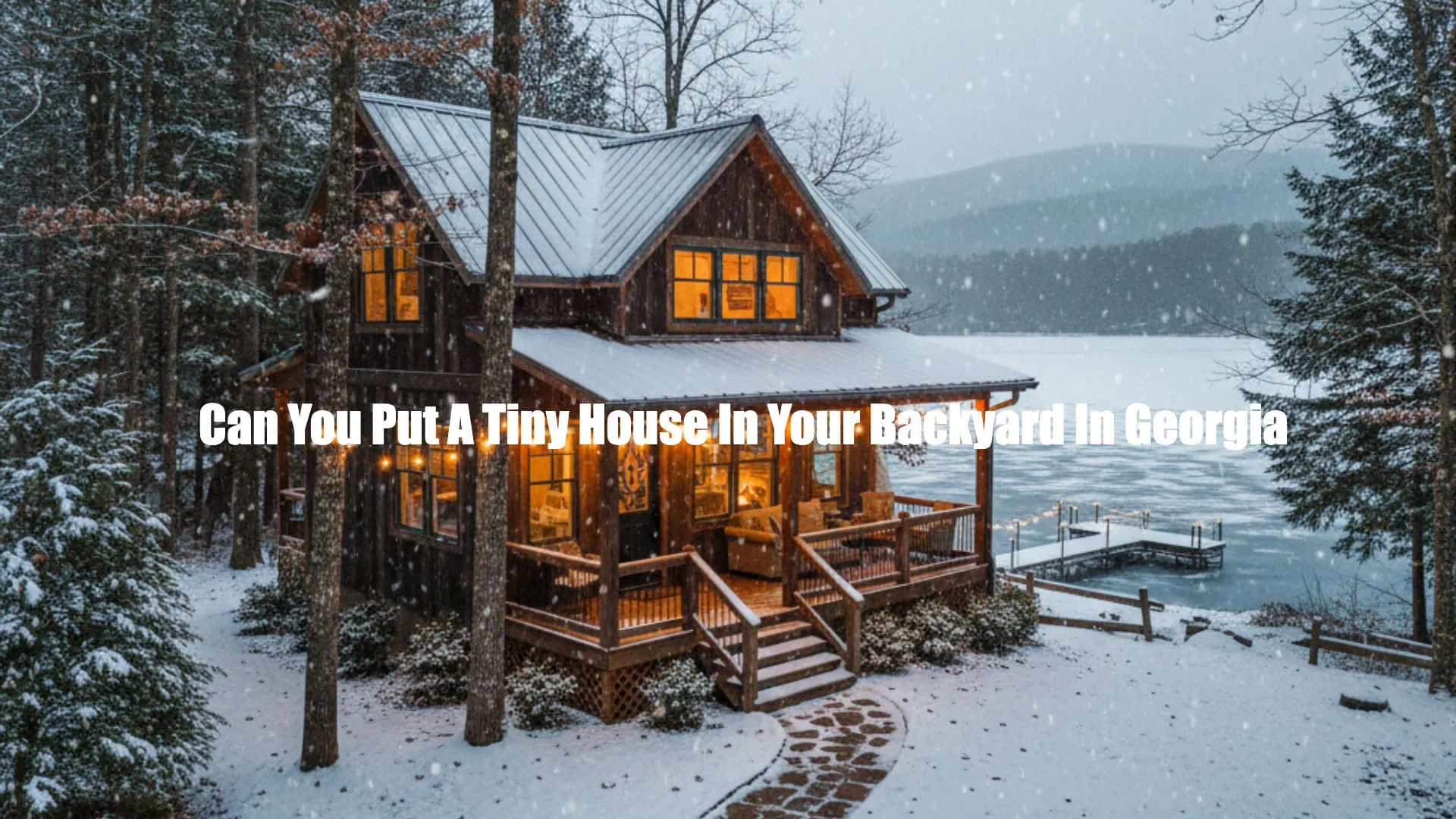
Georgia allows tiny houses in backyards as accessory dwelling units (ADUs) in many counties, with minimum sizes often starting at 400 square feet on permanent foundations. Tiny houses on wheels are typically restricted to temporary use and classified as RVs, requiring compliance with local zoning and building codes. Always verify with your county planning office, as rules vary by location.
In recent years, the tiny house movement has gained significant traction across the United States, promoting sustainable, affordable living options amid rising housing costs and a desire for simpler lifestyles. In Georgia, where median home prices have climbed above $300,000 in many areas, homeowners are increasingly exploring whether they can put a tiny house in their backyard to accommodate family, generate rental income, or create a dedicated workspace. The answer hinges on a patchwork of state guidelines and local ordinances, making it essential to navigate zoning laws, building codes, and permitting processes carefully to ensure compliance and avoid potential setbacks.
This guide provides a comprehensive overview of the regulations for placing a tiny house in your backyard in Georgia, drawing from official state resources and local examples to help you understand feasibility. From distinguishing between permanent structures and those on wheels to exploring county-specific allowances, we’ll cover the key considerations for turning your vision into reality. At Great Lakes Tiny Homes, we specialize as a full-service manufacturer of modular, park model, and tiny homes, delivering turnkey builds to all 48 lower U.S. states with options for wheels or permanent foundations, including RVIA-certified park models. Our expertise ensures designs that meet Georgia’s diverse requirements, whether for urban lots in Atlanta or rural properties in the north. For personalized guidance on your project, you can book a call with our experts at https://greatlakestinyhome.com/book/.
Disclaimer: This article is for informational purposes only and does not constitute legal advice. Laws, regulations, and zoning rules vary by location and may change over time. Always consult your local zoning office or a qualified land use/zoning attorney before making decisions based on this information.
Understanding Georgia’s Legal Framework for Backyard Tiny Houses
Georgia’s approach to backyard tiny houses is guided by the state’s adoption of the International Residential Code (IRC), which provides a baseline for construction standards but leaves enforcement to local jurisdictions. The Georgia Department of Community Affairs (DCA) oversees general housing policies, including the optional Appendix Q for tiny homes under 400 square feet, addressing features like loft access, ceiling heights, and emergency escapes. This framework supports permanent tiny houses as ADUs on single-family lots, promoting them as solutions to housing shortages while ensuring safety through requirements for utilities, insulation, and structural integrity. However, without statewide mandates, counties and cities interpret these codes differently, often prioritizing neighborhood character and infrastructure capacity in their ordinances.
A fundamental distinction lies between tiny houses on permanent foundations and those on wheels (THOWs). Permanent structures are classified as dwellings, requiring full compliance with IRC standards, including connections to water, sewer, and electricity, which integrate them into the property’s overall valuation and tax assessment. THOWs, built on chassis for mobility, fall under RV regulations from the RV Industry Association (RVIA) or HUD codes, limiting them to temporary occupancy in most areas—typically no more than 180 days annually—to prevent them from becoming de facto permanent residences without proper zoning approval. This classification affects everything from financing options, where permanents qualify for traditional mortgages, to resale value, as fixed builds often appreciate alongside the primary home.
Recent state initiatives reflect growing support for tiny houses, with legislation like Senate Bill 221 in 2023 aiming to streamline ADU approvals across municipalities to boost affordable housing stock. Urban areas face denser restrictions due to infrastructure limits, while rural counties offer more flexibility for off-grid elements like solar panels. For authoritative details, refer to the Georgia Tiny House Fact Sheet from the DCA, which outlines how zoning and codes apply to various tiny home types. Engaging early with local officials can reveal incentives, such as reduced fees for energy-efficient designs, helping align projects with Georgia’s evolving housing landscape.
Disclaimer: This article is for informational purposes only and does not constitute legal advice. Laws, regulations, and zoning rules vary by location and may change over time. Always consult your local zoning office or a qualified land use/zoning attorney before making decisions based on this information.
Zoning Laws and Local Regulations: What You Need to Know
Zoning laws in Georgia dictate the permissible uses of land, dividing properties into districts such as R-1 (single-family residential) or R-2 (multi-family), each with rules on building placement and types. In R-1 zones, backyard tiny houses are commonly approved as ADUs, provided they do not exceed 50% of the primary home’s size and maintain setbacks of at least 5 feet from side and rear lines to preserve privacy and access for services. These districts often require the ADU to be owner-occupied or used by family, prohibiting standalone rentals that could increase traffic or alter community demographics. Local variations, like Atlanta’s R-5 zoning allowing up to 750 square feet for ADUs, demonstrate how urban needs influence flexibility, balancing density with single-family preservation.
Key zoning elements include lot coverage limits, typically capping total built area at 40-50% to encourage green space, and height restrictions under 20 feet to avoid overshadowing neighbors. Variances can be sought for non-conforming lots, such as those under 7,500 square feet, through board hearings where evidence of minimal impact— like noise studies or traffic analyses—strengthens cases. HOAs impose additional covenants, often mirroring or exceeding zoning with aesthetic mandates, such as matching rooflines or prohibiting visible wheels on THOWs. Reviewing the county’s comprehensive plan, available through planning departments, reveals long-term visions that favor ADUs for aging-in-place solutions, informing proactive applications.
To navigate these, start with your property’s zoning verification via online GIS maps, then submit pre-application inquiries to gauge feasibility without formal costs. For deeper insights into compliant designs, explore options from trusted builders like those offering tiny house builder Atlanta services, ensuring alignment with local nuances. This preparation not only streamlines approvals but also mitigates risks like stop-work orders from overlooked easements.
Disclaimer: This article is for informational purposes only and does not constitute legal advice. Laws, regulations, and zoning rules vary by location and may change over time. Always consult your local zoning office or a qualified land use/zoning attorney before making decisions based on this information.
Georgia Counties That Allow Backyard Tiny Houses
Georgia’s 159 counties exhibit diverse approaches to backyard tiny houses, with progressive ones adopting ADU-friendly ordinances to address housing affordability. Rural counties often provide more leeway for permanent foundations, while urban-adjacent areas emphasize integration with existing infrastructure. This table summarizes key counties, highlighting minimum sizes, zoning types, and requirements based on official records; always confirm with county planning for site-specific applicability.
| County/City | Min Sq Ft | Zoning Type | Key Requirements | Source | Verified |
|---|---|---|---|---|---|
| Fulton County | 400 | R-1/R-2 (ADU) | Permanent foundation required; must match primary home architecture; setbacks 5-10 ft; no separate utilities without approval | Fulton County Zoning Ordinance | Yes |
| DeKalb County | 350 | Residential (ADU) | Environmental health review for septic; max 800 sq ft; owner occupancy; THOWs limited to 180 days | DeKalb County Zoning Regulations | Yes |
| Cobb County | 400 | R-15/R-20 (ADU) | Connection to main utilities mandatory; structural inspections; no independent structures | Cobb County Zoning Code | Yes |
| Gwinnett County | 750 | Residential (Guest House) | Owner occupancy; max 600 sq ft for ADUs; site plans and engineering reports required | Gwinnett County Zoning Ordinance | Yes |
| Chatham County | 400 | R-1 (ADU) | Flood zone elevations; hurricane tie-downs; exterior steps required; permits for new structures | Chatham County Planning and Zoning | Yes |
These counties illustrate Georgia’s varied landscape, where rural areas like Chatham offer coastal adaptations, while metro counties like Fulton prioritize urban integration. For communities, consider exploring the best tiny home communities in Georgia for inspiration on compliant setups. Verification with county offices ensures alignment with recent updates, such as expanded ADU allowances in response to housing demands.
Disclaimer: This article is for informational purposes only and does not constitute legal advice. Laws, regulations, and zoning rules vary by location and may change over time. Always consult your local zoning office or a qualified land use/zoning attorney before making decisions based on this information.
Major Georgia Cities and Their Tiny House Policies
Atlanta, as Georgia’s largest city, has evolved its policies to support ADUs amid urban growth, permitting units up to 750 square feet in R-5 zones through the Department of City Planning. Applications require detailed architectural drawings, neighbor notifications, and compliance with historic district guidelines where applicable, with processing times of 6-12 weeks and fees ranging from $400 to $1,000. A 2023 pilot program tests THOW placements in underutilized zones, evaluating infrastructure impacts, while incentives like fee reductions for affordable projects encourage family-oriented builds. Contact the Atlanta Planning Department at https://www.atlantaga.gov/government/departments/city-planning for current forms and consultations, noting that owner-occupancy remains a core requirement to maintain residential character.
Savannah’s historic charm shapes its tiny house rules, allowing ADUs under 600 square feet if they adhere to the city’s design standards reviewed by the Historic District Board. The process involves submitting site plans and material samples, taking 8-10 weeks with fees of $300-$600, and includes an ADU incentive program waiving costs for low-income initiatives to preserve heritage while addressing affordability. Coastal flood zones necessitate elevated foundations, adding engineering reviews for resilience against hurricanes. Reach the Savannah Planning Department via https://www.savannahga.gov/312/Planning-and-Urban-Design to discuss compliance, especially for properties near the waterfront where tidal influences demand specialized adaptations.
Augusta-Richmond County permits backyard tiny houses up to 800 square feet in R-1 zones, focusing on family ADUs with provisions for shared driveways to optimize space. Applications cost around $500 and require utility plans, processed in 4-8 weeks through the Planning and Development Department, with recent updates favoring multigenerational housing. Environmental assessments ensure septic systems meet county health standards, particularly in areas with high water tables. For guidance, visit the Augusta Planning and Development page, where online portals facilitate preliminary zoning checks before formal submissions.
Athens-Clarke County supports tiny homes as ADUs over 400 square feet, reflecting its university-driven innovation with pilot programs for off-grid features like solar integrations. Fees range $200-$500, with timelines of 5-7 weeks involving environmental reviews for sustainable elements, and policies emphasize educational uses such as student housing alternatives. The Unified Government of Athens-Clarke County oversees approvals, prioritizing designs that enhance neighborhood sustainability. Access resources at https://www.accgov.com/156/Planning, including public input sessions that allow residents to influence evolving ordinances.
Macon-Bibb County allows tiny houses in residential areas on permanent foundations with minimum widths of 20 feet, treating them as modular homes under state codes. Permits require building plans and utility connections, processed in 6-8 weeks for fees around $400, with flexibility for accessory uses like guest quarters. Recent zoning reforms promote affordable options, including skirting requirements for mobile-style units. Contact the Macon-Bibb Planning and Zoning Division at https://www.cityofmacon.org/departments-services/planning-and-zoning for site-specific advice, especially in historic districts where facade matching is mandatory.
Disclaimer: This article is for informational purposes only and does not constitute legal advice. Laws, regulations, and zoning rules vary by location and may change over time. Always consult your local zoning office or a qualified land use/zoning attorney before making decisions based on this information.
Permanent Foundation vs. Tiny Houses on Wheels: Legal Differences
In Georgia, the legal treatment of permanent foundation tiny houses versus those on wheels creates distinct pathways for backyard placement, each with implications for longevity and compliance. Permanent foundations anchor the structure to the ground, classifying it as a fixed dwelling under the IRC, which demands rigorous inspections for foundations, roofing, and HVAC systems to withstand local seismic and wind loads up to 115 mph. This setup facilitates full-time residency and property tax integration, often increasing assessed values by 10-15%, but requires professional engineering for soil stability in Georgia’s varied terrains, from red clay in the piedmont to sandy coastal soils.
Conversely, THOWs on chassis are regulated as RVs, certified by RVIA standards that emphasize mobility and safety features like propane leak detectors and fire suppression, but prohibit permanent occupancy in residential zones without variances. They offer quick setup for seasonal use, such as summer guest houses, yet face annual registration renewals and restrictions on utility ties, limiting them to 30- or 50-amp RV pedestals that may not support full household demands. Insurance for THOWs treats them as vehicles, potentially raising premiums during transport, while permanents qualify for standard homeowners policies with lower rates for fixed assets.
Choosing between them depends on lifestyle: permanents suit long-term family expansions, qualifying for equity loans at 4-6% interest, whereas THOWs appeal to nomads with costs 20-30% lower but resale challenges in strict counties. For zoning-compliant options, consider builders specializing in tiny house builder Georgia services, who navigate certifications to match local needs. Hybrid approaches, like skirted THOWs mimicking foundations, sometimes bridge gaps but require legal review to avoid reclassification disputes.
Disclaimer: This article is for informational purposes only and does not constitute legal advice. Laws, regulations, and zoning rules vary by location and may change over time. Always consult your local zoning office or a qualified land use/zoning attorney before making decisions based on this information.
Building Permits and Code Compliance Requirements
Obtaining building permits for a backyard tiny house in Georgia involves a multi-step process managed by local departments, starting with zoning verification to confirm ADU eligibility in your district. Submit detailed applications including scaled site plans, elevation drawings, and material specifications, often requiring a $200-$500 fee and 4-8 weeks for initial review, during which officials assess impacts on drainage, traffic, and utilities. Compliance with the 2018 IRC, as amended by Georgia, mandates features like R-19 wall insulation for energy efficiency and GFCI outlets in wet areas, with phased inspections ensuring adherence at each stage.
Code specifics include minimum ceiling heights of 6 feet 8 inches in living areas and 6 feet 4 inches in kitchens, plus loft requirements for 35 square feet of floor space and emergency skylights if over 44 inches from the floor. Electrical systems must meet NEC standards with 100-amp service minimums, while plumbing follows UPC guidelines for backflow prevention, critical in areas with hard water. For THOWs, RVIA certification substitutes for some inspections, but local tie-downs for wind resistance remain mandatory. Engaging a code consultant early can prevent rework, saving 10-20% on costs through pre-submission feedback.
Post-permit, final occupancy certificates verify full compliance, unlocking insurance and tax benefits. Resources like the DCA’s building code portal aid preparation, and partnering with experienced builders streamlines submissions. For available models, view tiny house for sale Georgia listings tailored to code needs. This thorough approach not only satisfies regulators but enhances the structure’s durability against Georgia’s humid climate and occasional severe weather.
Disclaimer: This article is for informational purposes only and does not constitute legal advice. Laws, regulations, and zoning rules vary by location and may change over time. Always consult your local zoning office or a qualified land use/zoning attorney before making decisions based on this information.
Utility Connections and Infrastructure Considerations
Integrating utilities into a Georgia backyard tiny house requires coordination with local providers to ensure reliable service without straining the primary residence’s systems. For electricity, subpanel extensions from the main meter—costing $1,500-$4,000—involve trenching and permits from Georgia Power or similar, with load calculations preventing overloads during simultaneous use like air conditioning peaks. Separate meters for ADUs add $2,500-$6,000 but allow independent billing, essential for rental scenarios, while solar tie-ins under net metering policies can offset costs by 20-40% in sunny southern counties.
Water and sewer connections tie into municipal lines ($800-$3,000) or necessitate private wells ($4,000-$12,000) and septic systems ($6,000-$18,000), sized by the DCA’s daily flow formulas—150 gallons per bedroom minimum—with percolation tests verifying soil suitability. In rural areas, rainwater harvesting supplements supplies but needs filtration for potability, compliant with health department variances. Off-grid composting toilets and propane setups reduce infrastructure needs but require annual inspections for safety, particularly in flood-prone zones where elevation protects against contamination.
Planning for high-speed internet via buried fiber ($600 install) or satellite options ensures connectivity, vital for remote work setups. Total utility expenses can reach $10,000-$30,000, but rebates for efficient systems like low-flow fixtures lower outlays. For community-integrated solutions, look at best tiny home communities in Georgia, where shared infrastructure simplifies connections. Professional assessments, including utility locates to avoid buried lines, safeguard investments and promote seamless daily operations.
Disclaimer: This article is for informational purposes only and does not constitute legal advice. Laws, regulations, and zoning rules vary by location and may change over time. Always consult your local zoning office or a qualified land use/zoning attorney before making decisions based on this information.
HOA Restrictions and Neighborhood Considerations
Even with favorable zoning, homeowners associations (HOAs) in Georgia can impose stringent rules on backyard tiny houses, governing over 25% of subdivided properties statewide. Covenants frequently prohibit secondary structures exceeding 500 square feet or visible from streets, requiring architectural committee approvals with submissions of 3D renderings and color palettes to match community aesthetics. Amending HOA bylaws through member votes offers a path forward, often succeeding when proposals emphasize value additions like increased equity from compliant ADUs, supported by real estate appraisals showing 8-12% uplifts.
Neighbor dynamics play a pivotal role; proactive communication via town halls or flyers detailing construction timelines and noise mitigations builds consensus, addressing concerns over parking or viewshed impacts. Screening with native evergreens like Georgia pines provides natural buffers, enhancing privacy while complying with landscaping mandates. In diverse neighborhoods, highlighting multigenerational benefits—such as housing elderly relatives—fosters support, aligning with community values of familial care.
Legal recourse for disputes involves mediation before litigation, but prevention through early engagement preserves harmony. For HOA-friendly designs, consult tiny house builder Georgia experts who incorporate subtle integrations. This collaborative approach not only secures approvals but strengthens community ties, turning potential conflicts into endorsements for innovative living.
Disclaimer: This article is for informational purposes only and does not constitute legal advice. Laws, regulations, and zoning rules vary by location and may change over time. Always consult your local zoning office or a qualified land use/zoning attorney before making decisions based on this information.
Practical Tips for Successfully Adding a Tiny House to Your Backyard
Success in adding a tiny house to your Georgia backyard begins with thorough site evaluation, selecting elevated, well-drained areas to mitigate flooding risks prevalent in the state’s piedmont and coastal regions. Conduct soil borings to assess bearing capacity, informing foundation choices like pier-and-beam systems that adapt to expansive clays, preventing settling issues over time. Budget for professional surveying ($500-$1,500) to map setbacks accurately, avoiding encroachments that could trigger neighbor disputes or permit denials.
Timeline management is crucial: allocate 3-6 months total, with design phases incorporating 3D modeling for visualization and stakeholder buy-in, followed by permitting buffers for revisions. Select builders versed in Georgia codes, prioritizing those offering warranties on workmanship to cover post-occupancy adjustments like HVAC tuning for humid conditions. Incorporate resilient features such as impact-resistant windows and metal roofing to endure occasional hail, extending the structure’s lifespan and reducing maintenance.
Post-construction, establish maintenance routines like quarterly gutter cleanings to prevent water damage, and monitor utility usage to optimize efficiency. For turnkey experiences, explore tiny house for sale Georgia options that include delivery and setup. These steps ensure a smooth integration, enhancing property functionality while complying with evolving standards.
Disclaimer: This article is for informational purposes only and does not constitute legal advice. Laws, regulations, and zoning rules vary by location and may change over time. Always consult your local zoning office or a qualified land use/zoning attorney before making decisions based on this information.
Future Outlook: Georgia’s Evolving Tiny House Landscape
Georgia’s tiny house regulations are poised for expansion as housing affordability challenges intensify, with 2024 legislative sessions considering bills to mandate ADU permissions in all residential zones, potentially reducing approval times by 50% through standardized processes. Urban counties like Fulton are piloting density bonuses for eco-friendly tiny homes, integrating solar mandates to align with state renewable goals, while rural areas explore agritourism exemptions for THOWs on farmland. Advocacy from groups like the Georgia Tiny House Alliance influences policy, hosting annual summits that connect builders with officials to shape inclusive ordinances.
Technological advancements, such as 3D-printed components and smart home integrations, promise to lower costs by 15-20%, making tiny houses more accessible amid rising material prices. Community developments are emerging, with over 20 new tiny home parks planned by 2025, offering shared amenities like community gardens to foster sustainable living. For those eyeing opportunities, reviewing the DCA’s annual reports provides foresight into incentives like tax credits for green certifications.
Staying informed through local planning newsletters ensures alignment with changes, such as expanded off-grid allowances in water-scarce regions. Great Lakes Tiny Homes monitors these trends, adapting models to future codes for enduring value. Discover supportive environments via best tiny home communities in Georgia, where innovative policies thrive.
Disclaimer: This article is for informational purposes only and does not constitute legal advice. Laws, regulations, and zoning rules vary by location and may change over time. Always consult your local zoning office or a qualified land use/zoning attorney before making decisions based on this information.
Tiny House Prices in Georgia
Tiny house prices in Georgia fluctuate based on several factors, including the structure’s size, whether it uses a permanent foundation or wheels, RVIA certification for mobility, utility hookups, and adherence to local building codes that may require additional reinforcements for wind or flood resistance. Smaller models under 300 square feet start around $40,000 for basic builds, while larger 400-square-foot units with full amenities can reach $120,000, influenced by Georgia’s material costs like lumber, which have stabilized post-2022 peaks. Foundation choices add $5,000-$15,000 for concrete slabs versus $2,000 for pier systems, and RVIA certification for THOWs ensures road legality but increases expenses by 10-15% due to specialized inspections. Utility integrations, such as septic and electrical tie-ins, contribute $8,000-$25,000 depending on site conditions, with rural properties often needing wells that elevate totals. Local zoning variances, like those in coastal counties mandating elevations, can add engineering fees of $1,000-$3,000, emphasizing the need for early consultations to budget accurately.
Financing options in Georgia include home equity lines at 5-7% interest for permanents, personal loans for THOWs, or state programs like Georgia Dream offering down payment assistance for ADUs under $150,000. Resale values hold strong in high-demand areas like metro Atlanta, appreciating 5-8% annually, while insurance averages $600 yearly for fixed units versus $400 for mobile ones. These variables underscore the importance of customized quotes to reflect Georgia’s diverse climates and regulations.
Great Lakes Tiny Homes Pricing
At Great Lakes Tiny Homes, our pricing for Georgia projects ranges from $100,000 to $150,000 for turnkey builds, encompassing design, permitting assistance, construction, and delivery across the state. This range covers modular and park model options tailored to local codes, with permanents at the higher end due to foundation work and THOWs offering savings through factory efficiency. We provide transparent breakdowns, factoring in Georgia-specific elements like humidity-resistant materials, ensuring value without hidden fees. Our full-service approach minimizes on-site disruptions, delivering completed homes in 3-6 months to fit your timeline and budget.
Great Lakes Tiny Homes Model Options
- Modular Homes: Factory-built sections assembled on-site, ideal for permanent foundations in zoned residential areas, offering quick setup and code compliance.
- A-Frame: Compact, peaked designs suiting sloped lots, with lofts for extra space, perfect for Georgia’s varied terrains under ADU rules.
- Cabin: Rustic yet modern styles blending with rural backyards, customizable for utility ties and family use in flexible counties.
- Park Models: RVIA-certified for wheels or foundations, versatile for temporary or permanent setups where zoning allows mixed classifications.
- Tiny House on Wheels: Mobile options for trial placements, adhering to RV regs in areas restricting permanents, with easy relocation.
Model selection should align with your county’s zoning—permanents for long-term residency in urban zones, THOWs for rural flexibility—ensuring seamless integration. If zoning influences your choice, book a call with our experts at https://greatlakestinyhome.com/book/ for tailored recommendations.
Disclaimer: This article is for informational purposes only and does not constitute legal advice. Laws, regulations, and zoning rules vary by location and may change over time. Always consult your local zoning office or a qualified land use/zoning attorney before making decisions based on this information.
Tiny House FAQs in Georgia
Q: Is it legal to put a tiny house in my backyard in Georgia?
A: Yes, it is generally legal as an ADU in many counties, subject to local zoning like minimum 400 square feet and setbacks, but THOWs are limited to temporary use. Verify with your planning department, as urban areas may require architectural matching while rural ones offer more flexibility for off-grid features.
Q: What is the minimum size for a tiny house in Georgia?
A: Local codes often mandate 120-400 square feet of habitable space, excluding lofts, with IRC requirements for ceiling heights and windows ensuring safety. Smaller structures may classify as non-residential, impacting utilities and taxes, so consult county ordinances for precise thresholds in your area.
Q: Where can I place a tiny house on my property in Georgia?
A: Typically in rear or side yards with 5-10 foot setbacks from lines, avoiding front yards and lot coverage over 50% to maintain open space. Flood zones require elevations, and easements must be cleared, with surveys recommended to confirm boundaries before permitting.
Q: What permits and utilities are required for a backyard tiny house in Georgia?
A: Building permits involve site plans and inspections under IRC, costing $500-$2,000, with utilities like 100-amp electrical and septic sized by bedrooms. Off-grid options need variances, and final occupancy verifies compliance, streamlining insurance and habitability certifications.
Q: What are the approximate costs for a tiny house in Georgia?
A: Expect $40,000-$120,000 for the build, plus $10,000-$30,000 for utilities and permits, varying by size and location with urban areas adding engineering fees. ROI through rentals or value increases offsets expenses, but factor in ongoing taxes and maintenance for accurate budgeting.
Q: Can I finance a tiny house in Georgia?
A: Yes, via home equity loans at 4-7% for permanents or personal loans for THOWs, with state programs like Georgia Dream aiding ADUs under $150,000. Builders often partner with lenders for customized terms, considering zoning impacts on eligibility and resale potential.
Q: Are there tiny home communities in Georgia?
A: Yes, emerging parks like those in Blue Ridge offer shared amenities under specific zoning, with over 20 planned by 2025 focusing on sustainable designs. They provide compliant alternatives to backyard builds, ideal for those seeking social integration while adhering to collective rules.
Q: How do HOAs affect tiny houses in Georgia?
A: HOAs may restrict sizes or visibility beyond zoning, requiring board approvals with aesthetic submissions, but amendments through votes can accommodate ADUs. Proactive neighbor engagement and design matching often secure support, preserving community harmony.
Conclusion: Your Path to Backyard Tiny House Success in Georgia
Placing a tiny house in your Georgia backyard offers versatile solutions for modern living, from family support to income generation, provided you align with local zoning, permits, and codes. By prioritizing compliance and thoughtful design, you can enhance your property’s value and functionality sustainably. Great Lakes Tiny Homes supports this journey with expert builds tailored to Georgia’s regulations—book a call with our team at https://greatlakestinyhome.com/book/ to explore your options.
For available properties, check tiny house for sale Georgia. With policies evolving favorably, now is an opportune time to plan, ensuring your project contributes positively to Georgia’s housing landscape.