

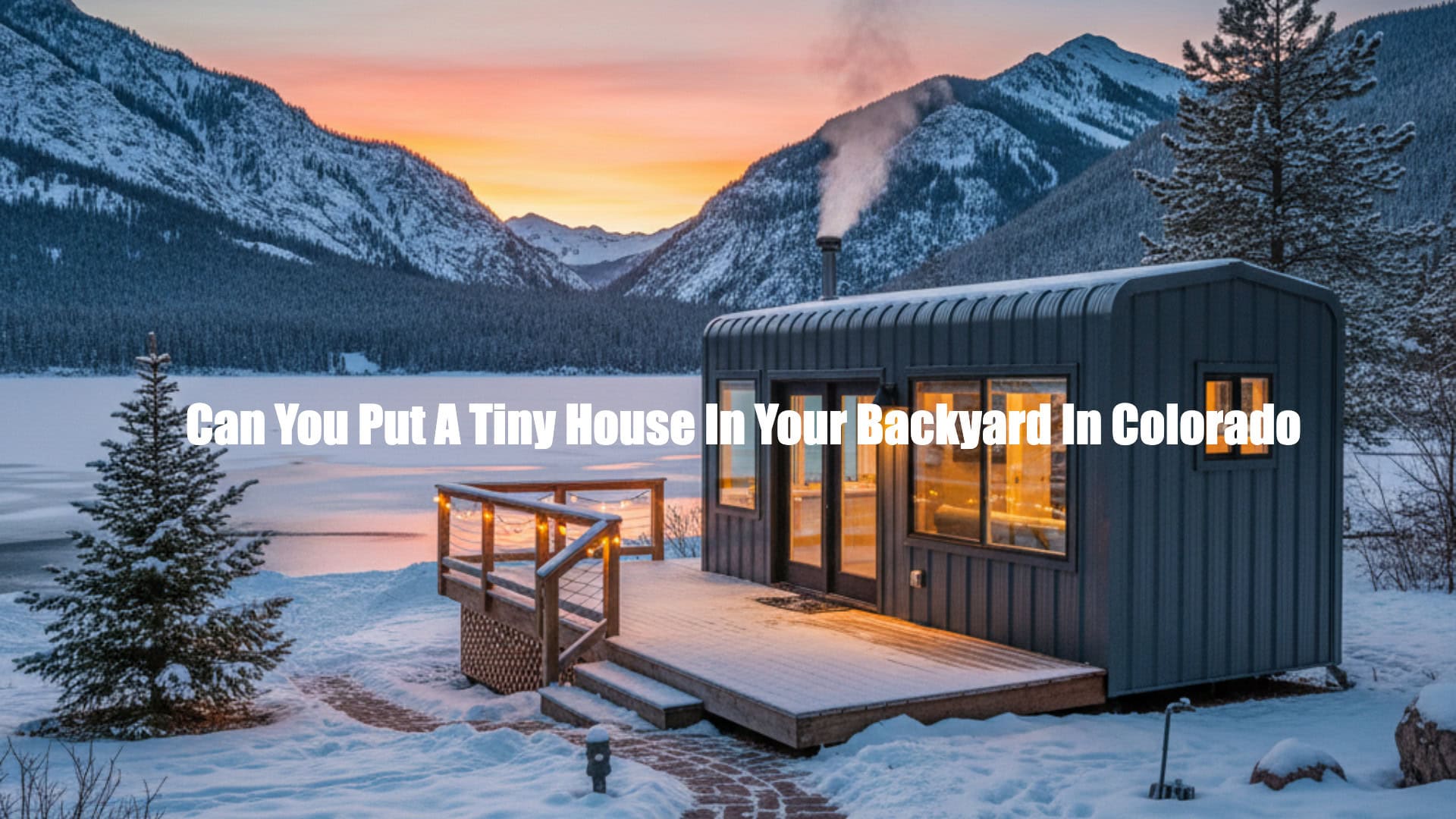
Can You Put a Tiny House in Your Backyard in Colorado?
Colorado permits tiny houses in backyards primarily as accessory dwelling units (ADUs) in most counties and cities, subject to local zoning, building codes, and minimum size requirements often starting at 400 square feet for permanent structures. Tiny houses on wheels are generally classified as recreational vehicles (RVs) and restricted from permanent residency outside designated areas, though recent state laws allow them as full-time dwellings if they meet IRC standards and are properly affixed. Always verify with local planning departments, as regulations vary widely and can change.
In the stunning vistas of Colorado, from the urban buzz of Denver to the serene mountains surrounding Boulder, the appeal of adding a tiny house to your backyard continues to grow. This compact living option offers a practical solution for multigenerational housing, guest accommodations, or even rental income amid the state’s escalating housing costs, where median home prices have surpassed $550,000. However, realizing this dream requires navigating a complex web of state guidelines and local ordinances that determine feasibility in your specific location. This refreshed guide explores the latest regulations, supportive counties and cities, and essential considerations to help you assess if a backyard tiny house aligns with your plans.
Whether envisioning a permanent foundation build or a mobile unit on wheels, understanding distinctions like ADU classifications versus RV rules is crucial. Recent legislative updates, including House Bill 22-1242 effective in 2023, have expanded options for tiny homes as permanent residences when compliant with the International Residential Code (IRC). As experts in this evolving landscape, Great Lakes Tiny Homes specializes in full-service manufacturing of modular, park model, and tiny homes, delivering turnkey solutions to all 48 lower U.S. states. Our builds come with or without wheels and can include RVIA certification for park models, ensuring compliance with diverse zoning needs. If you’re ready to explore tailored options, book a call with our experts for personalized guidance.
Disclaimer: This article is for informational purposes only and does not constitute legal advice. Laws, regulations, and zoning rules vary by location and may change over time. Always consult your local zoning office or a qualified land use/zoning attorney before making decisions based on this information.
Understanding Colorado’s Legal Framework for Backyard Tiny Houses
Colorado’s approach to tiny houses emphasizes local control, with the state setting baseline standards through the Division of Housing while delegating specifics to counties and municipalities. This structure allows flexibility but necessitates property-specific research to confirm backyard placements. Tiny houses are broadly defined under the IRC Appendix Q as dwellings of 400 square feet or less, excluding lofts, and must adhere to safety provisions for compact spaces like emergency egress and loft access. For backyard installations, they typically qualify as ADUs on single-family lots, provided the primary residence exists and occupancy rules are met—often requiring the owner to live on-site.
The key divide lies between permanent tiny houses on foundations, treated as fixed dwellings under full building codes, and tiny houses on wheels (THOWs), regulated as RVs under Colorado Revised Statutes. Permanent builds demand engineered foundations resistant to the state’s seismic and snow loads, up to 60 pounds per square foot in mountainous areas, and integration with local utilities. THOWs, while more affordable and movable, face residency limits unless affixed permanently and certified under RVIA standards, as clarified by recent laws allowing IRC-compliant THOWs for year-round living. State resources like the Division of Housing outline installation requirements, including insignias for approved units. Colorado Division of Housing – Tiny Homes and Tiny Houses. This framework supports innovative housing but underscores the need for pre-approval consultations to avoid violations.
Emerging trends show increased acceptance, with over 20 counties adopting ADU-friendly policies since 2020 to address affordability crises. However, off-grid setups remain challenging in urban zones due to utility mandates. For those in rural areas, agricultural exemptions can ease restrictions, but environmental reviews for water and septic are standard. Great Lakes Tiny Homes designs align with these codes, offering customizable features for Colorado’s climate.
Zoning Laws and Local Regulations: What You Need to Know
Zoning in Colorado governs backyard tiny houses through land use codes that classify properties into districts like residential (R-1 to R-MF) or agricultural (A-1), each with unique allowances for accessory structures. In low-density R-1 zones common in suburbs, ADUs are often permitted but capped at 50% of the primary home’s size or 800 square feet, whichever is smaller, to maintain neighborhood aesthetics. Setbacks typically require 5-10 feet from side and rear lines, while front yard encroachments are prohibited. Lot coverage limits, around 40-50%, ensure open space preservation, and height restrictions of 20-25 feet prevent overshadowing. These rules, enforced by county planning departments, aim to balance density with community character.
Permitting processes involve zoning compliance checks, site plan reviews, and public notifications in some areas, with timelines of 4-12 weeks and fees from $500 to $3,000. HOAs add layers, often mandating design reviews for material and color harmony. Recent state incentives under HB24-1152 streamline ADU approvals by shortening review periods and limiting HOA bans, though aesthetic guidelines persist. For THOWs, zoning treats them as temporary unless converted to permanent status via foundation and utility ties. Always initiate with a pre-application meeting at your local office to clarify variances.
Environmental factors like flood zones or steep slopes trigger additional reviews, such as geotechnical reports costing $1,000-$5,000. In wildfire-prone areas, defensible space requirements mandate 30-100 feet clearances. These regulations evolve, with 2025 updates expected to further liberalize ADUs in response to housing shortages. Integrating with tiny house builders in Denver can simplify navigation.
Disclaimer: This article is for informational purposes only and does not constitute legal advice. Laws, regulations, and zoning rules vary by location and may change over time. Always consult your local zoning office or a qualified land use/zoning attorney before making decisions based on this information.
Colorado Counties That Allow Backyard Tiny Houses
Several Colorado counties have progressive policies facilitating backyard tiny houses, often through ADU provisions in residential and agricultural zones. These areas prioritize affordable housing solutions while upholding safety standards. Below is a table summarizing key counties, drawing from official land use codes. Note that minimum sizes and requirements can shift with amendments, so direct verification is essential.
| County/City | Min Sq Ft | Zoning Type | Key Requirements | Source | Verified |
|---|---|---|---|---|---|
| El Paso County | 400 | Residential/RV Park | One tiny house per lot (two in A-35 ag zones); ANSI/RVIA compliant for THOWs; finished sidings required; building permit needed. | El Paso County Land Development Code Resolution 17-372 | Yes, 2026 |
| Denver County | 300 | All Residential Zones | ADUs up to 800 sq ft; owner occupancy required; compatible design with main house; site plan review. | Denvergov.org – Permitting an Accessory Dwelling Unit (ADU) | Yes, 2026 |
| Larimer County | 400 | Residential/Agricultural | Habitable rooms min 70 sq ft; ceiling height 6’8″; permanent foundation for non-THOW; building permit required. | Larimer County – Tiny Houses Guide | Yes, 2026 |
| Boulder County | 400 | Residential (Unincorporated) | Permanent foundation; site plan review; water service required; IRC 2015 compliant; min habitable room 70 sq ft. | Boulder County – Accessory Dwelling Unit Policy | Yes, 2026 |
| Jefferson County | No min (if code-compliant) | Residential | Building permit required; treated as single-family dwelling; THOWs as RVs with restrictions. | Jefferson County – Tiny Homes & Recreational Vehicles FAQ | Yes, 2026 |
| Adams County | 100 | Residential | Max 400 sq ft; villages require 10+ homes on 0.5+ acre lots; permit for ADUs. | Adams County Planning & Zoning | Yes, 2026 |
This table highlights permissive counties, but rural areas like Weld offer more flexibility for agricultural zones. For community options, explore the best tiny home communities in Colorado.
Disclaimer: This article is for informational purposes only and does not constitute legal advice. Laws, regulations, and zoning rules vary by location and may change over time. Always consult your local zoning office or a qualified land use/zoning attorney before making decisions based on this information.
Major Colorado Cities and Their Tiny House Policies
Colorado’s urban centers have tailored policies reflecting their unique housing dynamics, with Denver leading in ADU liberalization. These cities balance growth with preservation, often requiring compatibility with existing architecture.
Denver: ADUs are allowed in all residential zones, with sizes up to 800 square feet or 75% of the primary home. Owner-occupancy is mandated, and designs must match the main house’s style. The process involves a zoning permit ($400+) and building review (8-12 weeks). Contact Community Planning and Development at 720-865-2500. Denvergov.org – ADU Permits. For local builders, see tiny house builders in Denver.
Colorado Springs: In El Paso County, ADUs require lots over 9,000 square feet, capped at 800 square feet, emphasizing family use. Fees range $1,000-$2,500; submit blueprints for 6-10 week review. Height limited to 18 feet. Reach Pikes Peak Regional Building Department at 719-327-2880. A 2023 pilot supports THOWs in transitional zones. Check tiny houses for sale in Colorado Springs for opportunities.
Boulder: ADUs under 800 square feet need affordability stipulations in unincorporated areas; fees $1,500-$3,000 with 10-16 week habitat/flood reviews. Relaxed rules post-2021 for dimensions. Contact Planning at 303-441-3930. Boulder County Planning. Integrates well with eco-focused communities.
Fort Collins: In Larimer County, tiny houses 400-900 square feet in residential zones; $800-$2,000 fees, 4-8 weeks via digital portals. Modular-friendly amendments aid prefab. Call Building Department at 970-498-7683. Larimer County Building. Explore tiny houses for sale in Fort Collins.
Aurora: ADUs up to 1,000 square feet with neighbor input; $600-$1,800 fees, 6-12 weeks. 2024 expansion proposed. Contact Planning at 303-739-7162.
Pueblo: Flexible for 300-700 sq ft ADUs; $500-$1,500 fees, 5-9 weeks. Supports workforce housing. Call Development Services at 719-553-6123.
Disclaimer: This article is for informational purposes only and does not constitute legal advice. Laws, regulations, and zoning rules vary by location and may change over time. Always consult your local zoning office or a qualified land use/zoning attorney before making decisions based on this information.
Permanent Foundation vs. Tiny Houses on Wheels: Legal Differences
Permanent foundation tiny houses in Colorado are classified as ADUs, requiring adherence to the full IRC for structural integrity, including frost-protected foundations to counter freeze-thaw cycles common in the Rockies. These builds integrate seamlessly with property utilities and qualify for standard homeowner insurance, but demand professional engineering for site-specific loads like 90 mph winds in plains areas. The permitting path involves detailed plans and inspections at multiple stages, ensuring long-term durability against Colorado’s harsh winters.
In contrast, THOWs are governed by RV codes and CRS Title 42, limiting occupancy to 180 days unless permanently affixed and IRC-certified per HB22-1242. This mobility appeals for trial setups but complicates financing, as lenders view them as vehicles rather than real estate. RVIA certification verifies safety features like propane systems and electrical grounding, essential for skirting local RV park bans on tiny homes. Transitioning a THOW to permanent status involves removing wheels and adding a foundation, potentially reclassifying it for full residency rights.
Permanents offer stability and appreciation potential, averaging 10-15% value add to properties, while THOWs provide affordability at 30-50% lower cost but higher maintenance for mobility features. Utility challenges differ: Permanents connect directly to mains, while THOWs use adaptable hookups that may not meet permanent codes without upgrades. For zoning alignment, permanents fit ADU rules better in urban backyards. Consider best tiny home communities in Colorado for hybrid options.
Building Permits and Code Compliance Requirements
Securing building permits for Colorado backyard tiny houses starts with zoning clearance, followed by submission of engineered drawings, energy calculations, and soil reports to the local department. Fees scale with complexity, from $500 for basic ADUs to $3,000+ for custom designs, with reviews spanning 4-12 weeks including public comment periods in some counties. Compliance with the 2021 IRC, amended for Colorado’s high elevation, mandates R-38 insulation, impact-resistant windows, and seismic bracing in fault-prone regions.
Inspections occur at foundation, framing, rough-in (plumbing/electrical per UPC/NEC), and final stages, verifying smoke detectors, carbon monoxide alarms, and 36-inch egress windows for tiny spaces. Appendix Q tailors rules for lofts and compact kitchens, allowing alternating tread stairs. Septic systems in rural areas require health department percolation tests, costing $300-$800. Non-compliance risks stop-work orders or fines up to $1,000 daily. Great Lakes Tiny Homes handles code navigation, delivering pre-certified modules.
2025 code updates emphasize energy efficiency, with solar-ready roofs incentivized via rebates. Off-grid elements like composting toilets need variance approvals. Partnering with licensed pros ensures smooth passage. For Boulder-area projects, consult tiny house builders in Boulder.
Disclaimer: This article is for informational purposes only and does not constitute legal advice. Laws, regulations, and zoning rules vary by location and may change over time. Always consult your local zoning office or a qualified land use/zoning attorney before making decisions based on this information.
Utility Connections and Infrastructure Considerations
Utility integration for Colorado tiny houses varies by location, with urban backyards favoring extensions from the main home—electrical subpanels at $1,000-$3,500 and water/sewer ties at $1,000-$4,000. Rural setups may require new wells ($8,000-$15,000) and septics ($5,000-$18,000), permitted through county health via soil tests. Compliance with PUC metering ensures equitable billing, while graywater systems offer sustainability in water-scarce areas like the Western Slope.
Internet and gas follow similar paths, with buried lines preferred for permanence ($300-$1,000). Off-grid alternatives, solar PV systems (10kW at $20,000-$40,000 with 30% federal tax credit), suit remote lots but demand battery storage for winter reliability. Propane tanks for THOWs need setback approvals. Total infrastructure costs range $3,500-$25,000, influencing ROI through energy savings. Coordinate with providers early to avoid delays.
Environmental reviews in flood or wetland zones add $500-$2,000 for elevations. These setups enhance resilience against outages common in stormy seasons. For Fort Collins properties, view tiny houses for sale in Fort Collins.
HOA Restrictions and Neighborhood Considerations
HOAs in Colorado communities can impose stricter rules than zoning, reviewing tiny house proposals for CC&Rs compliance on outbuildings and modifications. Many prohibit THOWs as RVs and require ADUs to blend architecturally, with board approvals taking 30-60 days. Present detailed plans highlighting benefits like increased property values (up to 15%) to gain support.
Neighbor engagement mitigates concerns over privacy or traffic via informal meetings, potentially yielding letters of endorsement. Construction etiquette, like noise-limited hours, preserves relations. Post-build, adhere to maintenance standards to avoid violations. In community-oriented areas, tiny houses can foster social ties. Explore best tiny home communities in Colorado for HOA-free options.
Legal challenges to restrictive covenants are rare but possible under state fair housing laws. Professional mediation aids disputes. These dynamics underscore proactive diplomacy for harmonious integrations.
Tiny House Prices in Colorado
Tiny house prices in Colorado fluctuate based on size (100-400 square feet), foundation type (permanent vs. wheels), RVIA certification for mobility, utility connections, and adherence to local codes like snow-load reinforcements. Statewide averages range from $35,000 for basic DIY THOWs to $95,000 for custom permanents, with urban premiums in Denver adding 20-30% for permitting and labor. Rural builds benefit from lower land prep costs but may incur higher transport fees. Factors like energy-efficient features (solar integration at $10,000+) and interior finishes influence totals, alongside 2026 inflation adjustments projecting 5-7% rises.
Financing options include HELOCs at 4-8% rates or construction loans, with ADUs boosting property appraisals by 10-20%. Rental potential yields $1,000-$2,500 monthly, offsetting investments amid 7% vacancy rates. Off-grid models save on utilities but require upfront battery costs. These variables make budgeting site-specific.
Great Lakes Tiny Homes Pricing
Great Lakes Tiny Homes offers turnkey builds priced between $100,000 and $150,000, encompassing design, manufacturing, delivery, and installation across Colorado. This range covers customizable features tailored to local codes, including high-efficiency insulation for cold climates and optional RVIA certification. Full-service handling minimizes surprises, with transparent quotes factoring in transport to remote sites. Clients appreciate the all-in-one approach, ensuring compliance without added contractor hunts.
Compared to market averages, our pricing reflects premium materials and warranties, providing long-term value through durable construction. Financing partnerships ease upfront burdens, with ROI from rentals or family use. This investment aligns with Colorado’s sustainable living trends.
Great Lakes Tiny Homes Model Options
- Modular Homes – Ideal for permanent ADU zoning, assembled on-site for seamless backyard integration.
- A-Frame – Compact, sloped designs suited to snowy regions, maximizing vertical space under height limits.
- Cabin – Rustic yet modern, fitting rural agricultural zones with off-grid capabilities.
- Park Models – RVIA-certified for flexible placement, bridging THOW and permanent needs.
- Tiny House on Wheels – Mobile for testing locations, convertible to fixed under updated laws.
Model selection should consider your zoning—permanents for urban ADUs, wheels for rural trials. Zoning impacts like foundation mandates guide choices, ensuring regulatory fit. Book a call with our experts to match models to your property.
Practical Tips for Successfully Adding a Tiny House to Your Backyard
Success in Colorado backyard tiny houses hinges on site assessment—test soil for $500-$1,500 to confirm foundation viability, prioritizing south-facing spots for passive solar. Engage certified builders early, reviewing portfolios for code adherence; bids should detail timelines (4-8 months) and contingencies for weather delays. Assemble a permit packet with surveys and elevations, using digital tools for tracking.
Avoid common errors like underestimating drainage—install French drains ($2,000-$5,000) in rainy Front Range areas—or skipping noise buffers for neighbors. Buffer budgets by 20% for inspections and variances. Incorporate smart features like Nest thermostats for efficiency. For Colorado Springs, see tiny houses for sale in Colorado Springs.
Post-construction, annual maintenance like roof inspections prevents issues. Community involvement, such as joining Tiny House Colorado, provides support. These steps yield resilient, enjoyable spaces.
Future Outlook: Colorado’s Evolving Tiny House Landscape
Colorado’s tiny house scene is expanding, driven by housing shortages with 40,000-unit deficits projected by 2030, prompting bills like HB24-1152 for statewide ADU standardization. Incentives include tax credits for affordable builds and relaxed HOAs, with pilots in Aurora testing THOW villages. Environmental pushes favor net-zero designs, aligning with state renewable goals.
Advocacy from groups like Tiny Home Industry Association influences 2026 codes, potentially lowering barriers in 15+ counties. Remote work sustains demand, with 25% of builds now hybrid offices. Monitor via housing dashboards for updates. Great Lakes Tiny Homes anticipates these shifts, innovating compliant models.
This trajectory promises broader access, enhancing affordability and sustainability. Stay informed through official channels.
Tiny House FAQs in Colorado
Is it legal to put a tiny house in my backyard in Colorado?
Tiny houses are generally permitted in Colorado backyards as accessory dwelling units (ADUs) in most counties and cities, provided they comply with local zoning and building codes. Recent state legislation, such as House Bill 22-1242 effective in 2023, allows IRC-compliant tiny homes as permanent residences when properly affixed. However, regulations vary widely by location, so always consult your local planning department or a zoning professional for current rules, as they can change.
What is the difference between a tiny house on wheels and one on a foundation?
A tiny house on a foundation is treated as a permanent structure under full building codes, requiring engineered foundations to handle Colorado’s seismic and snow loads, along with permanent utility connections. Tiny houses on wheels (THOWs) are classified as recreational vehicles (RVs), limiting permanent residency unless they meet RVIA certification and IRC standards for year-round living. The distinction impacts permitting, mobility, and long-term placement options in backyard settings.
What is the minimum size for a tiny house in Colorado?
The International Residential Code (IRC) Appendix Q defines tiny houses as 400 square feet or less, excluding lofts, with safety features for compact spaces like emergency egress. Local jurisdictions may enforce minimum size requirements starting at 400 square feet for permanent ADUs to ensure habitability. Verify specifics with your local building department, as some areas have additional mandates beyond state baselines.
Where can I place a tiny house on my property in Colorado?
Backyard tiny houses as ADUs are typically allowed on single-family residential lots (R-1 zones) behind the primary home, subject to setbacks of 5-10 feet from side and rear property lines and lot coverage limits of 40-50%. Rural agricultural zones (A-1) offer more flexibility, but urban areas restrict placements to preserve neighborhood character. For detailed guidelines, review local zoning laws through your county planning office.
What permits and utilities are required for a backyard tiny house?
Obtaining permits involves zoning verification, building permits, and site plan approvals, often with fees and timelines of 4-12 weeks, plus public notifications in some municipalities. Permanent setups require connections to approved water, septic, and electrical utilities; off-grid systems face challenges in urban zones due to mandates. Refer to the Colorado Division of Housing for state resources, and always confirm requirements with local authorities to avoid violations.
Conclusion: Your Path to Backyard Tiny House Success in Colorado
Adding a tiny house to your Colorado backyard is achievable with diligent research into local zoning, permitting, and utilities, as detailed across supportive counties like Larimer and El Paso, and cities such as Denver and Boulder. We’ve covered legal distinctions, costs, and practical strategies to guide your journey, emphasizing compliance for lasting success. As regulations evolve favorably, opportunities abound for sustainable living.
Great Lakes Tiny Homes stands ready to assist with expert builds suited to Colorado’s diverse needs. To discuss your project and ensure zoning alignment, book a call with our experts. With preparation, your tiny house vision can become a reality.