

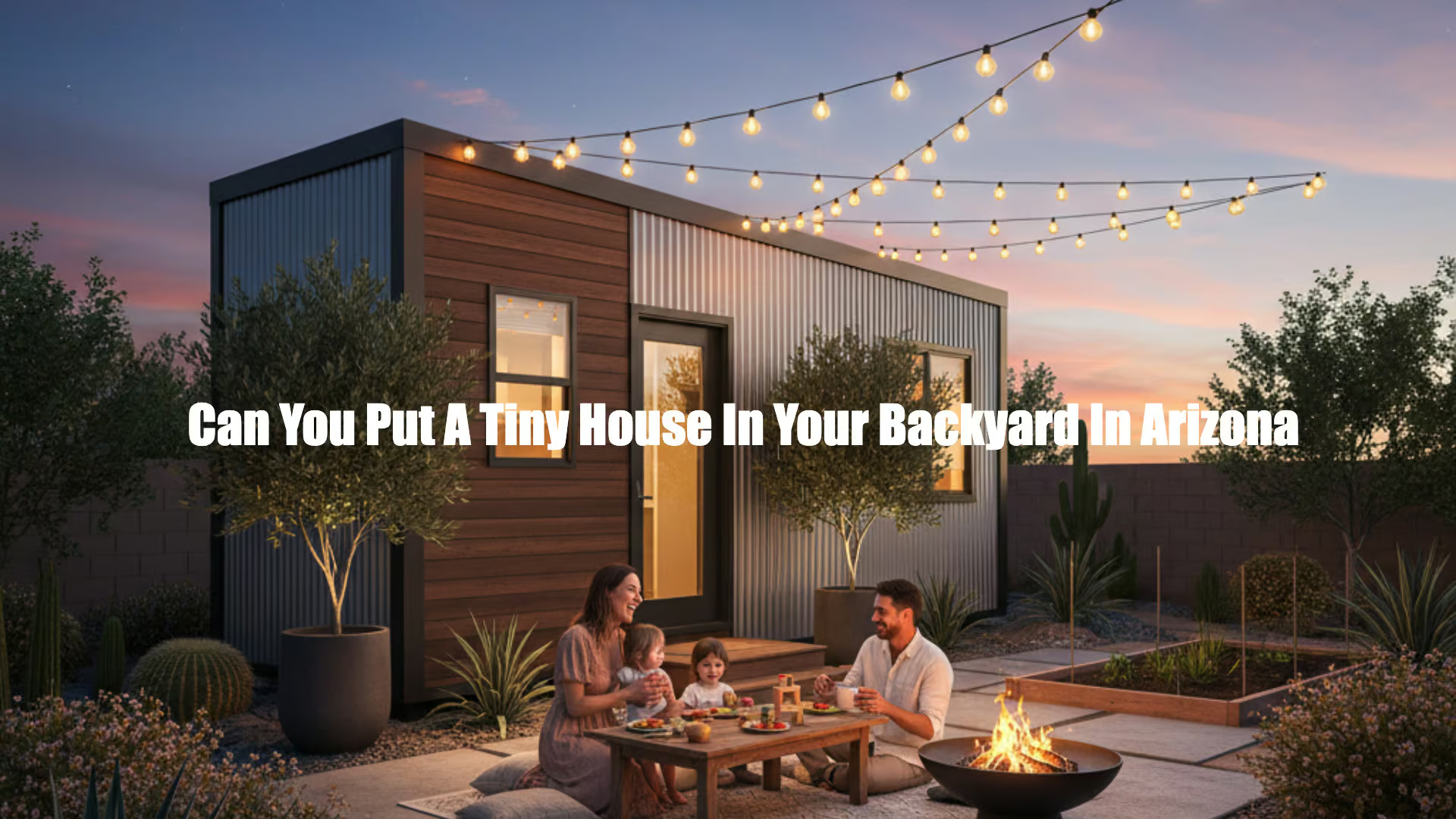
Arizona allows tiny houses in backyards as accessory dwelling units (ADUs) in many counties like Maricopa and Pima, with minimum sizes typically 200-400 square feet for permanent structures under the International Residential Code (IRC). Tiny houses on wheels are classified as RVs and restricted to temporary use or RV zones, requiring permits and compliance with local zoning. Always verify with county planning offices, as rules vary by location.
In the sun-drenched expanses of Arizona, from the urban vibrancy of Phoenix to the rugged beauty of Sedona, the appeal of adding a tiny house to your backyard has grown significantly. These compact dwellings, often under 400 square feet, provide versatile solutions for guest quarters, home offices, or affordable housing extensions amid rising property costs. However, realizing this vision involves understanding a patchwork of state-adopted codes and local ordinances that govern placement, construction, and use. This guide explores the legal landscape, practical steps, and key considerations to help you determine if a backyard tiny house fits your property and lifestyle.
At Great Lakes Tiny Homes, we specialize as a full-service manufacturer of modular, park model, and tiny homes, delivering turnkey builds to all 48 lower U.S. states. Our options include structures with or without wheels, and those with RVIA certification—often referred to as park models—designed to meet diverse regulatory needs. Whether you’re navigating Arizona’s zoning challenges or seeking a compliant design, our expertise ensures seamless integration. To discuss your project, book a call with our experts.
Disclaimer: This article is for informational purposes only and does not constitute legal advice. Laws, regulations, and zoning rules vary by location and may change over time. Always consult your local zoning office or a qualified land use/zoning attorney before making decisions based on this information.
Understanding Arizona’s Legal Framework for Backyard Tiny Houses
Arizona’s approach to backyard tiny houses relies on the state-adopted International Residential Code (IRC), including Appendix Q for dwellings under 400 square feet, which outlines standards for ceiling heights, lofts, and emergency egress tailored to compact spaces. This framework emphasizes safety features like smoke detectors and proper ventilation, crucial in a state with extreme temperatures ranging from 110°F summers to occasional freezes. While the state provides baseline guidelines, counties and cities hold authority over zoning and permitting, leading to variations that can either facilitate or complicate installations. For instance, the IRC requires a minimum ceiling height of 6 feet 8 inches in habitable areas, but local amendments might adjust this for desert-adapted designs incorporating passive cooling.
The distinction between tiny houses on wheels (THOWs) and permanent foundations remains pivotal. THOWs, built to RVIA standards, are treated as recreational vehicles, permitting temporary backyard stays in some rural zones but prohibiting full-time residency without conversion. Permanent structures qualify as ADUs, allowing indefinite use if tied to the primary residence, but demand full utility integration and inspections. Recent state initiatives, such as expansions under House Bill 2741 in 2023, have relaxed owner-occupancy rules for ADUs, promoting them as tools for multigenerational living or income generation in high-cost areas like Maricopa County.
Environmental factors uniquely shape Arizona’s codes, with mandates for wildfire-resistant materials in prone areas and water-efficient fixtures statewide due to drought concerns. Off-grid options, including solar panels and rainwater harvesting, gain traction in rural settings but require environmental impact assessments. By aligning with these standards, homeowners can leverage tiny houses for sustainable expansion, reducing overall property footprints while enhancing resilience to climate challenges. For deeper regulatory insights, consult the Arizona Department of Housing.
Disclaimer: This article is for informational purposes only and does not constitute legal advice. Laws, regulations, and zoning rules vary by location and may change over time. Always consult your local zoning office or a qualified land use/zoning attorney before making decisions based on this information.
Zoning Laws and Local Regulations: What You Need to Know
Zoning ordinances in Arizona dictate permissible uses for backyard spaces, categorizing them into districts such as R-1 (single-family residential) where ADUs like tiny houses are often allowed with restrictions on size and separation from the main home. These rules aim to preserve neighborhood character, typically enforcing setbacks of 5 to 10 feet from property lines and lot coverage limits of 40-50% to prevent overcrowding. Height caps, usually 15-20 feet, ensure tiny houses blend aesthetically, while density controls might limit one ADU per lot. In practice, this means mapping your property to confirm compliance, as violations can lead to fines up to $2,500 per day in urban zones.
Local variations add layers: urban areas like Phoenix prioritize family-oriented placements, requiring ADUs to share utilities with the primary residence, whereas rural counties offer more flexibility for off-grid setups. HOAs, covering over 60% of Arizona’s subdivisions, can impose supplemental covenants banning visible wheels or mandating matching exteriors, overriding zoning in some cases. Variances, obtained through public hearings, provide relief but involve fees and neighbor notifications, often taking 60-90 days. Understanding these dynamics through tools like county GIS maps helps anticipate challenges early.
Permitting processes unify these regulations, starting with pre-application meetings at planning departments to review site plans and environmental impacts. Fees range from $300 to $1,500, covering reviews for floodplains and seismic risks inherent to Arizona’s geology. Successful navigation often involves professional surveys to document compliance, ensuring long-term viability. For zoning specifics, refer to the Maricopa County Zoning Ordinance.
Disclaimer: This article is for informational purposes only and does not constitute legal advice. Laws, regulations, and zoning rules vary by location and may change over time. Always consult your local zoning office or a qualified land use/zoning attorney before making decisions based on this information.
Arizona Counties That Allow Backyard Tiny Houses
Arizona’s counties exhibit diverse policies on backyard tiny houses, influenced by population density and environmental factors, with urban counties like Maricopa emphasizing integration and rural ones like Yavapai favoring flexibility. These allowances typically frame tiny houses as ADUs in residential zones, requiring adherence to state IRC standards while addressing local concerns such as water scarcity and fire safety. Homeowners must submit detailed applications, often including utility plans and neighbor consents, to secure approvals that can span 4-12 weeks. This county-level approach reflects Arizona’s decentralized governance, enabling tailored solutions but necessitating thorough research via official portals.
Key enablers include streamlined permitting in progressive counties and incentives for sustainable designs, such as rebates for solar-equipped tiny houses in drought-vulnerable areas. Challenges arise from varying minimum sizes and foundation mandates, but successful projects often incorporate native landscaping to meet aesthetic reviews. By prioritizing counties with explicit ADU ordinances, homeowners can expedite processes and avoid costly revisions. For comprehensive county data, explore the Arizona Housing Needs Assessment.
| County/City | Min Sq Ft | Zoning Type | Key Requirements | Source | Verified |
|---|---|---|---|---|---|
| Maricopa County (Phoenix) | 200-400 | R-1 Residential | ADU permit required; shared utilities; 6 ft setbacks; no separate metering | Maricopa County Zoning Ordinance | Yes |
| Pima County (Tucson) | 200 | Single-Family Residential | IRC Appendix Q compliance; building permit and inspections; water-efficient fixtures | Pima County Permitting Regulation for Tiny Houses | Yes |
| Yavapai County | 200 | Rural Residential | Special use permit; fire-resistant materials; soil tests for foundations | Yavapai County Development Services | Yes |
| Cochise County | 296 | Residential | 2018 IRC Appendix Q; certificate of occupancy post-inspection; 6’4″ ceilings | Cochise County Tiny Homes Policy | Yes |
| Mohave County | 170 | Residential | Permits and inspections; 6’4″ ceilings; floodplain checks | Mohave County Planning and Zoning | Yes |
This table highlights permissive counties, but exclusions like Graham or Greenlee may have stricter minimums around 400 sq ft. Verification through county sites ensures accuracy amid ongoing updates. For community options, see the best tiny home communities in Arizona.
Disclaimer: This article is for informational purposes only and does not constitute legal advice. Laws, regulations, and zoning rules vary by location and may change over time. Always consult your local zoning office or a qualified land use/zoning attorney before making decisions based on this information.
Major Arizona Cities and Their Tiny House Policies
Phoenix, as Maricopa County’s hub, permits tiny houses as ADUs in R-1 zones under a 2022 ordinance update, capping sizes at 800 sq ft and requiring shared utilities to prevent independent tenancies. Applications via the Planning and Development Department involve $1,000-$2,500 fees and 8-12 week reviews, including energy audits for heat mitigation. A multigenerational pilot allows THOWs for family use, emphasizing designs with reflective roofs. Contact: Phoenix Planning Department at (602) 262-7811 or visit their official site for forms.
Tucson in Pima County supports tiny ADUs up to 800 sq ft per its ordinance, with fast-track permits under the 2023 housing bill for compliant builds featuring low-flow fixtures. Fees are $800, processed in 6-10 weeks by the Building Safety Division, focusing on seismic reinforcements. Off-grid solar incentives apply, but rentals need owner occupancy. Reach out to Tucson Planning at (520) 837-4956 or check Tucson PDS.
Mesa allows guest quarter tiny houses in R1 zones, with $600 permits and 4-8 week timelines through its 2021 THOW pilot now permanent for family extensions. Emphasis on parking provisions and aesthetic matches to main homes. For details, contact Mesa Planning at (480) 644-2388 or review Mesa Planning resources.
Scottsdale mandates desert-modern styles for tiny ADUs, with $1,200 permits taking 10 weeks via environmental reviews for water conservation. Low-water designs qualify for rebates. Inquire at Scottsdale Planning (480) 312-7760 or Scottsdale PD.
Flagstaff in Coconino County adopts Appendix Q for tiny homes under 600 sq ft, permitting ADUs with community input for wildfire zones. Permits cost $700, 6 weeks via Planning Division. Contact (928) 213-2600 or Flagstaff PDS. For builders in these cities, explore tiny house builder Arizona Phoenix.
Disclaimer: This article is for informational purposes only and does not constitute legal advice. Laws, regulations, and zoning rules vary by location and may change over time. Always consult your local zoning office or a qualified land use/zoning attorney before making decisions based on this information.
Permanent Foundation vs. Tiny Houses on Wheels: Legal Differences
Permanent foundation tiny houses in Arizona qualify as ADUs under IRC, enabling full-time use with requirements for concrete slabs resistant to expansive soils and integrations like direct plumbing ties. This setup supports financing as property additions, but involves $5,000-$10,000 in foundation costs and multi-stage inspections for electrical conformity to NEC standards. Advantages include stability against winds up to 90 mph and potential value increases of 10-15%, though mobility is sacrificed. In seismic zones, additional reinforcements like shear walls become mandatory, extending build times by 2-4 weeks.
THOWs adhere to RVIA 119.2 standards, classifying them as mobile units for temporary backyard placement up to 180 days in rural areas, with registrations via the DMV as trailers. They offer affordability at $30,000-$60,000 and easy relocation during monsoons, but face residency bans without foundation conversion and higher insurance as RVs. Utility hookups use temporary pedestals, limiting off-grid viability without solar upgrades. Conversion processes, involving axle removal and permitting, bridge to permanent status but add $3,000-$7,000.
Choosing depends on lifestyle: permanents suit long-term family expansions, while THOWs fit nomads or trials. Hybrid conversions allow testing before commitment. For compliant THOW options, consider tiny house on wheels designs. Analysis from state reports shows permanents yield better ROI in appreciating markets like Phoenix.
Disclaimer: This article is for informational purposes only and does not constitute legal advice. Laws, regulations, and zoning rules vary by location and may change over time. Always consult your local zoning office or a qualified land use/zoning attorney before making decisions based on this information.
Building Permits and Code Compliance Requirements
Arizona’s permitting for backyard tiny houses begins with zoning verification, followed by building permit applications to county departments including scaled plans, material specs, and engineer certifications for load-bearing in sandy soils. Fees span $500-$3,000, with timelines of 4-12 weeks encompassing preliminary reviews and public notices in populated areas. IRC 2018 mandates GFCI-protected outlets, PEX piping for freeze resistance, and wind-rated framing to 115 mph, inspected at foundation pour, rough-in, and final stages. Septic approvals from health departments require percolation tests, essential in water-scarce regions.
Certified professionals handle compliance, ensuring adherence to energy codes like R-38 roof insulation for cooling efficiency. Fire safety includes Class A roofing and 30-foot defensible space in wildland interfaces. Off-grid variances demand environmental reports on solar output and waste management. Streamlined processes in counties like Pima reduce delays for pre-approved designs. For permit guidance, see Phoenix Permit Center.
Post-permit, occupancy certificates confirm habitability, unlocking insurance and tax assessments. Common oversights like inadequate ventilation lead to re-inspections, costing $200 each. Proactive code checks via online portals prevent setbacks. In Tucson, digital submissions accelerate approvals by 20%.
Disclaimer: This article is for informational purposes only and does not constitute legal advice. Laws, regulations, and zoning rules vary by location and may change over time. Always consult your local zoning office or a qualified land use/zoning attorney before making decisions based on this information.
Utility Connections and Infrastructure Considerations
Utility planning for Arizona tiny houses prioritizes resilience to heat and aridity, with electrical extensions from main panels costing $1,000-$4,000 and requiring NEC-compliant trenching to avoid irrigation conflicts. Water connections tap municipal lines or necessitate wells at $8,000-$20,000, while greywater systems for landscaping comply with conservation mandates. Sewer options include septic tanks ($12,000) designed for low-flow usage or grinder pumps in sloped terrains. Internet via buried fiber ($600) ensures connectivity, vital for remote work in isolated backyards.
Off-grid setups feature solar arrays ($15,000-$30,000) with battery backups for 100% coverage, paired with composting toilets approved in rural zones under health codes. Propane for heating demands IFC-compliant tanks buried 10 feet from structures. Total infrastructure outlays reach $10,000-$25,000, offset by rebates for efficient appliances. In flood-risk areas, elevated connections prevent damage during rare but intense rains.
Professional assessments verify feasibility, integrating smart meters for usage tracking. Challenges like hard water scaling require softeners, adding $500. Sustainable choices, such as rainwater barrels, align with state incentives. For utility planning, consult Arizona Corporation Commission.
Disclaimer: This article is for informational purposes only and does not constitute legal advice. Laws, regulations, and zoning rules vary by location and may change over time. Always consult your local zoning office or a qualified land use/zoning attorney before making decisions based on this information.
HOA Restrictions and Neighborhood Considerations
HOAs govern 2.5 million Arizona homes, often prohibiting tiny houses unless covenants explicitly allow ADUs, requiring board approvals with detailed proposals on visibility and noise. Amendments to CC&Rs, needing 67% owner votes, can enable them but take 6-12 months. Aesthetic guidelines mandate earth-tone exteriors and screened enclosures, aligning with desert themes. Legal challenges via arbitration resolve disputes, but prevention through early consultations saves time.
Neighbor relations thrive on transparency: share renderings and host site visits to address privacy fears. In gated communities, security integrations like key fob access for tiny house gates become stipulations. Positive precedents, such as HOA-approved eco-tiny houses in Scottsdale, demonstrate community benefits like reduced traffic from in-law suites. Mediation services from state associations facilitate agreements.
Non-HOA neighborhoods focus on general nuisance laws, emphasizing quiet hours and lighting controls. Building rapport via neighborhood associations yields endorsements for variances. Long-term, compliant tiny houses enhance property harmony. For HOA navigation, review Arizona HOA Statutes.
Disclaimer: This article is for informational purposes only and does not constitute legal advice. Laws, regulations, and zoning rules vary by location and may change over time. Always consult your local zoning office or a qualified land use/zoning attorney before making decisions based on this information.
Tiny House Prices in Arizona
Tiny house prices in Arizona fluctuate based on size, with structures under 200 square feet starting lower but requiring more creative space planning, while 300-400 square foot models offer balanced comfort at mid-range costs. Foundation choices impact budgets: permanent setups add $5,000-$15,000 for concrete slabs suited to rocky terrains, whereas wheels enable mobility but necessitate RVIA certification for road legality, increasing expenses by $2,000-$5,000. Utility hookups vary regionally—urban areas like Phoenix demand municipal ties at $3,000-$8,000, while rural spots allow off-grid solar for $10,000-$20,000 total. Local codes influence final tallies, as seismic reinforcements in northern counties or wildfire materials in southern ones can add 10-20% premiums. Overall, Arizona’s arid climate favors energy-efficient builds, potentially qualifying for state rebates that offset 5-15% of costs through programs like the Arizona Commerce Authority’s sustainability incentives.
Customization levels further diversify pricing, with basic shells at entry points and luxury finishes like quartz counters pushing toward upper limits, especially in high-demand metros where labor rates exceed rural averages by 25%. Zoning compliance audits, often $500-$1,000, ensure investments align with ordinances, preventing rework expenses. Market trends show a 15% annual appreciation for compliant tiny houses, driven by housing shortages, making them viable assets. Buyers should factor in ongoing costs like $300-$600 annual HOA fees in subdivided areas or $200 property tax hikes for added square footage.
Great Lakes Tiny Homes Pricing
At Great Lakes Tiny Homes, our builds range from $100,000 to $150,000 for turnkey Arizona deliveries, encompassing design, construction, and on-site setup to meet local codes. This pricing reflects premium materials like insulated panels for extreme heat resistance and customizable layouts that accommodate ADU requirements. Delivery to remote sites adds $5,000-$10,000, but our nationwide network ensures efficiency. Value includes warranties and compliance certifications, positioning our homes as long-term investments in Arizona’s dynamic market.
Great Lakes Tiny Homes Model Options
- Modular Homes: Factory-built for quick assembly, ideal for permanent foundations in zoned residential areas.
- A-Frame: Sloped designs suited to mountainous regions, offering aesthetic appeal in rural zoning.
- Cabin: Rustic styles blending with desert landscapes, compliant for ADU placements.
- Park Models: RVIA-certified for wheeled options, fitting temporary or convertible backyard uses.
- Tiny House on Wheels: Mobile for zoning flexibility, perfect for testing backyard feasibility.
Model selection should consider local zoning—permanent options like modulars suit strict ADU rules, while wheeled models navigate RV restrictions. This alignment maximizes compliance and enjoyment. Zoning profoundly influences choices, as permanent models integrate seamlessly in residential districts but demand foundation investments, whereas mobile ones offer trial periods before commitment. To tailor a model to your Arizona property’s regulations, book a call with our experts.
Disclaimer: This article is for informational purposes only and does not constitute legal advice. Laws, regulations, and zoning rules vary by location and may change over time. Always consult your local zoning office or a qualified land use/zoning attorney before making decisions based on this information.
Practical Tips for Successfully Adding a Tiny House to Your Backyard
Site selection in Arizona backyards prioritizes level, south-facing spots for solar gain, avoiding floodplains via FEMA maps and ensuring 20-foot clearances from trees for fire safety. Engage licensed engineers for soil borings, costing $1,000, to confirm stability against subsidence common in clay-heavy soils. Timeline management involves Gantt charts for phased builds, allocating buffers for monsoon delays. Budget 10% contingency for unforeseen code tweaks.
Design tips include incorporating clerestory windows for natural light without heat gain and evaporative coolers over AC for 30% energy savings. Material choices like fiber cement siding resist termites and UV fading. Community engagement through apps like Nextdoor garners support, reducing variance oppositions. Post-install, annual maintenance like gutter cleaning prevents erosion issues.
For sales in key areas, view tiny house for sale Arizona Tucson. Success stories highlight phased approaches: start with permits, then utilities, culminating in celebrations of sustainable additions.
Disclaimer: This article is for informational purposes only and does not constitute legal advice. Laws, regulations, and zoning rules vary by location and may change over time. Always consult your local zoning office or a qualified land use/zoning attorney before making decisions based on this information.
Future Outlook: Arizona’s Evolving Tiny House Landscape
Arizona’s tiny house policies advance with 2024 legislation proposing uniform ADU standards to combat 20% housing shortages, including subsidies for low-income builds in underserved counties. Flagstaff’s THOW zoning pilots and Tucson’s prefab incentives signal broader acceptance, potentially reducing median costs by 15%. Advocacy from groups like the Arizona Tiny House Alliance influences updates, focusing on equity for veterans and seniors.
Technological integrations like smart grids and 3D-printed components promise faster, greener constructions, aligning with state sustainability goals. Rural expansions may loosen foundation mandates, fostering off-grid communities. Urban pilots in Mesa test density increases, balancing growth with preservation. Monitoring via state housing updates keeps stakeholders informed.
This evolution positions tiny houses as pivotal for Arizona’s future, enhancing affordability and resilience. For forward-looking designs, best tiny home communities in Arizona offer models.
Disclaimer: This article is for informational purposes only and does not constitute legal advice. Laws, regulations, and zoning rules vary by location and may change over time. Always consult your local zoning office or a qualified land use/zoning attorney before making decisions based on this information.
Tiny House FAQs in Arizona
Is it legal to put a tiny house in my backyard in Arizona?
Yes, Arizona permits tiny houses in backyards as ADUs in residential zones across counties like Maricopa and Pima, subject to local zoning and IRC compliance for structures under 400 square feet. THOWs face restrictions as RVs, limited to temporary use without permanent foundations. Verification with planning offices is crucial due to variations.
What is the difference between a tiny house on wheels and one on a foundation in Arizona?
THOWs are RV-classified for mobility and temporary placement, adhering to RVIA standards but barring full-time residency in most zones. Foundation-based tiny houses function as permanent ADUs under IRC, allowing indefinite occupancy with full permitting and utility ties. The former suits trials, the latter long-term integrations.
What is the minimum size for a tiny house in Arizona?
Arizona lacks a statewide minimum but follows IRC habitability rules, generally requiring 120-200 square feet for primary rooms and 6’8″ ceilings. Local codes in places like Cochise set 296 square feet thresholds. Consult municipalities for precise measurements ensuring safety.
Where can I place a tiny house on my property in Arizona?
Placement occurs in backyards of R-1 zones with 5-10 foot setbacks and 40-50% lot coverage limits, avoiding front yards and heights over 15 feet. Compliance with flood and fire zones is mandatory. See zoning maps for eligibility.
What permits and utilities are required for a backyard tiny house in Arizona?
Permits include building applications with plans and inspections, costing $500-$3,000; utilities demand electrical, water, and sewer connections per NEC and health codes. Off-grid options need variances. Early department consultations streamline processes.
How much does it cost to add a tiny house in a backyard in Arizona?
Costs range $40,000-$100,000, covering builds, permits, and utilities, with urban premiums for compliance. THOWs lower entry at $30,000. Factor regional variances like solar in rural areas.
Conclusion: Your Path to Backyard Tiny House Success in Arizona
Navigating Arizona’s tiny house regulations rewards diligence with innovative living spaces that enhance properties sustainably. From zoning checks to utility planning, thorough preparation ensures compliance and enjoyment. Great Lakes Tiny Homes supports this journey with expert builds tailored to state codes. To explore options for your backyard, book a call with our experts today.
For available properties, check tiny house for sale Arizona Phoenix. As policies evolve, staying informed positions you for success in this vibrant market.