
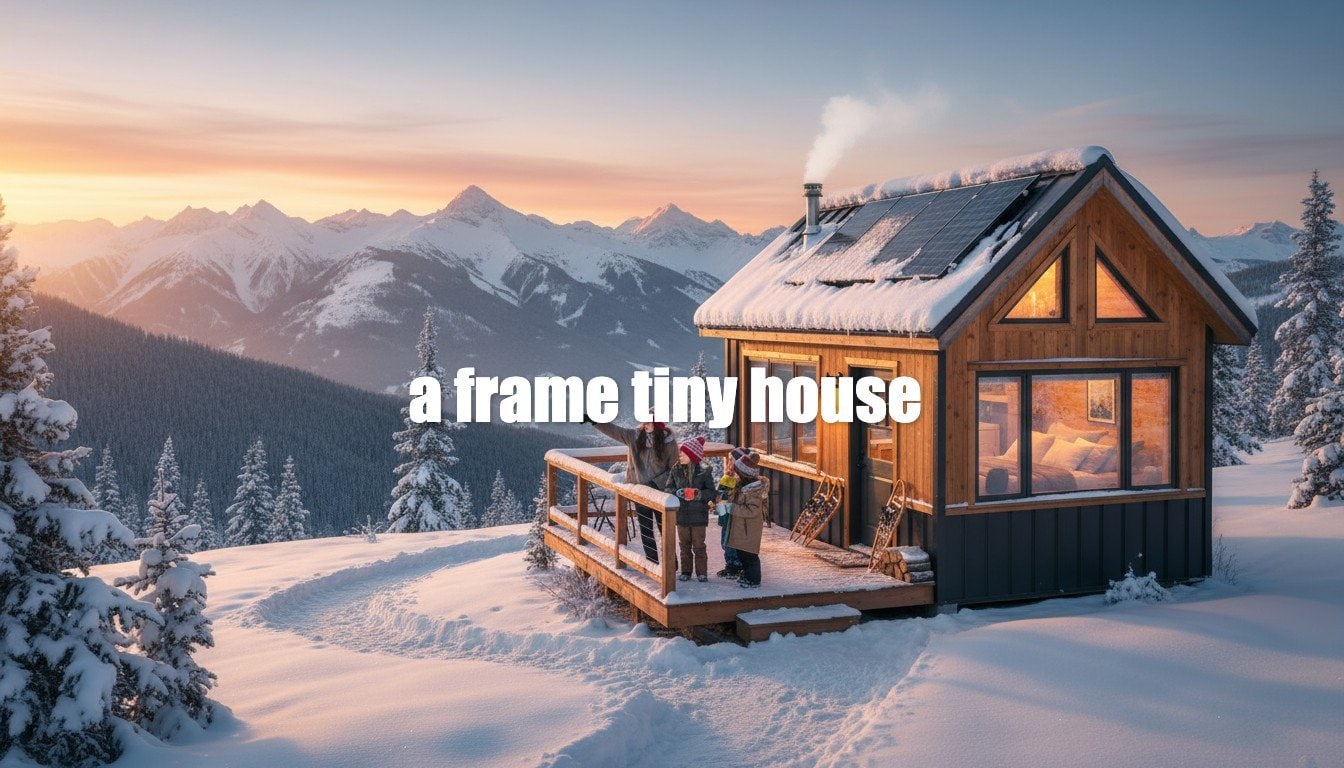
Introduction to A-Frame Tiny Houses
We remember the moment we first stumbled upon an A Frame Tiny House during a road trip through the Rockies. Nestled among the pines, this compact, triangular structure captured our imagination with its simplicity and charm. In the US, where housing costs are skyrocketing and many seek sustainable alternatives, A Frame Tiny Houses have surged in popularity. These homes, typically under 400 square feet, embody minimalism and affordability, appealing to those downsizing or embracing off-grid living. We’ve noticed how these designs resonate with urban professionals tired of high rents in cities like Seattle or families looking for affordable second homes in rural areas like the Ozarks.
People searching for A Frame Tiny House options often look for kits, detailed plans, or building advice tailored to US regulations. We understand this intent well, as we’ve explored numerous designs ourselves. The appeal lies in their cost savings—often 50% less than traditional homes—and quick construction times that can wrap up in weeks. According to a 2023 report from the Tiny House Industry Association, tiny home interest grew by 20% nationwide, driven by millennials and retirees alike. This growth is particularly evident in states like Colorado and Vermont, where environmental consciousness and outdoor lifestyles amplify the demand for such compact, nature-integrated dwellings.
In this guide, we dive into what makes A Frame Tiny Houses unique, their benefits for US lifestyles, step-by-step building processes, legal considerations, real-life inspirations, FAQs, and key takeaways. Whether you’re dreaming of a backyard cabin or a mobile retreat, we’ll help you determine if this design aligns with your vision. Let’s explore how we can bring this efficient living model to life, considering factors like climate adaptability and integration with existing properties.
As we’ve delved into the world of tiny homes across the US, our experiences at Great Lakes Tiny Homes have shown us the relevance of A Frame designs for diverse climates and needs. Drawing from projects that highlight practical adaptations, we share credible insights to guide your journey without the hype. For instance, we’ve seen how these structures perform in varying weather patterns, from heavy snowfalls to coastal humidity, providing a foundation for informed decision-making.
What is an A-Frame Tiny House?
We define an A-Frame Tiny House as a compact dwelling with a distinctive triangular roofline that resembles the letter ‘A,’ making it a standout in the world of small homes. Originating in mid-20th century architecture, particularly post-World War II when efficient, low-cost housing was needed, these structures were popularized by designers like Moshe Safdie for their structural simplicity. The steep roof not only sheds snow and rain effectively but also creates usable loft space within a footprint often limited to under 400 square feet to comply with tiny home standards. This design philosophy emphasizes resource efficiency, using gravity and geometry to distribute loads without complex engineering.
Common features include open floor plans on the ground level for living areas, a loft for sleeping, and large windows that flood the space with natural light. Unlike traditional rectangular tiny homes or rustic cabins, A-Frames maximize vertical space, turning the roof into walls for a cozy, cabin-like feel. In the US, we’ve seen adaptations for regional weather—thicker insulation in northern states like Minnesota for snow loads, or hurricane-resistant framing in Florida. Additionally, many incorporate passive solar design elements, such as south-facing windows, to enhance natural heating in temperate zones like the Pacific Northwest.
To visualize, imagine a diagram comparing an A-Frame to a rectangular tiny house: the A-Frame’s peaked roof allows for higher headroom in lofts, while the rectangular design might feel boxier. This makes A-Frames ideal for sloped terrains common in the Appalachians or Rockies. Our research into US building trends reveals how these homes blend historical charm with modern minimalism, perfect for those interested in frame houses that are both functional and aesthetically pleasing. For example, in mountainous regions, the A-Frame’s stability on uneven ground reduces the need for extensive site preparation, saving time and money.
Historically, A-Frames drew from Scandinavian influences, but in the US, they’ve evolved with local materials like cedar siding for durability. We appreciate how this design supports our interests in sustainable building, where every square foot counts. For beginners, understanding these basics sets the stage for planning your own project, whether it’s a park model or a stationary frame park setup. We’ve also noted how contemporary versions integrate smart home tech, like automated lighting in lofts, to enhance usability without expanding the footprint.
Benefits of A-Frame Tiny Houses in the US
We can’t overstate the energy efficiency of A-Frame Tiny Houses, thanks to their compact design that minimizes heat loss. The steep roof allows for superior insulation placement, reducing heating costs by up to 30% in cold US climates like the Midwest. For us, this means lower utility bills and a smaller carbon footprint, aligning with eco-conscious living. In practice, this efficiency is amplified by options like radiant floor heating or high-efficiency windows, which we’ve found cut energy use even further during winter months in places like Wisconsin.
Affordability is another major draw; material costs for an A-Frame are often lower due to the simple frame construction using fewer resources. Build times range from 7 to 30 days for DIY kits, slashing labor expenses compared to traditional homes. In the US, where average home prices exceed $400,000, these tiny houses offer savings of about 50%, per National Association of Home Builders data. We’ve calculated that a basic model can cost $30,000 to $60,000, making homeownership accessible. This affordability extends to ongoing expenses, such as property taxes, which are proportionally lower due to the reduced size.
The aesthetic appeal shines through in their whimsical, storybook look, while lofts optimize space for sleeping or a den area. Sustainability comes from the smaller footprint, using eco-friendly materials like reclaimed wood. Some models are mobile, towable on wheels, enhancing resale value in dynamic markets like California. Moreover, the design promotes mental well-being by encouraging clutter-free environments, which we’ve experienced firsthand as fostering creativity and relaxation in tight spaces.
To illustrate, here’s a comparison table of A-Frame kits:
| Provider | Cost | Build Time | Features |
|---|---|---|---|
| Avrame | $20k-$50k | 1-2 weeks | Modular panels, lofts |
| DEN | $40k-$80k | 2-4 weeks | Modern interiors, solar-ready |
| Zook Cabins | $25k-$60k | 1-3 weeks | Rustic A-Frame, customizable |
| Zip Kit Homes | $35k-$70k | 2-3 weeks | Pre-fab sections, energy-efficient |
From our time living in a small A-Frame, we loved the cozy living quarters and how it fostered intentionality. For urban dwellers in places like Portland or rural escapes in Texas, these homes address high housing costs head-on. We’ve also appreciated their versatility for multi-use, such as converting lofts into home offices for remote work trends post-pandemic.
How to Build an A-Frame Tiny House: Step-by-Step Guide
We start every project with thorough planning and site selection, crucial in the US where land use varies. Assess your location’s zoning—urban lots might limit size, while rural sites offer freedom. Budget $5,000-$10,000 for this phase, including soil tests and design plans. Our advice: sketch your frame house layout, incorporating a den or loft, and consult local codes via the International Residential Code (IRC) Appendix Q for tiny homes. During this stage, we recommend creating a detailed timeline and sourcing materials early to avoid supply chain delays, which have been common in recent years.
Next, choose your foundation: permanent concrete piers for stability ($2,000-$5,000) or wheels for mobility under RVIA standards ($1,000-$3,000). We opted for wheels in our Pennsylvania build near Milroy to allow flexibility. Ensure the site is level; poor prep can lead to costly fixes. For pier foundations, consider frost line depths in northern states to prevent heaving, and always incorporate drainage to manage rainwater effectively.
Assembly begins with the frame: erect the triangular skeleton using pre-cut lumber or kits. This takes 3-7 days for a team of two, costing $10,000-$20,000 in materials. Follow timelines strictly—roof sheathing first to weatherproof. We’ve learned from contractor delays that clear communication prevents setbacks. Use pressure-treated lumber for the base to resist moisture, and employ metal connectors for joints to enhance seismic resistance in areas like California.
Interior finishing follows: install drywall, flooring, and utilities like plumbing and electrical, adhering to NEC codes. Add insulation (R-30 for roofs) and fixtures for $5,000-$15,000. For off-grid, integrate solar panels early. We suggest routing wiring through the frame’s vertical members to save space, and opting for LED lighting to maximize efficiency in low-ceiling areas.
Finally, prioritize safety with tools like saws, levels, and ladders; wear PPE. Total cost: $30,000-$100,000. Embed a video tutorial here for visual guidance—we recommend YouTube channels on A-Frame construction. Our lessons: double-check measurements to avoid frame misalignment, and conduct a final walkthrough to ensure all systems function seamlessly before occupancy.
Legal Considerations and Permits for A-Frame Tiny Houses in the US
We navigate zoning laws that differ by state; California and Texas are tiny home-friendly, allowing ADUs under 400 sq ft, while others like New York impose stricter minimums. Check what counties in Michigan allow tiny houses for examples in the Great Lakes region. In states like Oregon, variances can be obtained for innovative designs, but this requires submitting detailed architectural plans and environmental impact assessments.
Building codes fall under IRC, but mobile units need RVIA certification for road legality. Permits cost $500-$5,000, involving inspections for structural integrity. In Hartman Center, PA, we’ve seen streamlined processes for park models. For stationary builds, ensure compliance with wind and seismic standards, which vary—Florida mandates 150 mph wind resistance, for instance.
For off-grid setups, secure septic approvals and solar permits; HUD resources at hud.gov are invaluable. State-by-state: Oregon favors eco-builds, Colorado requires snow-load engineering. Our experience with Milroy, PA permits taught us to engage locals early, avoiding fines up to $10,000. Additionally, explore tax incentives for energy-efficient homes through programs like the federal Investment Tax Credit for solar installations.
Expert quote from a builder: “US regulations reward planning; start with county offices.” Link to state sitemaps like best tiny home communities in states for more. We also advise consulting with a local attorney for easement issues if placing on shared land.
Real-Life Examples and Inspirations for A-Frame Tiny Houses
We visited an off-grid A-Frame in Colorado’s San Juan Mountains, a 200 sq ft haven built with local timber. Exteriors feature steep roofs for snow, interiors boast loft beds and a compact kitchen. The owner shared: “It simplified our lives, cutting costs by 60%.” Challenges like permitting were overcome with solar integration, yielding 100% off-grid power. The setup included rainwater harvesting, demonstrating self-sufficiency in remote areas.
In urban Oregon, Portland’s example is a backyard A-Frame ADU, 300 sq ft with modern finishes. Photos show sleek lines and large windows; testimonials highlight community living. Sustainability metrics: 40% less energy use than apartments. The owners incorporated native landscaping around the structure, blending it seamlessly with the urban backyard.
Another in Texas Hill Country: a mobile park model towed to sites, featuring a den for guests. We interviewed the family: “The build process was smooth, fostering family bonds.” Overcame flooding with elevated foundations. They added a small deck for outdoor living, expanding usable space without increasing the footprint.
A fourth in Michigan’s Upper Peninsula: rustic cabin-style with Hartman influences, using reclaimed materials. Gallery idea: before-after images showing transformation from plans to livable home. These stories inspire our related interests in custom projects. The Michigan build highlighted winter adaptations, like double-glazed windows and wood stoves, ensuring comfort during harsh seasons.
Frequently Asked Questions About A-Frame Tiny Houses
Is an A-frame tiny house legal in my state? It depends on zoning; states like CA and TX are permissive. See our state guides for details, backed by HUD data. For instance, in Florida, coastal zones may require additional flood certifications.
How long does it take to build? 1-2 months for DIY, per our projects; kits speed it to weeks. Factors like weather can extend timelines, so plan for contingencies in rainy regions.
What’s the best insulation for cold climates? Spray foam (R-30+) for roofs, ideal for northern US like PA’s Milroy area. Closed-cell foam provides both insulation and air sealing, preventing drafts.
Can I finance it? Yes, via RV loans or personal loans; rates 5-10% for $30k+ builds. Explore USDA rural development loans for eligible areas to lower interest rates further.
Differences between kits and custom builds? Kits like Avrame are faster/cheaper; customs allow personalization but cost more. Best A Frame Tiny House kits US? Avrame for beginners. Customs shine in unique features like built-in storage solutions.
How much does maintenance cost? $500/year for roofs; steep angles reduce wear. Regular checks on seals and gutters prevent issues in humid climates.
Are they good for families? Lofts suit small groups; add dens for space. Modular expansions can accommodate growing needs over time.
What’s the resale value? High in eco-markets, 80-90% retention. Location and upgrades like solar boost marketability.
Can I park it on wheels? Yes, if RVIA certified; check tiny house for sale locations. Ensure trailer brakes and lights comply with DOT standards.
Best materials for frames? Douglas fir for durability in US builds. Alternatives like engineered wood offer consistency and pest resistance.
How to find builders? Explore tiny house builders in locations like Texas or California. Vet for certifications and review portfolios for A-Frame expertise.
Conclusion: Is an A-Frame Tiny House Right for You?
We recap the benefits: energy savings, affordability from $30k, and quick builds using efficient frames. The process involves planning, assembly, and permits, tailored to US needs. From our reflections, we recommend A-Frames for their versatility in minimalist living, as they’ve transformed our views on home. These structures not only save money but also promote a lifestyle centered on experiences over possessions.
To decide, try this checklist: Do you value sustainability? Need mobility? Budget under $100k? If yes, it’s a fit. Start your journey with resources like Avrame plans or local builders. Tease: Read our tiny home financing guide next. Consider prototyping with sketches or virtual tours to visualize daily life in the space.
As experts in this space, we sign off encouraging you to envision your A-Frame today. At Great Lakes Tiny Homes, our experience delivering turnkey modular and park model homes across the lower 48 states makes us a reliable partner for those ready to explore A-Frame options, ensuring quality and compliance every step of the way.
Key Takeaways
- A-frames offer efficient, affordable tiny living with triangular designs that maximize space and withstand weather challenges across the US.
- US costs range $30k-$100k; always check local laws for building to avoid surprises in zoning and permitting.
- Kits from Avrame, DEN are ideal for beginners seeking plans, providing quick assembly and customization options.
- Build in 1-2 months with proper planning and materials, focusing on safety and code adherence for long-term durability.
- Sustainable and versatile for off-grid or urban homes, aligning with our interests in eco-friendly, intentional lifestyles that reduce environmental impact.