
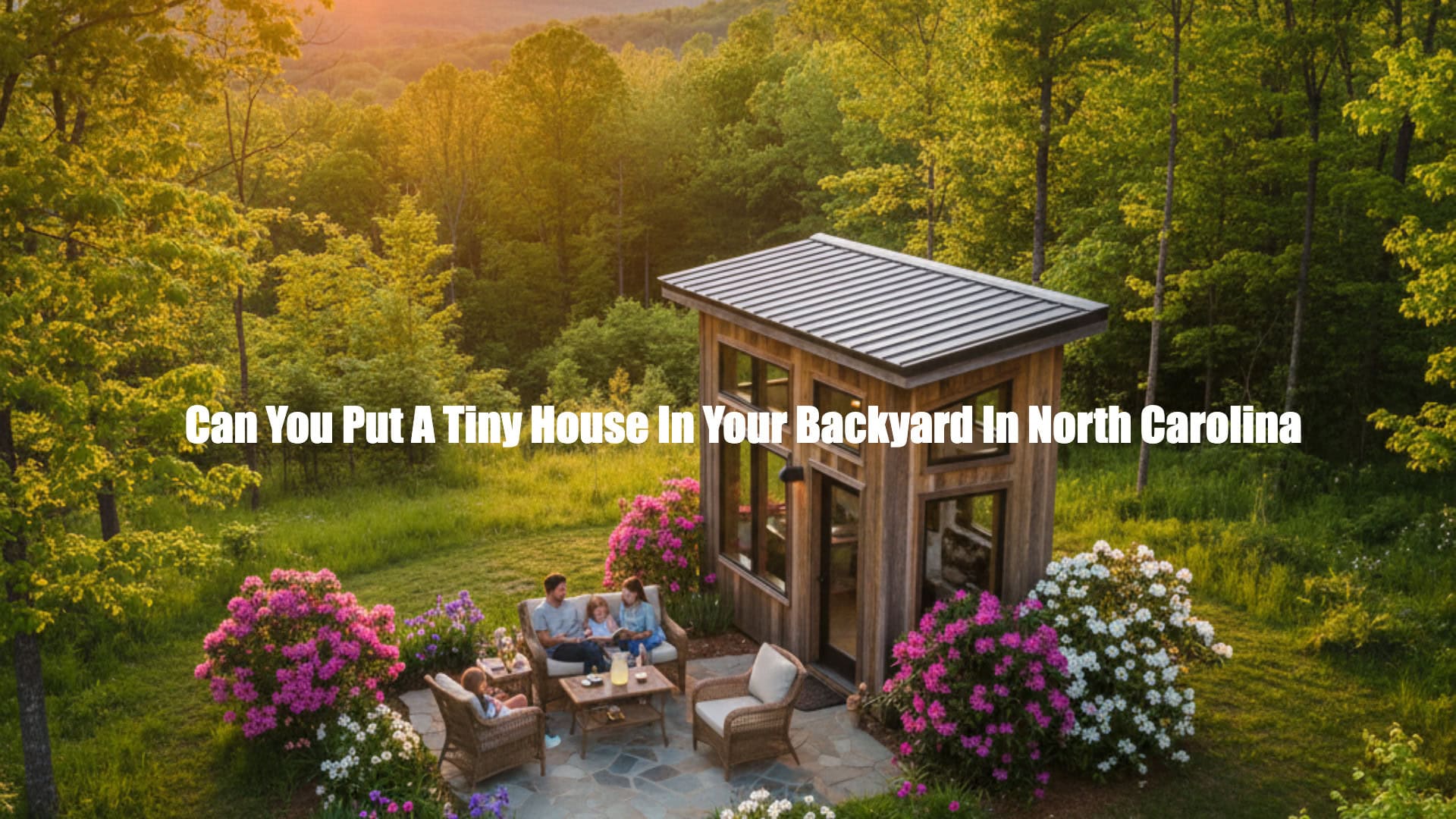
North Carolina allows tiny houses in backyards primarily as accessory dwelling units (ADUs) in many counties, with minimum sizes often starting at 150 square feet for one occupant plus 100 square feet per additional person. Tiny houses on wheels are generally classified as recreational vehicles and restricted from permanent residency, limited to temporary use up to 180 days in most areas. Local zoning and building codes govern placement, requiring permits and compliance with the North Carolina Residential Code.
In North Carolina, the dream of adding a tiny house to our backyard is increasingly within reach for many homeowners. As housing costs rise and the appeal of minimalist living grows, we’re seeing more interest in these compact, efficient dwellings. Whether we’re looking to create a guest space, a home office, or an affordable housing option for family, understanding the rules is key to making it happen. This interest stems from broader trends in sustainable living, where tiny houses reduce our environmental footprint by using fewer resources and promoting energy efficiency. For instance, a well-designed tiny house can cut energy consumption by up to 50% compared to traditional homes, aligning with North Carolina’s push toward greener building practices.
At Great Lakes Tiny Homes, we’ve observed how tiny houses fit into modern lifestyles, offering sustainable solutions that align with our values of simplicity and innovation. As a full-service manufacturer of modular, park model, and tiny homes, we deliver turnkey builds to all 48 lower U.S. states, with options available with or without wheels and with or without RVIA certification—our models with RVIA certification are often called Park Models. Our experience in crafting quality tiny homes positions us to share insights that help navigate North Carolina’s unique regulatory landscape effectively. To explore your options further, book a call with our experts today.
Disclaimer: This article is for informational purposes only and does not constitute legal advice. Laws, regulations, and zoning rules vary by location and may change over time. Always consult your local zoning office or a qualified land use/zoning attorney before making decisions based on this information.
Understanding North Carolina’s Legal Framework for Backyard Tiny Houses
North Carolina approaches tiny house regulations primarily at the local level, meaning counties and municipalities hold the most sway over whether we can place a tiny house in our backyard. The state doesn’t have a blanket law prohibiting or endorsing them, but it provides a foundational framework through the North Carolina State Building Code, which ensures structures meet safety standards regardless of size. This code, based on the International Residential Code (IRC) with state-specific amendments, covers everything from foundation integrity to energy conservation, helping us build structures that withstand the state’s diverse weather patterns, including hurricanes along the coast and heavy snow in the mountains. For detailed guidelines, refer to the North Carolina Office of State Fire Marshal’s Tiny Homes Memo.
A key distinction lies between tiny houses on wheels (THOWs) and those on permanent foundations. THOWs are often classified as recreational vehicles (RVs), allowing mobility but limiting permanent residency in many areas. This classification means they can be parked temporarily, say for seasonal use, but zoning often prohibits them as full-time homes to prevent makeshift neighborhoods. Permanent foundation tiny houses, however, are treated more like traditional homes or accessory dwelling units (ADUs), requiring adherence to stricter building codes but offering greater stability and legal recognition. For example, a permanent tiny house might need engineered footings to handle soil types common in the Piedmont region, ensuring longevity. The state’s adoption of IRC Appendix Q in 2021 further supports tiny houses under 400 square feet by addressing unique features like lofts and compact stairs.
We’ve noted that some counties have developed specific ordinances for tiny houses, streamlining approvals for backyard placements. These ordinances often include provisions for modular construction, which speeds up the process while maintaining quality. ADUs represent a popular legal pathway, as they allow secondary units on the same lot as the primary residence, often with fewer hurdles if we comply with size and zoning rules. In practice, this means we can use an ADU designation to house aging parents or generate supplemental income, provided the unit shares the primary home’s address and utilities. Recent legislative developments, such as House Bill 781 from 2019, have encouraged local governments to consider innovative housing, fostering growing acceptance in cities like Asheville and Raleigh. This bill aimed to reduce barriers for small-lot developments, indirectly benefiting tiny house enthusiasts by promoting density in urban areas. As acceptance grows, we’re likely to see more incentives, like tax credits for energy-efficient builds, further encouraging adoption.
Overall, while the state sets baseline codes, our success depends on local nuances. For more on supportive communities, check out our guide to the best tiny home communities in North Carolina.
Disclaimer: This article is for informational purposes only and does not constitute legal advice. Laws, regulations, and zoning rules vary by location and may change over time. Always consult your local zoning office or a qualified land use/zoning attorney before making decisions based on this information.
Zoning Laws and Local Regulations: What You Need to Know
Zoning laws in North Carolina significantly influence where and how we can position a tiny house in our backyard. Residential zones, such as R-1 (single-family) or R-2 (two-family), dictate what’s permissible. In R-1 zones, tiny houses might only be allowed as ADUs, while R-2 could permit more flexibility for multi-unit setups. Understanding these classifications involves reviewing comprehensive zoning maps available through county GIS systems, which help us visualize how our property aligns with district boundaries. For deeper analysis, R-3 zones in denser areas might even allow tiny house clusters, though this is rarer in suburban settings. According to the Iredell County Guidelines for Tiny Homes, zoning compliance is essential for permitting.
Setback requirements—distances from property lines—typically range from 5 to 20 feet, ensuring space for access and safety. These rules prevent overcrowding and allow for emergency vehicle access, which is particularly important in wildfire-prone areas like the western part of the state. Lot coverage ratios limit how much of our land the structures can occupy, often capping at 35-50%, and height restrictions usually keep tiny houses under 35 feet to blend with neighborhoods. Exceeding these can trigger variances, a process that involves public hearings and potential neighbor objections, adding months to our timeline. In coastal counties, additional flood zone regulations may require elevated foundations to mitigate storm surge risks.
We always emphasize checking with local planning departments early. Obtaining permits involves submitting site plans, blueprints, and sometimes environmental assessments. These departments often offer pre-application meetings, where we can discuss our vision and receive preliminary feedback, saving time later. Homeowners associations (HOAs) can impose stricter rules, potentially overriding zoning if their covenants prohibit accessory structures. In such cases, we might need to amend HOA bylaws, a democratic process that requires majority vote but can open doors for community-wide benefits like shared green spaces. The North Carolina Office of State Fire Marshal provides overarching guidance that local rules must align with.
Our recommendation is clear: consult local authorities before any project. This proactive step avoids costly surprises. To dive deeper into county-specific allowances, explore what counties in North Carolina allow tiny houses.
Disclaimer: This article is for informational purposes only and does not constitute legal advice. Laws, regulations, and zoning rules vary by location and may change over time. Always consult your local zoning office or a qualified land use/zoning attorney before making decisions based on this information.
North Carolina Counties That Allow Backyard Tiny Houses
North Carolina’s counties vary widely in their tiny house policies, with several embracing backyard placements under specific conditions. We’ve compiled a scannable table of key counties that permit them, highlighting size requirements, permit processes, and restrictions. This focuses on those with progressive stances, but always verify with local offices as rules evolve. Each county’s approach reflects local priorities, such as environmental protection in coastal areas or urban density in the Triangle region, providing us with tailored opportunities based on our location. The table below draws from official county resources to ensure accuracy.
| County/City | Min Sq Ft | Zoning Type | Key Requirements | Source | Verified |
|---|---|---|---|---|---|
| Wake County | 150 sq ft (one occupant) + 100 sq ft per additional | R-1, R-2 (ADUs) | On permanent foundation; connect to utilities; permits via online portal; no separate address | Raleigh Planning and Development | Yes |
| Mecklenburg County | 320 sq ft | Residential districts (ADUs) | Special use permits; public hearings; municipal water/sewer required; no RVs permanent | Charlotte Planning Department | Yes |
| Buncombe County | 70 sq ft per habitable room | R-1 (ADUs) | Conditional use permits; environmental assessments for slopes; no travel trailers permanent | Buncombe County Planning | Yes |
| Orange County | 320 sq ft | Rural residential | On foundation; utilities connected; trailers temporary only; lot width min 25 ft | Orange County Planning | Yes |
| Durham County | 150 sq ft | Residential (ADUs) | Small houses allowed; no RVs as ADUs; lot width 25 ft; side/rear yard requirements | Durham County Planning | Yes |
| Forsyth County | 150 sq ft (one occupant) + 100 sq ft per additional | Dwelling zones | Mobile/manufactured homes included; no seasonal vacation use; check local building dept | Winston-Salem Planning | Yes |
These counties represent a fraction of North Carolina’s 100, but they showcase the potential. For builders in these areas, see our tiny house builder in Raleigh options. Expanding on this, each county’s policies evolve through public input sessions, where we can voice support for more flexible rules, influencing future ordinances. Rural counties like those in the mountains often have fewer restrictions, making them ideal for off-grid setups, while urban ones prioritize integration with existing infrastructure.
Disclaimer: This article is for informational purposes only and does not constitute legal advice. Laws, regulations, and zoning rules vary by location and may change over time. Always consult your local zoning office or a qualified land use/zoning attorney before making decisions based on this information.
Major North Carolina Cities and Their Tiny House Policies
Major cities in North Carolina have tailored regulations that can make or break our tiny house plans. Here’s a focus on key metros, including costs, processes, and tips. These urban centers often balance growth with preservation, providing us with models for integrating tiny houses into vibrant cityscapes. Policies here tend to emphasize ADUs to address housing shortages, with streamlined processes in progressive areas.
In Raleigh (Wake County), tiny houses as ADUs are permitted with sizes up to 750 sq ft. Permit costs range from $600-$1,200; applications via the city’s online portal require architectural drawings and take 4-8 weeks. Recent policy changes, like the 2022 ADU ordinance update, have simplified approvals by reducing paperwork for compliant designs. To navigate bureaucracy, we suggest attending planning commission meetings to build rapport with officials. For example, sharing stories of successful ADUs in similar cities can humanize our proposal and garner support. Contact: Raleigh Planning Department, (919) 996-2626.
Charlotte (Mecklenburg County) allows backyard tiny houses in multifamily zones; expect $800-$1,500 in fees for permits involving structural reviews, with timelines of 6-10 weeks. A pilot program in uptown neighborhoods tests THOW integrations, allowing temporary setups to assess community impact. Practical advice: Prepare a presentation highlighting community benefits to foster positive relationships. This could include data on how tiny houses alleviate housing shortages, a pressing issue in this booming metro. Contact: Charlotte Planning Department, (704) 336-2205.
Asheville (Buncombe County) is tiny-house friendly, permitting up to 600 sq ft ADUs; costs $400-$900, applications processed in 3-5 weeks with eco-friendly incentives. The 2021 sustainability initiative eases approvals for green builds, such as those with solar integration. We recommend joining local advocacy groups to influence officials and streamline your path. These groups often host workshops on code navigation, equipping us with insider knowledge. Contact: Asheville Planning Department, (828) 232-4220.
Durham (Durham County) supports tiny houses via ADU permits costing $500-$1,000; expect 5-7 weeks for review, including public hearings. Recent changes allow off-grid pilots, testing solar and rainwater systems in select districts. Build ties by volunteering for housing committees—personal connections speed things up and can lead to expedited reviews. Contact: Durham County Planning, (919) 560-0906.
Greensboro (Guilford County) permits in select zones; fees $700+, 4-6 weeks. No major pilots yet, but growing interest through community forums. Tip: Document everything meticulously to handle red tape efficiently, perhaps using digital tools for tracking submissions. Contact: Greensboro Planning Department, (336) 373-2144.
For sales in these cities, visit tiny house for sale in Charlotte. Overall, these cities demonstrate how urban policies can evolve, offering us pathways through innovation and engagement. Each city’s unique ordinances reflect local needs, from Asheville’s eco-focus to Charlotte’s density solutions, providing diverse options for backyard tiny houses.
Disclaimer: This article is for informational purposes only and does not constitute legal advice. Laws, regulations, and zoning rules vary by location and may change over time. Always consult your local zoning office or a qualified land use/zoning attorney before making decisions based on this information.
Permanent Foundation vs. Tiny Houses on Wheels: Legal Differences
The legal differences between permanent foundation tiny houses and THOWs are crucial for our backyard projects in North Carolina. Permanent ones are classified as ADUs, requiring full compliance with the North Carolina Residential Code, including insulation, egress windows, and seismic standards. They offer long-term security but demand foundations like concrete slabs, often starting at 400 sq ft to qualify as habitable. This classification enables mortgage financing and increases our property’s appraised value, as banks view them as fixed assets. In seismic zone considerations, especially near the southern Appalachians, reinforcements like shear walls become essential for safety. The North Carolina Office of State Fire Marshal outlines these requirements for permanent structures.
THOWs, resembling RVs, fall under recreational vehicle codes, allowing flexibility in size (down to 100 sq ft) and mobility. However, they’re restricted from permanent occupancy in many zones, limited to 180 days annually, and face challenges with financing and insurance. For instance, RV loans have higher interest rates, and insurers may classify them as vehicles rather than homes, affecting coverage for theft or weather damage. In practice, THOWs suit transitional living, like during home renovations, but require RV park zoning for longer stays.
Pros of permanent: Equity building, easier utilities, resale value. Cons: Higher upfront costs ($50,000+), longer permits. THOW pros: Affordability ($20,000-$40,000), quick setup. Cons: Zoning battles, utility hookups as temporary. For security, permanent wins; for experimentation, THOWs suit us. A hybrid approach, starting with a THOW and later converting to permanent, is gaining popularity in flexible counties, allowing us to test the waters before committing. This strategy aligns with evolving codes that now permit retrofits under Appendix Q.
At Great Lakes Tiny Homes, our expertise in building code-compliant structures helps North Carolina residents choose the right path. Ready to start? Book a call with our experts—we’ve helped hundreds of customers make their tiny home dreams a reality. For community options, explore the best tiny home communities in North Carolina.
Disclaimer: This article is for informational purposes only and does not constitute legal advice. Laws, regulations, and zoning rules vary by location and may change over time. Always consult your local zoning office or a qualified land use/zoning attorney before making decisions based on this information.
Building Permits and Code Compliance Requirements
Securing building permits for a backyard tiny house in North Carolina follows a structured process to ensure safety and legality. Step 1: Research local zoning via county websites. Step 2: Submit an application with site surveys, floor plans, and elevation drawings—fees typically $300-$1,500 based on project scope. Including energy modeling reports can preempt issues in energy-conscious areas. The process often requires proof of compliance with the Iredell County Tiny Homes Guidelines, which mirror state standards.
Step 3: Await review (2-8 weeks), then schedule inspections for foundation, framing, electrical, and final occupancy. The North Carolina Building Code mandates 2×6 framing for energy efficiency, GFCI outlets, and PEX plumbing. Structural standards include wind load resistance up to 115 mph in coastal areas, with additional bracing for tornado-prone regions like the eastern plains. For modular homes, certification under the North Carolina Modular Construction Program is required, ensuring factory-built units meet residential codes.
Utility connections require separate approvals: electrical via Duke Energy, septic per health department rules (minimum 300-gallon tanks). Fire safety includes smoke detectors and 10-foot clearances from main structures. Working with certified builders protects our investment and boosts property values by 10-20%. Best practices involve phased inspections to catch issues early, such as plumbing leaks during rough-in stages. In areas like the Outer Banks, elevated foundations are mandatory to comply with flood elevation certificates from FEMA.
Great Lakes Tiny Homes ensures all our builds meet North Carolina standards and can guide the permitting process, saving us time and stress. This guidance often includes pre-submission reviews to align with inspector expectations. For builder recommendations, check our tiny house builder in Charlotte directory.
Disclaimer: This article is for informational purposes only and does not constitute legal advice. Laws, regulations, and zoning rules vary by location and may change over time. Always consult your local zoning office or a qualified land use/zoning attorney before making decisions based on this information.
Utility Connections and Infrastructure Considerations
Connecting utilities to our backyard tiny house demands careful planning in North Carolina. For electricity, we can extend from the main panel (under 200 amps, no permit needed if subpanel) or install a separate meter ($1,000-$3,000). In rural settings, solar arrays with battery storage offer independence, complying with net metering laws that credit excess power back to the grid. Duke Energy’s programs support this, allowing up to 10 kW systems without additional fees in most counties.
Water options include tying into municipal lines ($500-$2,000) or private wells; sewer via septic ($5,000-$15,000 for systems handling 2-4 bedrooms). Composting toilets reduce water use by 90%, appealing in water-scarce areas, but require health department variances. Internet and cable run via underground conduits ($200-$800), ensuring modern connectivity. Fiber optic options in urban counties enhance remote work setups. In mountainous regions, gravity-fed water systems may need engineering for steep slopes.
Off-grid setups with solar panels and composting toilets are permitted in rural counties but require variance approvals and may limit resale. Cost estimates: Full hookups $5,000-$20,000. Proper planning complies with codes and enhances livability—essential for us in varying climates from mountains to coast. Industry insights suggest integrating smart home tech during utility installs for future-proofing, like app-controlled thermostats that optimize energy use. The North Carolina Office of State Fire Marshal emphasizes safe electrical connections for all setups.
Disclaimer: This article is for informational purposes only and does not constitute legal advice. Laws, regulations, and zoning rules vary by location and may change over time. Always consult your local zoning office or a qualified land use/zoning attorney before making decisions based on this information.
HOA Restrictions and Neighborhood Considerations
Even if zoning allows it, HOAs in North Carolina can block our tiny house plans through covenants limiting accessory structures or aesthetics. We must review CC&Rs thoroughly and seek written board approval before investing. This review often uncovers hidden rules, like bans on visible utilities, prompting us to design concealed systems. In gated communities common in the Triangle, these covenants can be as binding as local laws, requiring legal review.
Approach boards with data: Show how tiny houses preserve values (studies indicate +5-15% appreciation). Present plans emphasizing matching architecture, landscaping integration, and low-impact designs. For instance, using native plants around the structure can mitigate aesthetic concerns while supporting local biodiversity. Public hearings for variances may involve neighbor input, so transparency builds goodwill.
Engage neighbors early—host informal meetings to address concerns like noise or views. Architectural reviews often take 30-60 days; prepare visuals and comply with guidelines. Being a good neighbor means respecting quiet hours and sharing benefits, like community gardens, to foster support. Best practices include follow-up communications to keep stakeholders informed, building trust throughout the project. In historic districts, additional approvals from preservation boards ensure designs respect architectural heritage.
Disclaimer: This article is for informational purposes only and does not constitute legal advice. Laws, regulations, and zoning rules vary by location and may change over time. Always consult your local zoning office or a qualified land use/zoning attorney before making decisions based on this information.
Tiny House Prices in North Carolina
Tiny house prices in North Carolina vary significantly based on multiple factors including overall size and square footage, foundation type (permanent versus wheels), RVIA certification status, utility hookup requirements, and compliance with local building codes and zoning ordinances. The state’s diverse geography and varying cost of living across different regions also contribute to price variations, with mountain and coastal areas typically commanding higher prices than rural inland locations. Understanding these price factors is essential for budgeting purposes and making informed decisions about tiny house features and location choices that align with our financial resources and long-term housing goals. For example, coastal counties may require elevated foundations to meet flood standards, adding $5,000-$10,000 to costs, while rural areas benefit from lower permitting fees.
The regulatory environment in North Carolina significantly impacts tiny house pricing, as homes that must meet full International Residential Code requirements typically cost more than those classified as recreational vehicles or temporary structures. Additionally, site preparation costs can vary dramatically depending on location, with some areas requiring extensive utility extensions, road improvements, or environmental mitigation measures that add substantially to the total project cost. Local permit fees, inspection costs, and professional service requirements also contribute to regional price variations that prospective tiny house owners should factor into their overall budget planning. In urban areas like the Triangle, labor costs for certified builders can increase prices by 20-30%, reflecting higher demand and skilled workforce availability.
Great Lakes Tiny Homes Pricing
Great Lakes Tiny Homes offers comprehensive tiny house solutions in the $100,000 to $150,000 price range, providing turnkey delivery services to locations throughout North Carolina and ensuring that your investment includes not just the structure itself but also professional delivery, setup assistance, and ongoing support services. Our pricing reflects the high-quality materials, professional craftsmanship, and comprehensive compliance with applicable building codes and safety standards that ensure your tiny home will provide years of comfortable, safe living while maintaining its value over time. The turnkey approach eliminates many of the hidden costs and logistical challenges associated with tiny house construction and placement, providing transparent pricing that includes delivery, setup, and initial system testing. This range accommodates various customizations, such as energy-efficient appliances or premium finishes, tailored to North Carolina’s climate needs like enhanced insulation for humid summers.
Our comprehensive pricing structure accounts for the various regulatory requirements across different North Carolina jurisdictions, ensuring that your home meets all applicable codes and standards regardless of where you choose to place it within the state. This approach provides peace of mind and eliminates the risk of costly modifications or compliance issues that can arise when working with builders who are not familiar with the complex and varying regulatory landscape across different counties and municipalities. Our experienced team works closely with local authorities throughout the permitting and inspection process, ensuring smooth project completion and full regulatory compliance. For instance, in counties requiring RVIA certification, our certified models fit seamlessly without additional fees.
Great Lakes Tiny Homes Model Options
Great Lakes Tiny Homes offers an extensive selection of professionally designed models that can be customized to meet both your personal preferences and local zoning requirements, ensuring that your tiny home investment aligns with both your lifestyle goals and regulatory compliance needs. Our diverse model lineup includes options specifically designed to meet different regulatory classifications and use scenarios, providing flexibility for various placement options and long-term housing strategies. Each model can be customized with various features, finishes, and systems that allow you to create a truly personalized living space while maintaining the structural integrity and safety standards that are essential for long-term satisfaction and regulatory compliance. Model selection should consider North Carolina’s zoning, such as permanent foundations for ADUs in urban counties or wheels for temporary rural setups.
- Modular Homes: Designed for permanent foundation placement and full IRC compliance, ideal for locations requiring traditional residential classification and offering maximum financing and insurance options.
- A-Frame: Distinctive architectural style that maximizes interior space efficiency while providing excellent structural strength and weather resistance, particularly suitable for mountain and rural locations.
- Cabin: Traditional styling that blends seamlessly with rural and recreational environments while offering modern amenities and energy-efficient systems for year-round comfort.
- Park Models: RVIA-certified units that provide maximum placement flexibility and are specifically designed for RV parks, campgrounds, and communities that accommodate recreational vehicles.
- Tiny House on Wheels: Mobile units that offer the ultimate in flexibility and can be relocated as needed while maintaining comfortable living spaces and essential amenities for full-time or seasonal use.
When selecting a model, it’s important to consider how your choice will align with local zoning requirements and your long-term housing plans, as different models offer varying levels of mobility, financing options, and regulatory compliance pathways. Our team can help you evaluate the zoning implications of different model choices and recommend options that best meet your specific needs while ensuring compliance with local regulations. Understanding these relationships between model selection and zoning requirements is crucial for making informed decisions that support both your immediate housing needs and long-term lifestyle goals, while avoiding potential complications that could arise from mismatched expectations and regulatory requirements. For example, Park Models with RVIA certification are ideal for counties allowing RV-registered structures, while Modular Homes suit strict ADU zones.
If you’d like expert guidance on selecting the right model for your specific North Carolina location and zoning requirements, our experienced team can provide personalized recommendations based on your unique circumstances and goals. Book a call
Disclaimer: This article is for informational purposes only and does not constitute legal advice. Laws, regulations, and zoning rules vary by location and may change over time. Always consult your local zoning office or a qualified land use/zoning attorney before making decisions based on this information.
Practical Tips for Successfully Adding a Tiny House to Your Backyard
For North Carolina residents, success starts with site selection: Choose flat, well-drained areas away from flood zones (check FEMA maps). Work with licensed contractors—verify via the NC Licensing Board. Soil testing ($500-$1,000) reveals if reinforcements are needed for clay-heavy Piedmont soils. In coastal areas, elevation certificates are mandatory to comply with NFIP standards, preventing insurance issues.
Manage permits by hiring expediters if needed; plan 3-6 months for timelines. Common mistakes: Underestimating drainage (install French drains, $1,000-$3,000) or ignoring access (ensure 10-foot easements). Lessons from projects: Budget 20% extra for surprises, like unexpected utility relocations. Engaging early with inspectors can clarify requirements, such as ventilation for humid climates.
Opt for designs with hurricane-resistant features and energy-efficient windows for our humid subtropical climate. Ventilation systems combat mold in humid summers. Great Lakes Tiny Homes’ local expertise helps us sidestep pitfalls, delivering on-time, compliant builds. Their methodology includes 3D modeling for visualization, ensuring our design fits perfectly. For sales, see tiny house for sale in Raleigh.
Disclaimer: This article is for informational purposes only and does not constitute legal advice. Laws, regulations, and zoning rules vary by location and may change over time. Always consult your local zoning office or a qualified land use/zoning attorney before making decisions based on this information.
Future Outlook: North Carolina’s Evolving Tiny House Landscape
North Carolina’s tiny house scene is expanding, driven by affordability crises pushing median home prices over $300,000. Policies are shifting: Senate Bill 673 (2023) proposes ADU standardization, while pilots in Raleigh and Charlotte test THOW parks. These pilots gather data on livability, potentially leading to statewide guidelines by 2025. Advocacy from groups like the North Carolina Tiny House Association pushes for broader acceptance, including off-grid incentives.
The movement gains traction via groups like the Tiny House Institute, advocating for code reforms. Municipalities like Asheville lead with eco-villages, integrating tiny houses into sustainable developments. This means more opportunities for us, with streamlined approvals on the horizon. Economic analyses predict tiny houses could address 10% of the state’s housing gap, spurring investment. Rural counties are exploring tiny house overlays to boost tourism and local economies.
Stay updated via NC Department of Insurance resources. Great Lakes Tiny Homes leads in this market, innovating for North Carolina’s future. Their forward-thinking designs anticipate regulatory changes, keeping us ahead. For builder insights, visit our tiny house builder in Asheville page.
Disclaimer: This article is for informational purposes only and does not constitute legal advice. Laws, regulations, and zoning rules vary by location and may change over time. Always consult your local zoning office or a qualified land use/zoning attorney before making decisions based on this information.
Tiny House FAQs in North Carolina
Is it legal to put a tiny house in my backyard in North Carolina?
Tiny houses are generally legal in North Carolina as accessory dwelling units (ADUs) or permanent structures, but regulations vary by county and municipality. The state follows the North Carolina State Building Code, which incorporates Appendix Q of the International Residential Code for tiny houses under 400 square feet. Always check with your local planning department, as zoning laws may impose additional restrictions; for more on supportive areas, see our guide to tiny home communities in North Carolina.
What is the difference between tiny houses on wheels and those on permanent foundations?
Tiny houses on wheels (THOWs) are classified as recreational vehicles, allowing temporary placement but often prohibiting full-time residency in residential zones to avoid unregulated developments. Permanent foundation tiny houses are treated like traditional homes or ADUs, requiring compliance with building codes for foundations, plumbing, and electrical systems, which provides more stability and legal options for long-term living. Local ordinances may differ, so verify with authorities before proceeding.
What is the minimum size for a tiny house in North Carolina?
North Carolina’s adoption of IRC Appendix Q sets guidelines for tiny houses between 400 square feet and as small as 100 square feet for habitable space, focusing on safety features like emergency exits and ceiling heights. However, some localities may have stricter minimums, especially for ADUs, to ensure habitability. Consult your county’s building code for exact requirements, as they can vary.
Where can I place a tiny house on my property in North Carolina?
Tiny houses must comply with zoning setbacks, typically 5 to 20 feet from property lines, and lot coverage limits of 35-50% in residential zones like R-1 or R-2. Placement is often restricted to rear yards to maintain neighborhood aesthetics and allow emergency access. Review your property’s zoning map through the county GIS system to confirm allowable locations.
What permits and utilities are required for a backyard tiny house?
Permits for construction, zoning approval, and possibly septic or sewer connections are required, along with inspections to meet state building codes for electrical, plumbing, and structural integrity. Utilities must typically connect to the primary residence’s systems, sharing the address, unless separate metering is approved. Regulations can change, so contact your local permitting office for the latest details.
How much does it cost to add a tiny house in my backyard in North Carolina?
Costs for a tiny house range from $30,000 to $100,000 depending on size, materials, and whether it’s on wheels or a foundation, plus site preparation and permitting fees that can add 10-20%. Energy-efficient designs may qualify for state incentives, reducing long-term expenses. Factor in local variances, which might increase costs if needed.
Conclusion: Your Path to Backyard Tiny House Success in North Carolina
Placing a tiny house in our North Carolina backyard is feasible with diligent planning, from understanding state codes to securing local permits. We’ve covered zoning, counties like Wake and Mecklenburg, utility setups, and costs—key to compliance. By addressing these elements methodically, we mitigate risks and maximize benefits, turning a vision into reality.
Start by contacting your planning department, then consult pros. At Great Lakes Tiny Homes, we’re here for guidance. With opportunities growing, proper prep ensures our tiny living success. As a company delivering turnkey modular and park model homes across the lower 48 U.S. states, Great Lakes Tiny Homes brings credibility through our focus on quality craftsmanship and regulatory expertise, making us a reliable partner for North Carolina projects no matter where you are. To discuss your vision, book with our experts today. For available options, explore tiny house for sale in Asheville.